
The infection of three healthcare workers during Kenya's Ebola outbreak has exposed an urgent question: how effectively could the country's health system respond if infections spread beyond the first group of identified contacts?
Kenya has confirmed seven Ebola cases, including one death, following the arrival of an infected traveller from the Democratic Republic of Congo.
The fact that three healthcare workers who treated the first patient subsequently became infected is particularly concerning.
Healthcare workers are among the people most likely to encounter infectious patients, especially before a disease has been identified.
Their protection is therefore central to any effective outbreak response.
But infections among medical personnel do not automatically prove that hospitals lacked protective equipment or that staff failed to follow procedures.
Determining what happened requires a detailed investigation into the circumstances of exposure.
The first test is protecting frontline workers
Ebola spreads through direct contact with infected bodily fluids and contaminated materials.
Healthcare workers may face increased risks when examining patients, collecting samples, administering treatment or handling contaminated equipment.
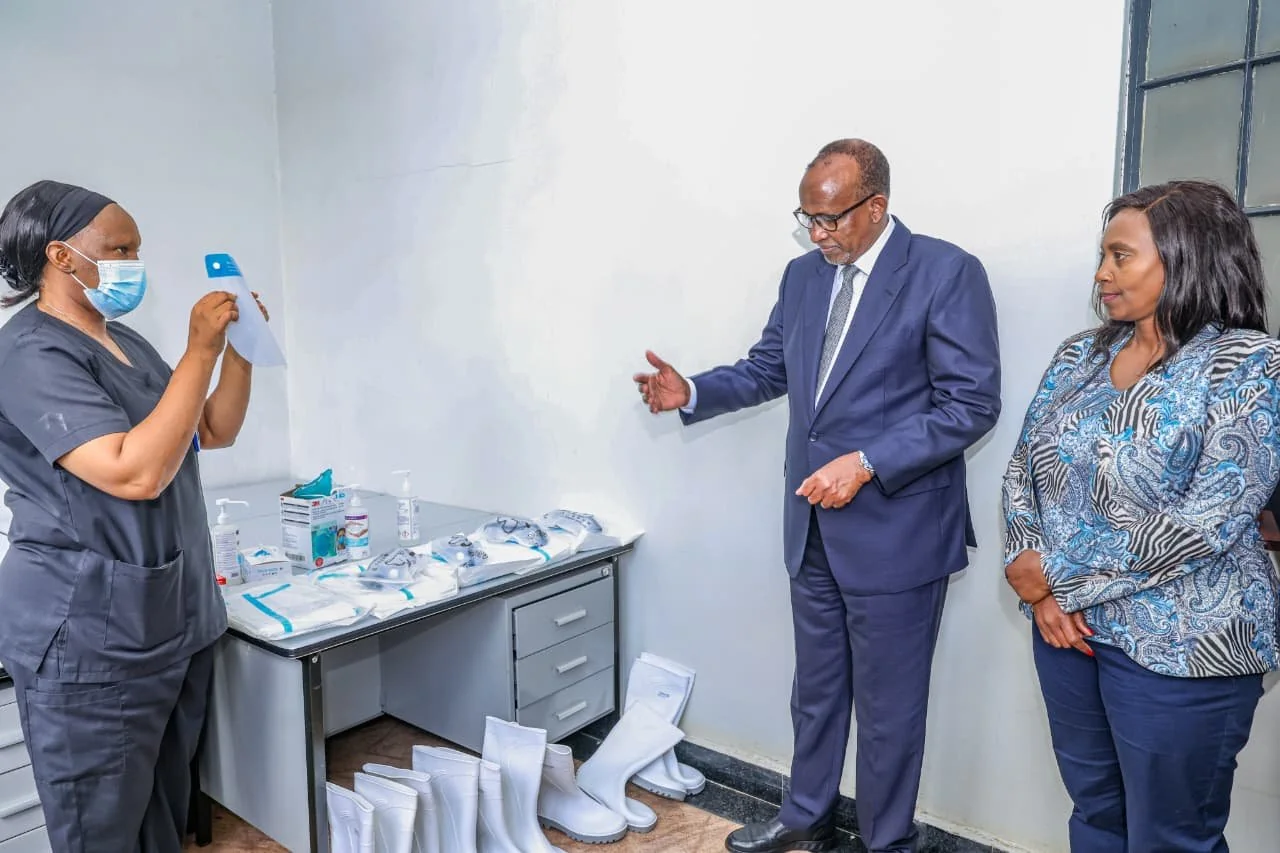
Effective protection requires more than supplying gloves and protective suits.
Hospitals need appropriate isolation facilities, trained personnel, reliable supplies of protective equipment and clear procedures for putting on and removing protective clothing.
Staff must also be able to recognise potential Ebola cases early enough to prevent unnecessary exposure.
A critical question is whether the infected workers encountered the patient before Ebola was suspected and whether appropriate precautions were in place at that stage.
Those details have not been fully established in the information released publicly.
Can Kenya detect infections before they spread?
Contact tracing is one of the most important tools for controlling Ebola.
Kenya's Ministry of Health says 128 of 130 identified contacts have been traced and quarantined.
That is an encouraging surveillance indicator.
However, the success of an outbreak response depends on more than the percentage of known contacts located.
Health authorities must also identify previously unrecognised exposures, test suspected cases quickly and maintain effective monitoring throughout the incubation period.
Ebola symptoms can take between two and 21 days to appear.
This means surveillance must continue even when no new infections are immediately reported.
The challenge beyond Nairobi
Kenya's outbreak response must account for differences between major referral hospitals and smaller facilities.
Rural hospitals and border-area health centres may have fewer isolation rooms, specialist personnel or laboratory resources.
Patients can also move between facilities before a diagnosis is confirmed.
Preparedness therefore requires coordinated systems for referral, sample transport, ambulance decontamination and emergency communication.
The Ministry of Health and county governments need to ensure that frontline facilities understand how to identify and safely manage suspected cases.
What Kenya needs to demonstrate
An effective response should include transparent reporting on healthcare-worker exposures, the availability of protective equipment and the capacity of designated treatment centres.
Authorities should also clarify how quickly suspected infections can be tested and how exposed personnel are supported during quarantine.
Regular simulation exercises, infection-control audits and independent assessments can help identify weaknesses before an outbreak expands.
Public communication is equally important.
Communities need accurate information about symptoms, transmission and when to seek medical help without creating unnecessary fear or stigma.
The immediate outbreak may still be contained.
The larger lesson is that preparedness should not be judged only by the number of confirmed cases.
It should be measured by how reliably Kenya can protect healthcare workers, detect infections and maintain an effective response across the entire health system.
You may also like
Category: Health
Related Video: What Dangote’s proposed Lamu oil refinery could mean for East Africa
Related Explainer: Ebola contact tracing: Why the 21-day window matters in Kenya’s response
 Facebook
 Twitter / X
 WhatsApp
 LinkedIn
 Telegram
 Reddit