
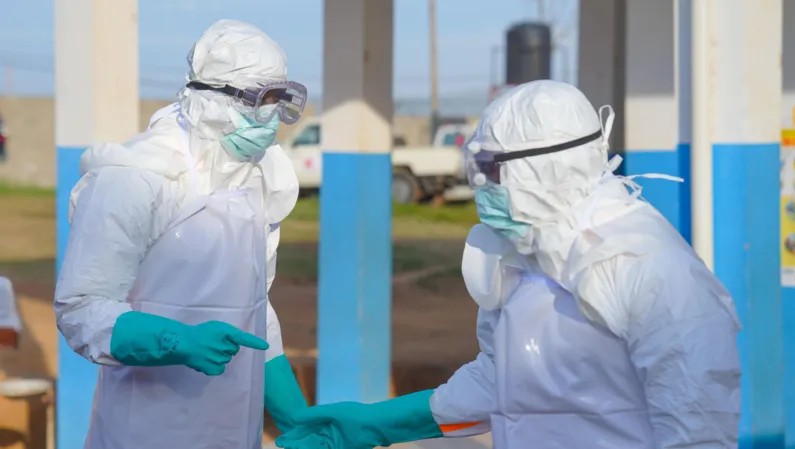
A 20-year-old man in Wajir whose illness raised concern over a possible Ebola infection has tested negative for the virus, according to Governor Ahmed Abdullahi, easing fears of another case as Kenya continues its response to a confirmed infection imported from the Democratic Republic of Congo (DRC).
Abdullahi announced on Thursday, October 8, that preliminary laboratory results from samples sent to the National Public Health Virology Laboratory in Nairobi had returned negative.
“I am pleased to report that the preliminary laboratory results indicate that the sample is NEGATIVE for Ebola Virus Disease,” the governor said in a statement.
The patient had been assessed at Habaswein Sub-County Hospital in Wajir South after his travel history and clinical condition prompted concern among health workers.
The county government said he would continue receiving medical care and be monitored under public health procedures. The negative result rules out Ebola in the sample tested, but it does not establish what caused his illness.
Conflicting accounts fuelled uncertainty
The Wajir announcement followed public confusion over whether the patient was being investigated for Ebola.
On Thursday, The Star reported that Health Cabinet Secretary Aden Duale had dismissed reports of a suspected case in Wajir, responding “Not true” when asked about them.
The governor later announced the preliminary negative test result. The public statements did not fully explain the difference between the accounts, and no detailed joint clarification from the county and the Ministry of Health was available in the reports reviewed.
The episode highlights the importance of timely, consistent communication during a public health alert. When reports of a possible case circulate, residents need clear information about what health teams are investigating, what laboratory results show and what remains unconfirmed.
Abdullahi urged residents not to spread unverified claims.
“I urge residents to remain calm and to avoid sharing unverified information, which can cause unnecessary fear and panic,” he said, asking the public to rely on official county and Ministry of Health updates.
Kenya still has one confirmed imported case
The Wajir result does not alter Kenya’s confirmed Ebola case.
The Ministry of Health announced on October 6 that a Kenyan man who had been living in the DRC tested positive for Bundibugyo virus disease, a form of Ebola, after arriving in Nairobi. He died on October 5 despite receiving supportive treatment. The diagnosis was confirmed independently by the National Virology Reference Laboratory and the Kenya Medical Research Institute.
According to the ministry, the man had fallen ill about a month earlier and received treatment at several health facilities in the DRC. He later travelled by road to Kampala, Uganda, before boarding a flight to Nairobi on October 3.
Health authorities began contact tracing after confirming the infection.
In an update on October 7, Duale said officials had identified 57 contacts linked to the deceased. Ten had been accounted for and placed under quarantine at the National Police Service Hospital, while efforts to locate and monitor the others continued.
The ministry also said Kenya had screened more than 652,000 travellers and tested 267 samples by October 6. It maintained that the country was not experiencing an Ebola outbreak, despite the confirmed imported case.
Why testing and surveillance still matter
The World Health Organization says early Bundibugyo virus symptoms can resemble other illnesses, including malaria. Laboratory testing is therefore important in distinguishing Ebola from other causes of fever and serious illness.
The virus can spread through direct contact with the blood or other bodily fluids of an infected person, or through contaminated materials. People are not considered infectious before symptoms begin, according to WHO guidance.
Kenya's response includes contact tracing, surveillance at points of entry and preparations to isolate and treat suspected or confirmed cases. The WHO is supporting the government as it works to prevent further transmission.
The outbreak in the DRC remains a serious regional concern. WHO reported more than 8,700 confirmed cases and 4,200 confirmed deaths there by October 6, although the burden varies between affected areas.
For Wajir, the preliminary negative result is reassuring. But the immediate priority remains the patient's care, clear communication with the public and continued vigilance while Kenya follows up contacts linked to its confirmed imported case.
You may also like
Category: News
Related Video: Gachagua’s explosive Ruto scorecard: Debt, taxes, State capture and a government ‘that has failed’
Related Explainer: Ebola contact tracing: Why the 21-day window matters in Kenya’s response
About the Author
Maureen Onyango is a journalist passionate about storytelling, life coaching and spiritual lessons. She studied at the Kenya Institute of Management and enjoys telling stories that inform, inspire and empower communities.
 Facebook
 Twitter / X
 WhatsApp
 LinkedIn
 Telegram
 Reddit