
The new tax laws offer temporary relief on fuel and revise construction taxes, but motorists are still paying more as international oil costs climb.
President William Ruto has extended reduced VAT on petrol, diesel and kerosene for another 90 days, even as motorists contend with higher pump prices following a fresh rise in the cost of imported fuel.
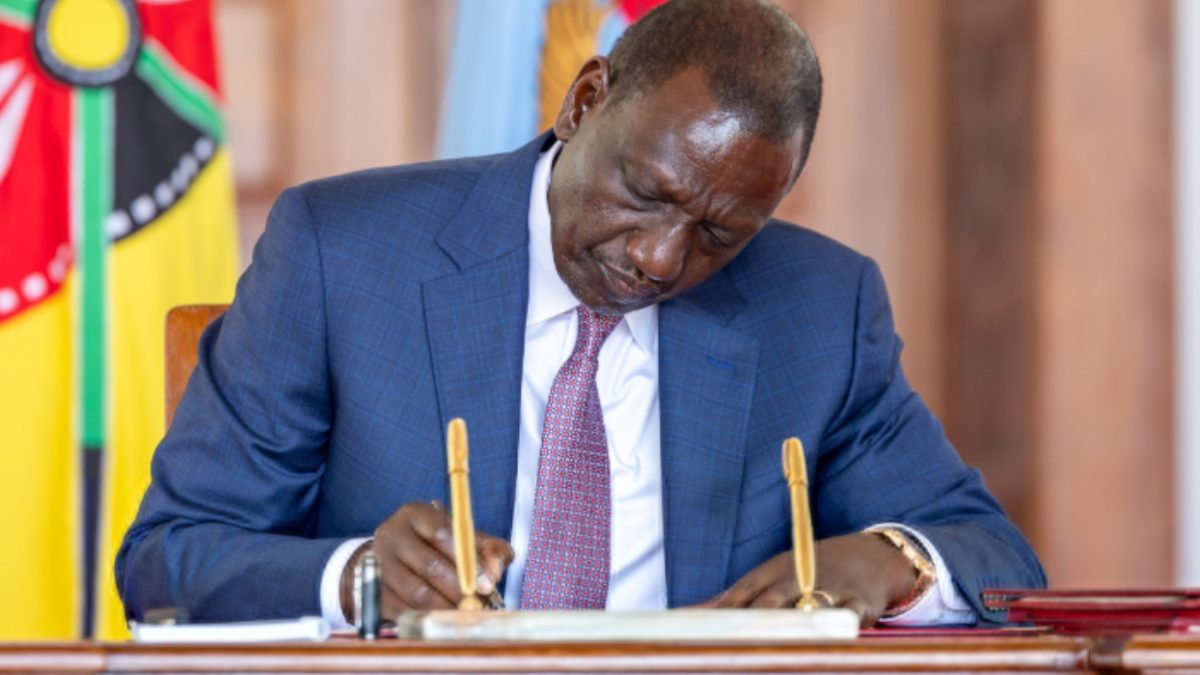
Ruto signed two laws at Eldoret State Lodge on Friday, 16 October 2026: the Tax Laws (Amendment) Act, 2026, and the Kenya Revenue Authority (Amendment) Act, 2026. The measures extend fuel tax relief, change excise duty on selected construction materials and revise how the tax authority is funded and governed.
The fuel measure maintains VAT at eight per cent instead of the standard 16 per cent for an initial 90 days. The Treasury Cabinet Secretary may extend the reduced rate for a further 90 days if the circumstances warrant it. The extension follows the expiry of an earlier relief period on 14 October.
But the timing highlights a challenge for the government: lowering one component of the fuel bill does not guarantee a reduction in the final price paid at the pump.
Why fuel prices are still rising
The Energy and Petroleum Regulatory Authority (EPRA) raised maximum retail fuel prices for the period running from 15 October to 14 November.
In Nairobi, the maximum price of super petrol increased by Sh12.93 to Sh226.96 per litre. Diesel rose by Sh9.90 to Sh227.76, while kerosene increased by Sh28.49 to Sh219.87.
The regulator’s latest price review followed higher costs of imported petroleum products amid instability in the Middle East. Reuters also reported that disruptions linked to the conflict had pushed up international oil costs and contributed to the Kenyan price increase.
The reduced VAT rate is intended to limit the tax burden on fuel. However, pump prices also reflect the cost of importing petroleum, shipping, insurance, exchange rates and other regulated charges.
This means motorists may not immediately feel the full benefit of the tax measure. The relief limits what fuel prices might otherwise have been, but it does not remove the pressure caused by more expensive imports.
The extension is therefore a temporary cushion rather than a guarantee that fuel prices will fall. Its longer-term effect will depend partly on international oil prices and whether the government extends the reduced rate beyond the initial period.
What changes for construction materials?
The Tax Laws (Amendment) Act also revises excise duty on selected building materials, a move the government says is intended to ease costs in the construction and housing sectors.
One change replaces the weight-based calculation of excise duty on tiles with a charge based on the area covered. Tiles are commonly sold by square metre, making the new method more closely aligned with how buyers purchase the product.
The law also reduces excise duty on sanitary ware, including ceramic sinks and related fittings, from Sh50 to Sh30 per kilogramme. It further changes the treatment of certain imported float glass and other glass products from East African Community partner states to align with regional customs arrangements.
These changes could reduce costs for developers, contractors and households building or renovating homes. They may also affect projects under the government’s affordable housing programme.
However, lower taxes do not automatically translate into equivalent reductions in retail prices. The final cost will depend on suppliers, transport expenses, exchange rates, competition and whether businesses pass the tax savings on to buyers.
The impact will become clearer as suppliers adjust their prices and the changes take effect in the market.
New funding rules for KRA
The second law changes the statutory funding arrangements and board composition of the Kenya Revenue Authority (KRA), the agency responsible for collecting government revenue.
Under the amended provisions, KRA is to receive funding equivalent to at least two per cent of the revenue estimated for collection in each financial year. The law also provides for an incentive equivalent to three per cent of revenue collected above the amount targeted for a given quarter. The changes establish a more explicit link between the authority’s funding and its revenue collection performance.
Supporters of the measure argue that better resourcing and coordination could improve revenue administration and reduce the need to raise taxes simply to meet collection targets. But the effect will depend on how the new arrangements are implemented and whether they lead to better compliance and more efficient collection.
The performance incentive also raises a question of accountability: how will the government ensure that stronger collection efforts do not translate into unfair pressure on compliant taxpayers or businesses?
The law does not, by itself, establish that revenue collection will improve or that future tax increases will be avoided.
Kenya Ports Authority joins the KRA board
The amendments also bring the managing director of the Kenya Ports Authority (KPA) onto the KRA board.
The change recognises the close relationship between port operations and customs revenue. Much of the country’s imported merchandise passes through the ports, where customs declarations, cargo clearance and tax assessment are important parts of government revenue collection.
The legislation also revises provisions relating to KRA board membership, including removing the term “ex-officio member” from relevant sections of the law.
The intended result is closer coordination between the institutions. Whether this improves clearance times, reduces revenue leakages or strengthens enforcement will depend on the decisions made by the agencies and the practical changes that follow.
What the laws mean for households
The two laws target different parts of the economy. The fuel VAT extension is intended to soften the effect of expensive petroleum, while the construction changes aim to reduce the tax burden on selected building materials. The KRA amendments focus on revenue collection and institutional management.
For households, the immediate concern remains the cost of transport, cooking fuel and essential goods. Fuel prices influence the cost of moving food and other products across the country, so increases can put pressure on household budgets even when tax relief is in place.
For people building homes, the changes to tiles, sanitary ware and glass could offer some relief. But the actual savings will depend on how the tax changes affect prices charged by suppliers and retailers.
The KRA reforms may have a less immediate effect on household expenses, but they matter for the wider debate over how the government raises revenue and funds public services.
The government has presented the measures as a way to cushion consumers while improving tax administration. The test will be whether the relief reaches households and businesses, and whether the new revenue arrangements improve collection without adding unnecessary burdens to taxpayers.
For now, the fuel VAT extension offers a temporary buffer against higher costs. It does not, however, shield Kenyans from the full impact of global oil market disruptions.
You may also like
Category: News · Related Topic: William Ruto
Related Video: What Dangote’s proposed Lamu oil refinery could mean for East Africa
Related Explainer: Ebola contact tracing: Why the 21-day window matters in Kenya’s response
About the Author
Maureen Onyango is a journalist passionate about storytelling, life coaching and spiritual lessons. She studied at the Kenya Institute of Management and enjoys telling stories that inform, inspire and empower communities.
 Facebook
 Twitter / X
 WhatsApp
 LinkedIn
 Telegram
 Reddit