
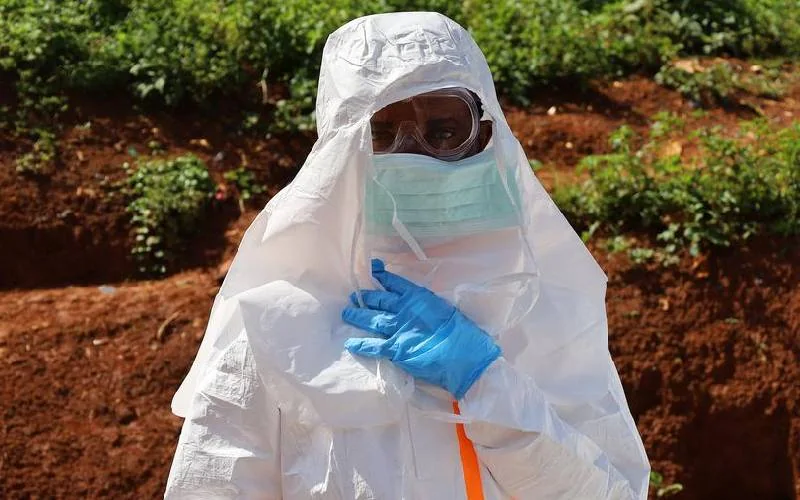
The Democratic Republic of Congo's Ebola outbreak has surpassed 9,000 confirmed infections, becoming the country's largest recorded epidemic of the disease.
According to figures released by Congo's public health institute on Tuesday, October 13, the country has recorded 9,066 confirmed infections and 4,381 deaths.
The outbreak was officially declared in May and is caused by the Bundibugyo strain of the Ebola virus.
The latest figures place the epidemic second only to the devastating West African outbreak of 2014–2016 in recorded global Ebola history.
Why this outbreak is particularly serious
The Bundibugyo strain presents major challenges for public-health authorities because there is currently no approved vaccine or specific treatment for the strain.
Medical teams rely on supportive care, early identification of infected people, infection prevention and rigorous contact tracing.
Ebola outbreaks can be especially difficult to control when infections occur across multiple geographical locations or where healthcare access is limited.
Responders must identify people who have been exposed, monitor them for symptoms and prevent further transmission.
The process becomes more complicated when infected individuals travel before their illness is recognised.
How the outbreak reached other countries
The Congo outbreak has already affected several countries.
Uganda reported 20 cases and two deaths earlier in the year before being declared Ebola-free in August.
Kenya confirmed its first imported infection in early October after a patient travelled from Congo through Uganda to Nairobi.
The patient died on October 5.
On October 14, Kenya confirmed a second infection involving a 39-year-old relative of the first patient.
The second patient was already in quarantine, and Kenyan authorities say there is no evidence of wider community spread.
What the figures mean
The reported 4,381 deaths among 9,066 confirmed cases represent approximately 48% of the reported confirmed infections.
This proportion should not be interpreted as an individual's precise risk of dying because reported case totals, case detection and clinical outcomes can change during an outbreak.
Nevertheless, the scale of mortality illustrates the seriousness of the crisis.
The outbreak also places substantial pressure on healthcare workers, laboratories and public-health surveillance systems.
Why Kenya should pay attention
Kenya is a regional transport, trade and aviation hub, with significant movement of people between East African countries.
The country's international connections create economic opportunities but also make effective cross-border health surveillance important.
The confirmation of two linked Ebola infections does not mean Kenya is experiencing uncontrolled community transmission.
It does, however, underline the need for effective screening, prompt reporting of symptoms and coordination between neighbouring health authorities.
What happens next?
Health authorities across the region are expected to continue strengthening contact tracing, laboratory testing and infection-prevention measures.
For Kenya, the priority remains monitoring known contacts and preventing additional transmission.
For Congo, the immediate challenge is bringing infections under control across affected locations while maintaining access to healthcare and other essential services.
The growing outbreak also highlights the importance of continued investment in African public-health systems, laboratory capacity and research into vaccines for less common Ebola strains.
You may also like
Category: Health
Related Video: Murkomen Says Kenya Is Safe: “Stop Creating a Crisis” | Political Goons & Security Under Scrutiny
Related Explainer: Ebola contact tracing: Why the 21-day window matters in Kenya’s response
 Facebook
 Twitter / X
 WhatsApp
 LinkedIn
 Telegram
 Reddit