
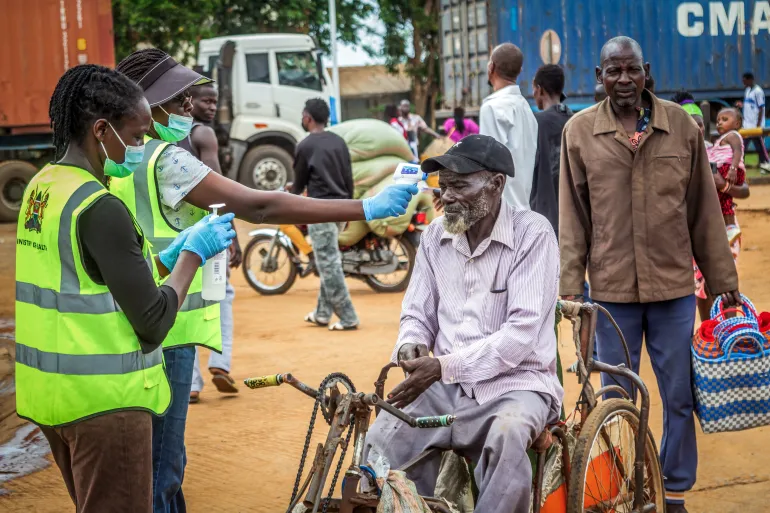
Kenya has confirmed a third case of Ebola after a 65-year-old woman tested positive for the virus, as health authorities race to trace three people who may have been exposed to the disease.
The Ministry of Health said on Friday that the woman is a close relative of the country's first two Ebola patients and had been in quarantine since October 6.
She developed fever, a sore throat and general weakness before being isolated and tested. Laboratory results from the National Virology Reference Laboratory and the Kenya Medical Research Institute (KEMRI) confirmed infection with the Bundibugyo virus, a strain that causes Ebola disease.
The woman has been transferred to an infectious disease treatment unit, where she is receiving supportive care.
Director-General for Health Dr Patrick Amoth said detecting the infection while the patient was under quarantine had allowed doctors to begin treatment early and reduced the risk of spreading the virus.
The second patient, also a relative of the first confirmed case, remains in stable condition and is responding to treatment.
Three Contacts Still Missing
The latest diagnosis brings Kenya's confirmed Ebola cases to three, including one death.
Health officials have identified 130 people who came into contact with infected patients. Of these, 127 have been traced and placed under quarantine, while efforts continue to locate the remaining three.
The ministry says there is currently no evidence of community transmission, with all confirmed infections linked to the first patient.
However, authorities have warned that additional cases could emerge among people already under observation.
The first patient, a Kenyan man who had been living in the Democratic Republic of Congo, travelled through Uganda before arriving in Nairobi on October 3.
He was admitted to Nairobi Hospital and died on October 5 after testing positive for Ebola.
His death triggered an emergency response involving contact tracing, isolation, laboratory testing and enhanced screening at border crossings and airports.
Kenya Steps Up Ebola Surveillance
The government has distributed protective equipment and infection prevention supplies to 28 high-risk counties and points of entry.
Travellers arriving from 10 high-risk countries are also subject to enhanced screening, including digital health declarations.
The outbreak comes as the Democratic Republic of Congo battles a major Ebola epidemic that has killed more than 4,000 people.
Ebola spreads through direct contact with the blood or bodily fluids of infected people who are symptomatic or have died from the disease. It is not spread through the air.
Symptoms include fever, severe weakness, muscle pain, vomiting, diarrhoea and sometimes unexplained bleeding.
Health officials have urged Kenyans to avoid contact with suspected Ebola patients and seek immediate medical attention if symptoms develop, particularly after possible exposure.
Families are also advised not to touch, wash or prepare the bodies of suspected Ebola victims. Trained teams can conduct safe and dignified burials.
Suspected cases can be reported through the Ministry of Health hotline 719 or Kenya Red Cross 1199.
Despite the latest infection, the government says there are no restrictions on travel, trade or public gatherings.
You may also like
Category: Health
Related Video: Dolly Parton’s Family Announces Her Passing in Emotional Tribute
Related Explainer: Ebola contact tracing: Why the 21-day window matters in Kenya’s response
 Facebook
 Twitter / X
 WhatsApp
 LinkedIn
 Telegram
 Reddit