
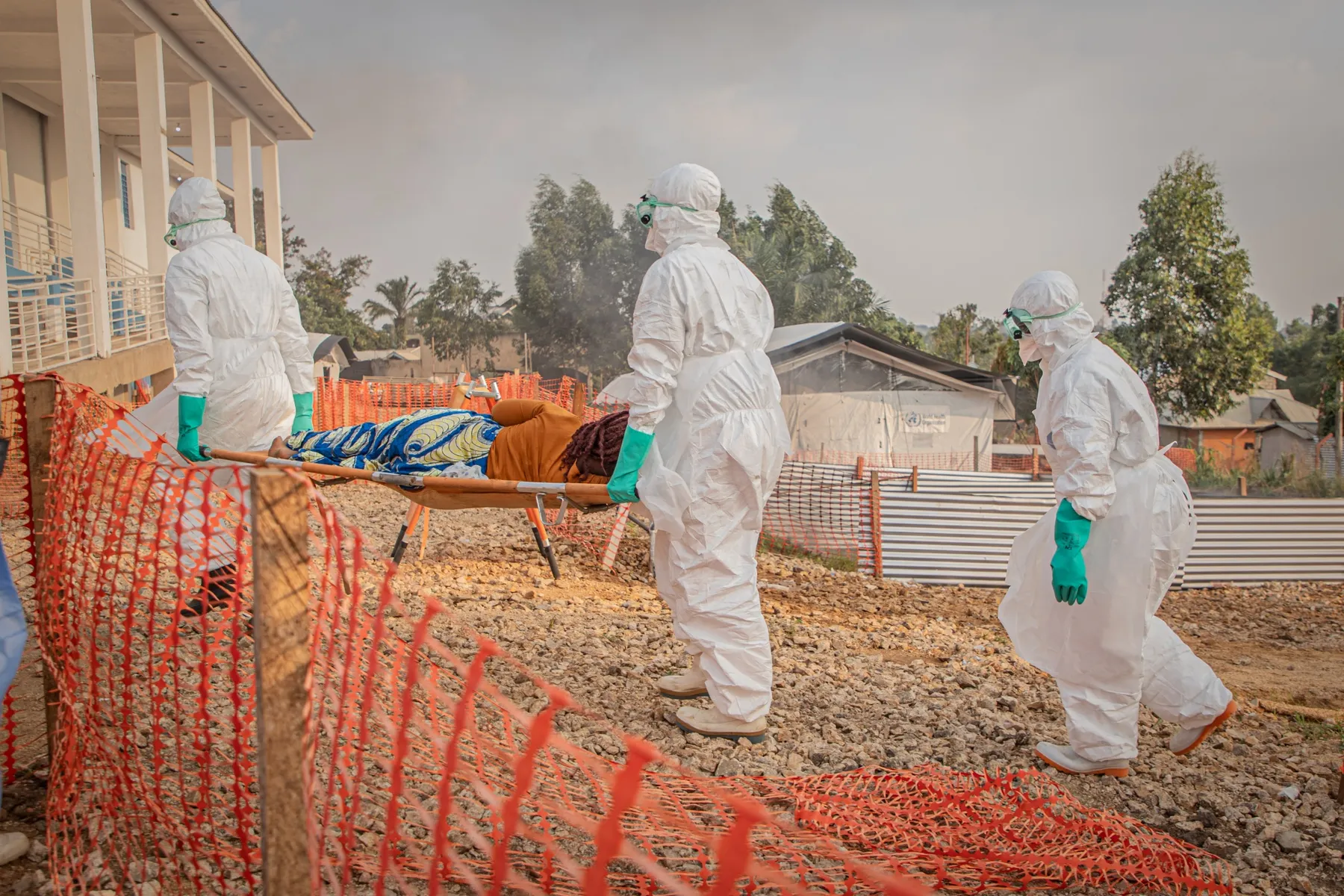
Kenya is stepping up surveillance and preparedness as the Democratic Republic of Congo (DRC) battles its largest Ebola outbreak on record, with the disease spreading across multiple provinces and cases previously detected in neighbouring Uganda.
Kenya has no confirmed Ebola cases, according to the Ministry of Health's latest publicly available update. The country has nevertheless increased preparedness, particularly at border points and other locations where travellers from affected areas may enter Kenya.
The development matters for Kenya because the current outbreak involves Bundibugyo virus, a relatively rare Ebola species for which there is currently no approved vaccine or specific treatment. The outbreak was declared in the DRC in May and has continued to expand despite containment efforts.
The outbreak is getting bigger
The scale of the DRC outbreak has changed significantly since it was first declared.
According to the World Health Organization's latest detailed situation report, 4,665 confirmed cases and 2,184 deaths had been reported in the DRC as of August 12. Cases had been detected in 54 health zones across six provinces.
The WHO says the outbreak has now surpassed the 2018–2020 Ebola outbreak in the DRC, which recorded 3,317 cases, making the current outbreak the largest Ebola outbreak ever documented in the country.
More recent reporting indicates the situation has continued to deteriorate. Reuters reported on August 19 that official DRC data had passed 5,000 confirmed cases and 2,378 deaths.
The figures are not directly comparable with every WHO update because the reporting dates and data reconciliation periods differ. What is clear is that the outbreak continues to expand rapidly.
Why Kenya is watching the border
Kenya's greatest concern is not that Ebola is currently circulating in the country—it is that infected people could cross borders before symptoms become apparent.
Kenya shares a major transport and trade corridor with Uganda, while people and goods regularly move between East and Central Africa.
The Ministry of Health has therefore increased surveillance at border points.
In June, the ministry said Kenya remained free of Ebola and that 59 suspected cases tested in the country had all returned negative results.
Kenya's preparedness measures include enhanced surveillance, screening and coordination among health authorities and partners.
This is particularly important because the WHO has assessed the risk as very high within the DRC and high for Uganda and countries sharing land borders with countries where Bundibugyo virus has been detected. The risk to other African countries was assessed as lower.
Kenya has already screened hundreds of thousands of travellers
Kenya's preparedness has also been scaled up as the regional outbreak has evolved.
The Ministry of Health recently reported that the country's Ebola preparedness level had reached 81 per cent, while more than 450,000 travellers had been screened.
That figure is important because it shows that Kenya's response is already operating beyond contingency planning.
But preparedness is not the same as having eliminated the risk.
The effectiveness of the response will depend on whether health authorities can identify suspected cases quickly, isolate them, trace contacts and prevent onward transmission if an infected traveller enters the country.
What makes this outbreak different?
The virus responsible for the current outbreak is Bundibugyo virus, rather than the Zaire ebolavirus that caused several of the best-known Ebola outbreaks.
That distinction is important.
The WHO says there is currently no approved vaccine or specific treatment for Bundibugyo virus disease. Researchers are testing possible candidates, but the tools used in previous Ebola outbreaks cannot simply be assumed to provide the same level of protection against this virus.
The outbreak has therefore created an additional challenge for health authorities: containing transmission while medical researchers work to establish which interventions are effective against this particular virus.
A vaccine is being prepared—but it is not yet a solution
The DRC is preparing to receive doses of Ervebo, a vaccine that has been used against Zaire ebolavirus in previous outbreaks.
However, Ervebo is not licensed for Bundibugyo virus.
The WHO and its partners have planned the use of doses partly in clinical trials and partly among frontline health workers, while researchers assess whether the vaccine can offer protection against the current strain.
That means Kenya cannot rely on vaccination as its primary defence against an imported case.
For now, surveillance, rapid diagnosis, isolation and contact tracing remain central to preparedness.
What should travellers from Kenya know?
The current situation does not mean Kenyans should avoid normal travel or assume that Ebola is circulating in Kenya.
Instead, people travelling to affected areas need to follow official health advice and pay attention to symptoms after returning.
The CDC advises travellers returning from Ebola-affected areas to monitor themselves for symptoms and seek medical advice if they become ill, while informing healthcare providers about their travel history.
The symptoms associated with Ebola can include fever, weakness, muscle pain, headache and sore throat, followed in some cases by vomiting, diarrhoea, rash and other serious symptoms.
However, those symptoms can also occur with many other illnesses.
A person having a fever after travelling does not automatically mean they have Ebola.
The important issue is informing healthcare workers about recent travel to an affected area so that appropriate precautions can be taken.
Kenya's next test is speed
The most important question for Kenya is no longer simply whether the country has enough emergency plans on paper.
It is whether those plans can work quickly if a suspected case arrives.
That means the next stage of Kenya's response will be measured by several things:
- how effectively travellers are screened at high-risk entry points;
- how quickly suspected cases can be tested;
- whether isolation facilities are ready;
- how quickly contacts can be identified and monitored;
- whether health workers have adequate protective equipment; and
- how effectively authorities communicate with communities without creating unnecessary panic.
Kenya has already reported progress in preparedness, but the continued expansion of the DRC outbreak means the country cannot afford to treat preparedness as a one-time exercise.
The regional picture is changing
Uganda provides an important lesson.
The country previously recorded confirmed Bundibugyo cases linked to the DRC outbreak, but authorities subsequently declared its outbreak over after sustained control efforts.
That experience demonstrates that rapid surveillance and community cooperation can stop transmission.
The DRC, however, is facing a much more difficult situation, with cases spreading across six provinces, insecurity in some affected areas and challenges in tracing contacts and reaching remote communities.
For Kenya, the regional experience reinforces the importance of catching any imported case early.
What happens next?
The immediate focus is on containment in the DRC and maintaining Kenya's surveillance system.
The WHO continues to monitor the outbreak, while the DRC and its international partners are expanding testing, treatment, surveillance and research.
For Kenyans, the key fact remains unchanged:
There is no confirmed Ebola outbreak in Kenya at present.
But with the DRC outbreak now the country's largest ever and the disease having demonstrated its ability to cross borders, Kenya's preparedness measures are likely to remain under close scrutiny.
The real test will come if a suspected case reaches Kenya—and whether the health system can identify and contain it before it becomes a chain of transmission.
You may also like
Category: Health
Related Video: What Dangote’s proposed Lamu oil refinery could mean for East Africa
Related Explainer: Ebola contact tracing: Why the 21-day window matters in Kenya’s response
 Facebook
 Twitter / X
 WhatsApp
 LinkedIn
 Telegram
 Reddit