
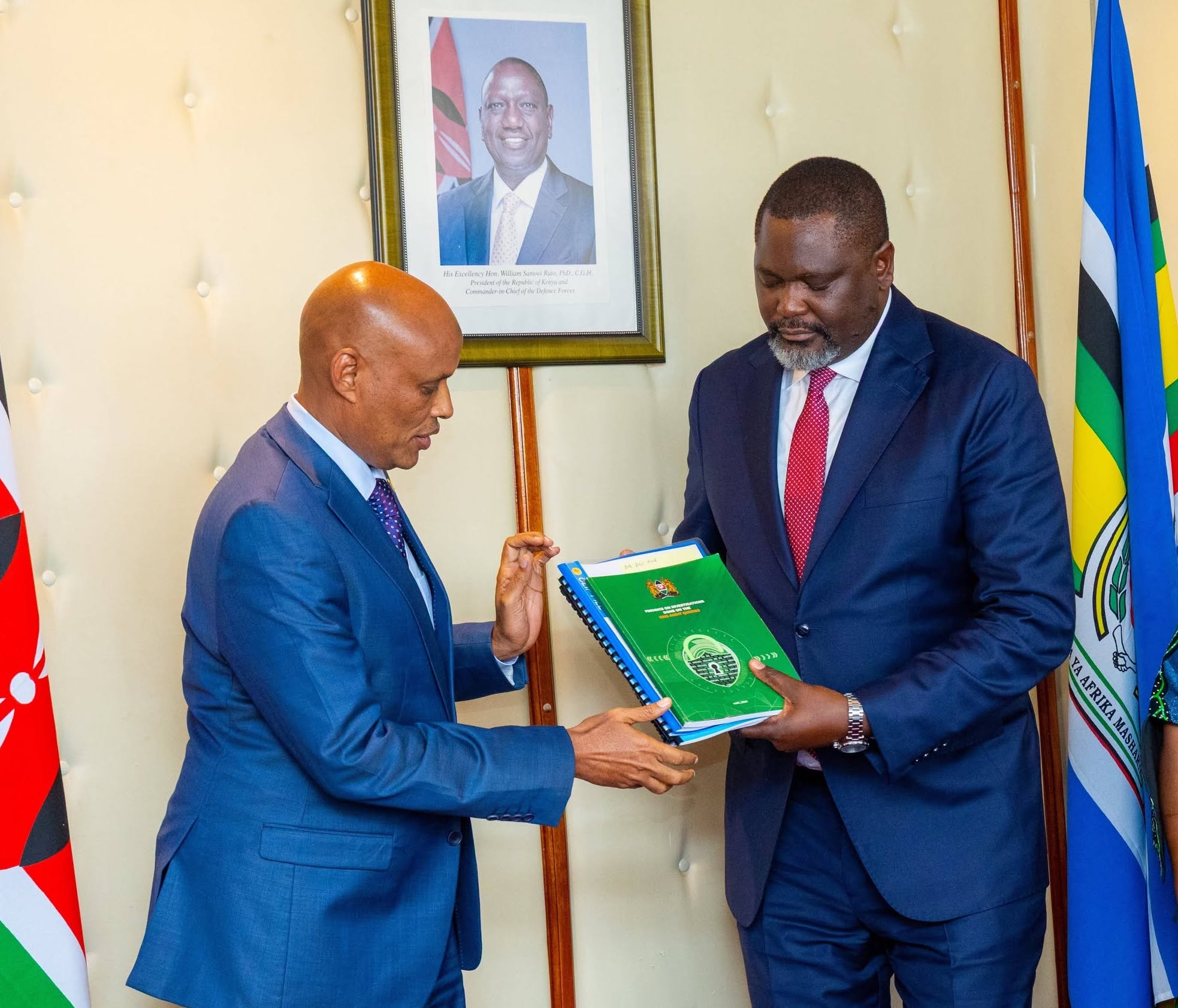
Kenya's investigation into suspected payroll irregularities worth Sh6.2 billion has raised a wider question about public financial management: why do government payment systems remain vulnerable to manipulation despite years of digitisation?
Eighty-four human resource officers have been directed to step aside while investigators examine suspicious payroll transactions.
The affected institutions include the Kenya Police Service, Kenya Prisons Service and departments within the Ministry of Health.
The investigation is ongoing, and the officers have not been found guilty of wrongdoing.
But the case highlights the importance of examining the systems that authorise, process and audit government payments.
Digitisation does not automatically prevent fraud
Electronic payroll systems are intended to improve efficiency, accuracy and accountability.
They can reduce manual paperwork, maintain transaction records and make it easier to identify unusual payments.
However, digital systems remain vulnerable when users have excessive access privileges or when approval procedures are weak.
A payment processed electronically is not necessarily legitimate.
Its integrity depends on whether the recipient is authorised, the amount is correct and the transaction has passed independent checks.
If the same officials can create records, approve payments and alter beneficiary details, opportunities for abuse may arise.
The investigation will need to establish whether such weaknesses existed in the affected departments.
Who checks government payrolls?
Payroll administration involves several layers of responsibility.
Human resource departments maintain employee records, while finance and accounting teams manage payments and expenditure controls.
Internal auditors are expected to identify weaknesses and examine suspicious transactions.
External oversight institutions, including the Office of the Auditor-General, provide additional scrutiny.
Effective controls require these functions to operate independently.
The challenge is ensuring that suspicious payments are detected before large sums have been transferred.
What investigators must establish
The Directorate of Criminal Investigations will need to determine how the questioned transactions entered the payroll system.
Investigators must also establish whether employee records were genuine, whether payments were authorised and who controlled the accounts receiving funds.
Digital audit trails can help reconstruct transactions, but their reliability depends on how securely the records were maintained.
The investigation may reveal individual wrongdoing, institutional weaknesses or a combination of both.
Those findings should determine the appropriate criminal and administrative responses.
Can government recover the money?
Where investigators establish that public funds were unlawfully obtained, recovery proceedings may be possible.
But recovery depends on identifying recipients, tracing transactions and establishing the legal basis for reclaiming payments.
The full amount under investigation should not be treated as proven theft.
Some transactions may ultimately be explained, while others could lead to disciplinary action or prosecution.
What reforms would matter?
Government institutions should maintain strict separation between payroll preparation, approval and payment.
Access rights should be reviewed regularly, with additional safeguards for changes to employee banking details.
Automated systems can flag unusual payments, duplicate records and unexpected changes in allowances.
Independent audits should also test whether the controls operate effectively.
Most importantly, identified weaknesses must lead to corrective action rather than remain findings in audit reports.
The Sh6.2 billion investigation will test whether Kenya can move beyond suspending individual officers to strengthening the systems that protect public revenue.
For taxpayers, the measure of success will be not only whether wrongdoing is punished, but whether similar transactions become harder to conceal.
Category: Business
Related Video: What Dangote’s proposed Lamu oil refinery could mean for East Africa
 Facebook
 Twitter / X
 WhatsApp
 LinkedIn
 Telegram
 Reddit