
Kenya's Ebola outbreak has exposed a challenge that no East African country can solve alone: preventing infectious diseases from crossing borders while keeping people and goods moving.
Tanzania has introduced additional health screening and surveillance requirements following confirmed Ebola infections in Kenya.
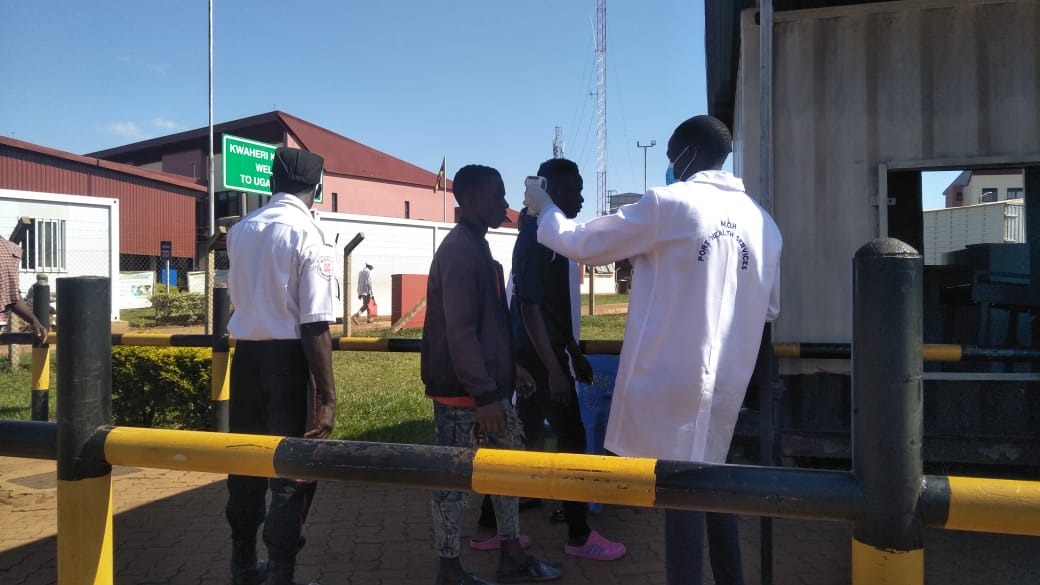
The measures include health declarations, temperature checks and monitoring of travellers considered at high risk of exposure.
They reflect growing concern about the movement of people across a region connected by busy highways, airports and informal border crossings.
But the longer-term question is whether East African countries have sufficiently coordinated systems to identify infectious travellers before they expose others.
A journey that illustrates the challenge
Kenya's first confirmed Ebola patient had travelled from the Democratic Republic of Congo through Uganda before arriving in Nairobi.
The journey involved movement across international borders and different transport systems.
The case demonstrates how a person exposed to a dangerous infection can travel considerable distances before a diagnosis is confirmed.
Screening at airports and border crossings is important, but it cannot detect every infected traveller.
Ebola symptoms may take up to 21 days to develop.
Someone who has been infected but remains asymptomatic may pass through temperature screening without triggering an alert.
That makes communication between national health authorities essential.
The problem with fragmented surveillance
East African countries operate different health information systems, reporting procedures and emergency response structures.
When a suspected case crosses a border, officials need to share accurate information quickly.
Delays can complicate contact tracing, particularly when travellers use several vehicles or cross multiple borders.
A coordinated system should enable authorities to identify potential exposures, alert neighbouring countries and monitor contacts without unnecessarily restricting movement.
Regional cooperation is also necessary to prevent duplication and conflicting public-health instructions.
What about informal border crossings?
Official border posts are only part of East Africa's transport network.
Communities living along national boundaries frequently cross for trade, farming, education and family activities.
Some crossings take place away from formal immigration facilities.
These movements can make conventional screening less effective.
Community health workers, local leaders and cross-border surveillance teams therefore have important roles in identifying suspected infections.
Public cooperation depends on trust.
If travellers fear punishment, stigma or unnecessary restrictions, they may be less willing to disclose symptoms or exposure histories.
The economic stakes
Kenya, Uganda and Tanzania are major trading partners.
Their transport corridors support the movement of agricultural products, manufactured goods, fuel and other essential supplies.
Disruptions at border crossings can increase costs for traders and consumers.
Health measures must therefore be proportionate to the actual risk and supported by reliable evidence.
Enhanced screening is different from a blanket travel ban.
The aim should be to detect and manage possible infections while allowing safe travel to continue.
What should happen next?
East African governments need to strengthen shared surveillance protocols, emergency communication and contact-tracing cooperation.
They should also conduct joint outbreak simulations and ensure that border facilities have trained staff and reliable referral arrangements.
For travellers, the most important requirements are accurate health declarations and prompt reporting of symptoms after known exposure.
The Ebola outbreak will eventually be brought under control.
But its lasting lesson may concern whether East Africa can build a coordinated disease-surveillance system capable of responding to the next cross-border health emergency.
Category: Health
Related Video: What Dangote’s proposed Lamu oil refinery could mean for East Africa
Related Explainer: Ebola contact tracing: Why the 21-day window matters in Kenya’s response
 Facebook
 Twitter / X
 WhatsApp
 LinkedIn
 Telegram
 Reddit