
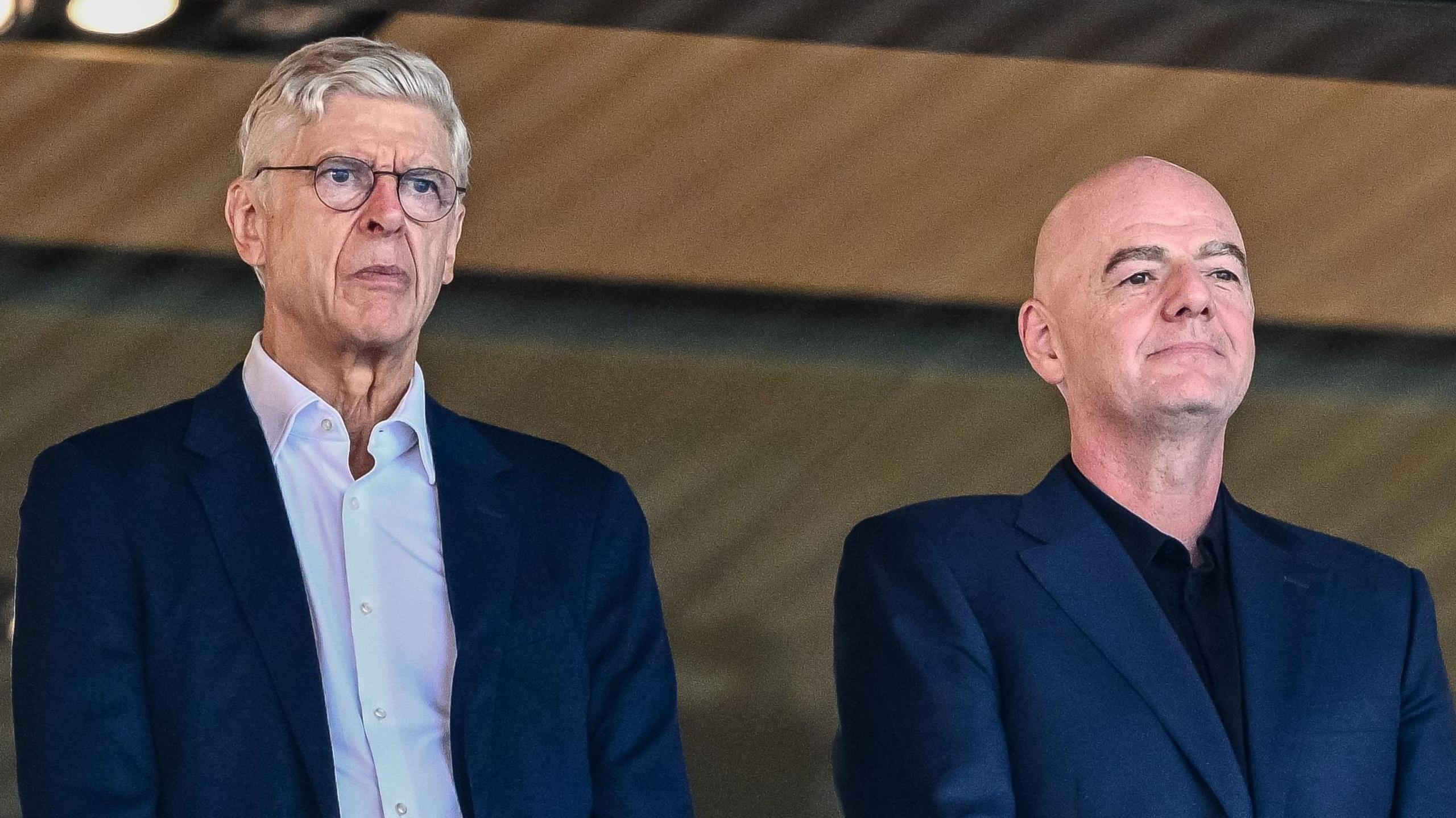
Former Arsenal manager Arsène Wenger is emerging as a possible challenger to Gianni Infantino in FIFA’s 2027 presidential election, but the Frenchman has yet to indicate that he is willing to take on his boss.
Senior European football figures have reportedly encouraged Wenger to enter the race, hoping his standing in the game could help unite opposition to Infantino after a series of controversies at football’s world governing body.
However, the idea remains speculative. Wenger has not announced a candidacy, and there is no public confirmation that he is preparing a campaign.
The debate comes as Infantino faces renewed scrutiny over a failed plan to bring private investors into FIFA’s commercial operations. Leaders from Europe, Asia and North America have questioned his leadership, while supporters in other regions continue to back him.
Infantino is seeking a fourth term in an election scheduled for March 2027. With the nomination deadline approaching, the central question for his critics is whether they can agree on a credible alternative.
Why Wenger’s name has entered the race
Wenger, 76, has a profile that few football administrators can match. He managed Arsenal for 22 years, winning three Premier League titles and seven FA Cups before leaving the club in 2018.
He joined FIFA in 2019 as chief of global football development, a role that has taken him beyond Europe and into discussions about youth development, coaching and the future of the game.
Supporters believe that experience could help him appeal to national associations that want changes at FIFA without backing a candidate seen as representing only European interests.
His time in Japan, his work on football development and his longstanding advocacy for giving more countries opportunities on the world stage could help him build support across different regions.
But the qualities that make Wenger attractive to some critics of Infantino do not automatically make him a presidential candidate. He would have to decide whether to leave his current role, build a campaign and persuade national associations to support him.
There has been no public indication that he has made that decision.
FIFA crisis puts Infantino under pressure
The push for a potential challenger follows the collapse of FIFA Forward Enterprise, a proposal that would have brought private investment into a new commercial structure involving FIFA competitions.
Infantino had argued that the scheme could generate more money for football development. But the proposal faced criticism over consultation, transparency and the possible involvement of outside investors in a business built around major football events.
The backlash has prompted calls for greater scrutiny of FIFA’s finances and decision-making. UEFA and CONCACAF leaders have also pressed for an independent review of FIFA’s financial reserves and how development funding is distributed.
Wenger distanced himself from the abandoned plan, saying he had not been involved in developing it and had learnt about it through media reports.
His position fuelled questions about how much influence he has within FIFA’s senior leadership. It also raised a dilemma for anyone hoping he might run against Infantino: would he be prepared to challenge the president who appointed him?
For now, there is no evidence that Wenger intends to turn his distance from the project into a presidential campaign.
More money for football development
Infantino is also expected to use FIFA’s financial strength to make the case for his continued leadership.
At its October 15 meeting in Zurich, the FIFA Council is due to consider a proposal to increase development funding by $3.4 billion for the 2027–2030 cycle. If approved, the additional money would substantially increase the resources available to FIFA’s 211 member associations and other football bodies.
The proposal comes after criticism of the abandoned private-investment scheme and calls for FIFA to make greater use of its own reserves.
For national associations, the funding debate is important. Additional money could support pitches, youth programmes, women’s football and other development priorities. But critics argue that decisions on spending must be accompanied by clear safeguards and transparent oversight.
That creates a political challenge for Infantino. He must defend the organisation’s approach to governance while persuading member associations that his leadership can deliver tangible benefits to their football programmes. The proposed increase in funding is not yet a completed distribution; it remains subject to the relevant approval process.
The numbers may favour Infantino
Even with criticism from several powerful football leaders, Infantino remains difficult to dislodge.
He has cultivated support among national associations in Africa, South America and Oceania. African football, in particular, has been an important part of his political base. All 54 African member associations have backed his re-election, according to recent reporting, strengthening his position ahead of the vote.
A challenger would need more than a famous name. They would need to build a coalition across FIFA’s membership, which includes countries with very different priorities and levels of football development.
Wenger’s supporters may believe that his reputation and experience could bridge some of those divides. But his lack of a declared bid means there is no evidence yet of a campaign capable of challenging Infantino’s support.
Former Tottenham defender Ramon Vega has already declared his intention to run. However, he has yet to establish himself as a serious threat to the incumbent, while other prominent football figures have been reluctant to enter the contest.
What Wenger would need to do
The nomination deadline is November 18, 2026. A candidate must be nominated by at least five FIFA member associations to enter the presidential election.
That leaves limited time for Wenger to make a decision, should he be interested. A successful bid would also require him to persuade football leaders that he offers more than a change of personality at the top.
His record at Arsenal gives him global recognition, while his FIFA role gives him experience of the organisation he would seek to lead. Yet critics may question whether a respected coach and development official has the political relationships needed to manage FIFA’s competing regional interests.
Wenger has also promoted ideas that have divided opinion, including proposals for a biennial men’s World Cup and changes to the offside law. His football expertise is widely recognised, but a presidential campaign would test his ability to build consensus on issues extending well beyond the pitch.
For now, Wenger remains a name being discussed by people who want an alternative to Infantino, not a confirmed candidate.
The coming weeks will show whether that support develops into a serious challenge or remains an intriguing possibility in a contest the incumbent is still well placed to win.
You may also like
Category: Sports
Related Video: What Dangote’s proposed Lamu oil refinery could mean for East Africa
Related Explainer: Explainer: Why Kenya is moving hospitals to HMIS and what it means for SHA patients
About the Author
Maureen Onyango is a journalist passionate about storytelling, life coaching and spiritual lessons. She studied at the Kenya Institute of Management and enjoys telling stories that inform, inspire and empower communities.
 Facebook
 Twitter / X
 WhatsApp
 LinkedIn
 Telegram
 Reddit