
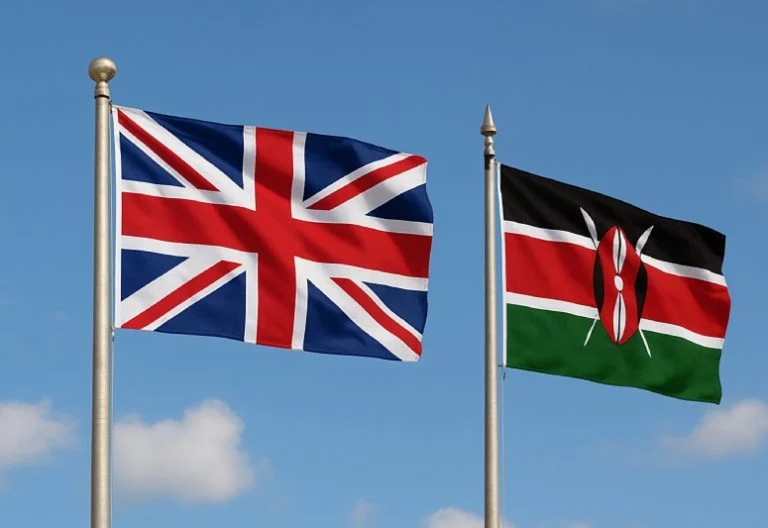
The United Kingdom has updated its travel advice for Kenya after the country confirmed its first imported case of Bundibugyo virus disease, a form of Ebola.
But the update does not amount to a blanket UK warning against travelling to Kenya.
Instead, the Foreign, Commonwealth and Development Office (FCDO) has added information about the Ebola case to its Kenya travel advice. It tells British travellers to follow instructions from Kenyan health authorities and monitor developments.
The advisory also warns that people arriving in Kenya, particularly from Uganda, Ethiopia and the Democratic Republic of Congo (DRC), could face enhanced health screening because of the regional Ebola situation.
The distinction matters because the FCDO already advises against travel to some parts of Kenya for security reasons, including areas near the Somalia border and parts of the northern coast. Those restrictions are separate from the new Ebola guidance.
Kenya says it has an imported case, not an outbreak
Kenya confirmed its first Bundibugyo virus disease case on October 6.
The patient was a Kenyan national who had been living in the DRC, where he became ill and sought treatment at several health facilities.
He travelled by road to Kampala through Beni on October 2 before flying to Nairobi on October 3.
After arriving in Nairobi, he was taken to hospital and isolated. Samples tested positive for Bundibugyo virus at both the National Virology Reference Laboratory and the Kenya Medical Research Institute.
He died on the night of October 5 and was buried the following day under Kenya's safe and dignified burial procedures, according to the World Health Organisation.
Health Cabinet Secretary Aden Duale has repeatedly urged Kenyans not to panic.
The Ministry of Health says the country is not experiencing an Ebola outbreak and describes the case as imported from the DRC.
57 people now linked to the case
Kenyan health officials have expanded the contact-tracing operation following the patient's death.
The Ministry of Health said on October 7 that 57 contacts had been identified.
Ten had been accounted for and placed under quarantine, while efforts continued to locate and follow up the others.
The earlier breakdown included 28 identified contacts, among them family members and healthcare workers who attended to the patient.
Officials were also tracing 23 passengers and four crew members from the flight the patient took to Nairobi. These figures form part of the wider contact-tracing operation and should not automatically be added together as 55 separate people.
Kenya steps up screening
The case has put renewed attention on how travellers move across East Africa.
Kenya had already strengthened Ebola preparedness because of the outbreak in the DRC and Uganda.
By October 6, more than 652,000 travellers had been screened at points of entry, while 267 suspected samples had been tested. About 5,000 healthcare workers had also received training on Ebola prevention and case management, according to WHO.
The government has since tightened surveillance at high-risk entry points and strengthened arrangements for isolation and follow-up.
The Ministry of Health says five facilities have been designated to manage suspected and confirmed cases. They include Kenyatta National Hospital, Moi Teaching and Referral Hospital, National Police Service Hospital, Port Reitz Hospital and Nairobi Hospital. Together, the facilities have more than 240 isolation beds, according to the ministry.
WHO does not recommend travel restrictions
Despite the new UK guidance, the WHO position is more cautious on travel restrictions.
The UN health agency said it does not recommend restrictions on travel to or trade with Kenya based on the information currently available.
WHO Regional Director for Africa Dr Mohamed Janabi said Kenya's preparedness measures had given the country a head start, but stressed the need to identify any further cases quickly.
“The priority now is to move swiftly to detect any further cases before the virus has an opportunity to spread,” Janabi said.
That approach reflects the nature of the current situation.
Kenya has one confirmed imported case. The immediate public health priority is to identify people who may have been exposed, monitor them and isolate anyone who develops symptoms.
Why the UK advice matters
For travellers, the most immediate change is likely to be at points of entry.
People arriving in Kenya from countries affected by the regional Ebola situation may face additional health screening.
The FCDO has asked British nationals to follow instructions from Kenyan authorities rather than suggesting that travel to Kenya as a whole should be avoided.
The United States has also issued a health alert following Kenya's confirmation of the case, urging Americans who believe they may have been exposed to monitor their health and seek medical guidance if symptoms develop.
For Kenya, the challenge now is twofold: stopping any possible onward transmission while keeping public information accurate enough to prevent fear from outrunning the actual risk.
The country's health authorities say preparedness measures are already in place.
For now, the focus remains on contact tracing, surveillance and early detection rather than a nationwide travel shutdown.
You may also like
Category: News
Related Video: What Dangote’s proposed Lamu oil refinery could mean for East Africa
Related Explainer: Ebola contact tracing: Why the 21-day window matters in Kenya’s response
About the Author
Maureen Onyango is a journalist passionate about storytelling, life coaching and spiritual lessons. She studied at the Kenya Institute of Management and enjoys telling stories that inform, inspire and empower communities.
 Facebook
 Twitter / X
 WhatsApp
 LinkedIn
 Telegram
 Reddit