
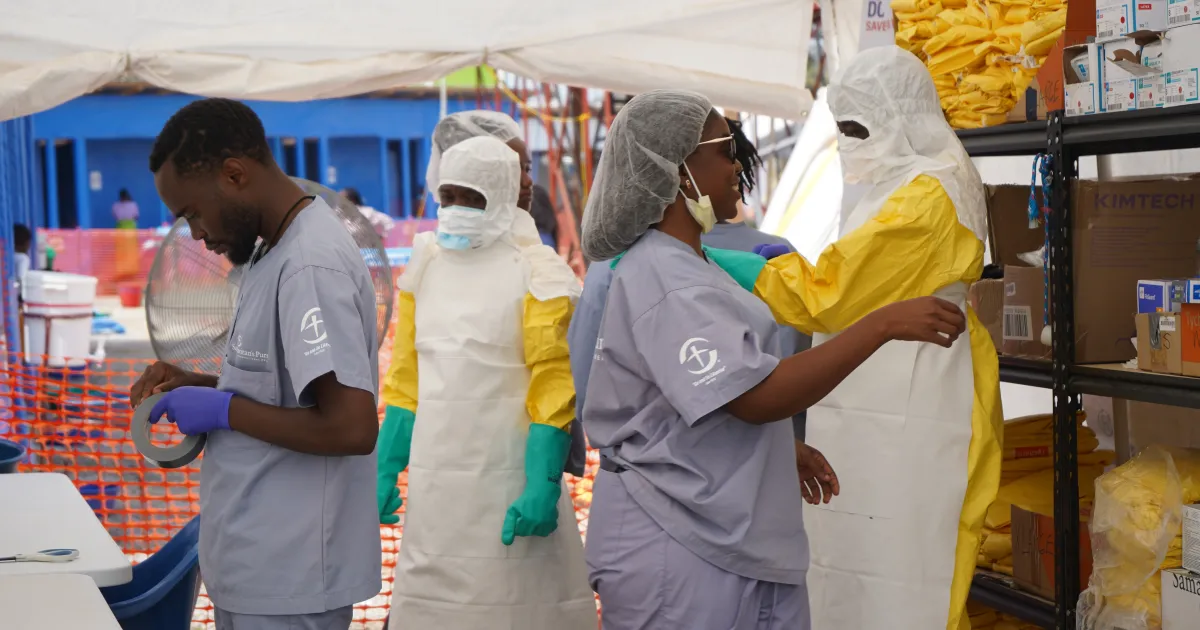
Kenya’s Ebola case count has risen to eight, prompting renewed warnings from health officials that the disease can initially resemble malaria and other common illnesses.
The latest case involves a 49-year-old hospital patient attendant who tested positive while in quarantine after being identified as a contact of the country’s first patient, according to Health Director-General Patrick Amoth.
The man developed a fever, headache and muscle pain. Amoth said he was likely exposed to the first patient, who had travelled from the Democratic Republic of Congo (DRC) through Uganda before dying in a Nairobi hospital on October 5.
The Ministry of Health is urging anyone who feels unwell, particularly people who may have been exposed to Ebola, to seek medical advice promptly rather than assume the symptoms are caused by malaria.
The warning comes as health teams continue monitoring people who may have come into contact with confirmed cases.
Why Ebola can be mistaken for malaria
The World Health Organization (WHO) says Ebola symptoms can be difficult to distinguish from those of illnesses such as malaria, typhoid and meningitis during the early stages.
Symptoms usually begin suddenly and may include:
-
Fever
-
Unusual tiredness or weakness
-
Muscle pain
-
Headache
-
Sore throat
As the illness progresses, patients may develop vomiting, diarrhoea, abdominal pain and impaired kidney or liver function. Bleeding can occur, but it is not present in every case.
The time between infection and the onset of symptoms ranges from two to 21 days, according to WHO.
This overlap with other illnesses makes proper medical assessment important. Having a fever or headache does not, on its own, mean someone has Ebola. Testing is needed to confirm the infection.
People who develop compatible symptoms after contact with a confirmed or suspected case, or after travelling from an affected area, should seek medical care immediately and tell health workers about their possible exposure.
Eighth case linked to the first patient
The latest infection brings Kenya’s reported total to eight since the first case was identified this month.
The initial patient was a Kenyan man who had travelled from the DRC via Uganda. He died in Nairobi on October 5, prompting contact tracing among relatives, health workers and others who may have been exposed.
The Associated Press reported that authorities had identified 130 contacts, with 128 remaining in quarantine as of Sunday. The latest patient was already being monitored when he developed symptoms and tested positive.
Three close relatives of the first patient and three health workers were among the other people reported to have tested positive.
The cases have raised concerns about possible transmission in healthcare settings, where staff may come into contact with infected bodily fluids or contaminated materials while caring for patients.
How Ebola spreads — and how to respond
Ebola spreads through direct contact with the blood or other bodily fluids of an infected person, or with contaminated items such as bedding and clothing. People do not transmit the virus before symptoms begin, according to WHO.
The risk is not the same as catching a respiratory infection simply by sharing air in an ordinary setting. However, direct contact with infected fluids or contaminated materials can lead to infection, making careful infection prevention essential.
Health officials are urging the public to avoid contact with bodily fluids from anyone who may be infected and to follow instructions from medical teams.
Kenya has stepped up surveillance and screening as the outbreak in neighbouring DRC continues to spread. The WHO has reported that the current outbreak involves the Bundibugyo virus, a type of Ebola virus for which there is no approved vaccine or specific treatment. Supportive medical care remains important for patients.
For members of the public, the priority is to report possible exposure, seek medical assessment when advised and rely on official health updates rather than unverified messages circulating online.
What Kenyans should do
Anyone who has had close contact with a confirmed or suspected Ebola patient and develops symptoms should seek urgent medical advice and explain the possible exposure to healthcare staff.
Do not attempt to diagnose the illness at home or delay care because the symptoms resemble malaria. At the same time, avoid assuming that every fever is Ebola, as several common illnesses can cause similar symptoms.
Kenya’s national public health surveillance platform lists 719 as a free health support line. People should follow the Ministry of Health’s current guidance when seeking advice about possible exposure.
With eight confirmed cases reported, the effectiveness of contact tracing, safe care and timely reporting will be important in containing further spread.
You may also like
Category: Health
Related Video: Gachagua’s explosive Ruto scorecard: Debt, taxes, State capture and a government ‘that has failed’
Related Explainer: Ebola contact tracing: Why the 21-day window matters in Kenya’s response
About the Author
Maureen Onyango is a journalist passionate about storytelling, life coaching and spiritual lessons. She studied at the Kenya Institute of Management and enjoys telling stories that inform, inspire and empower communities.
 Facebook
 Twitter / X
 WhatsApp
 LinkedIn
 Telegram
 Reddit