
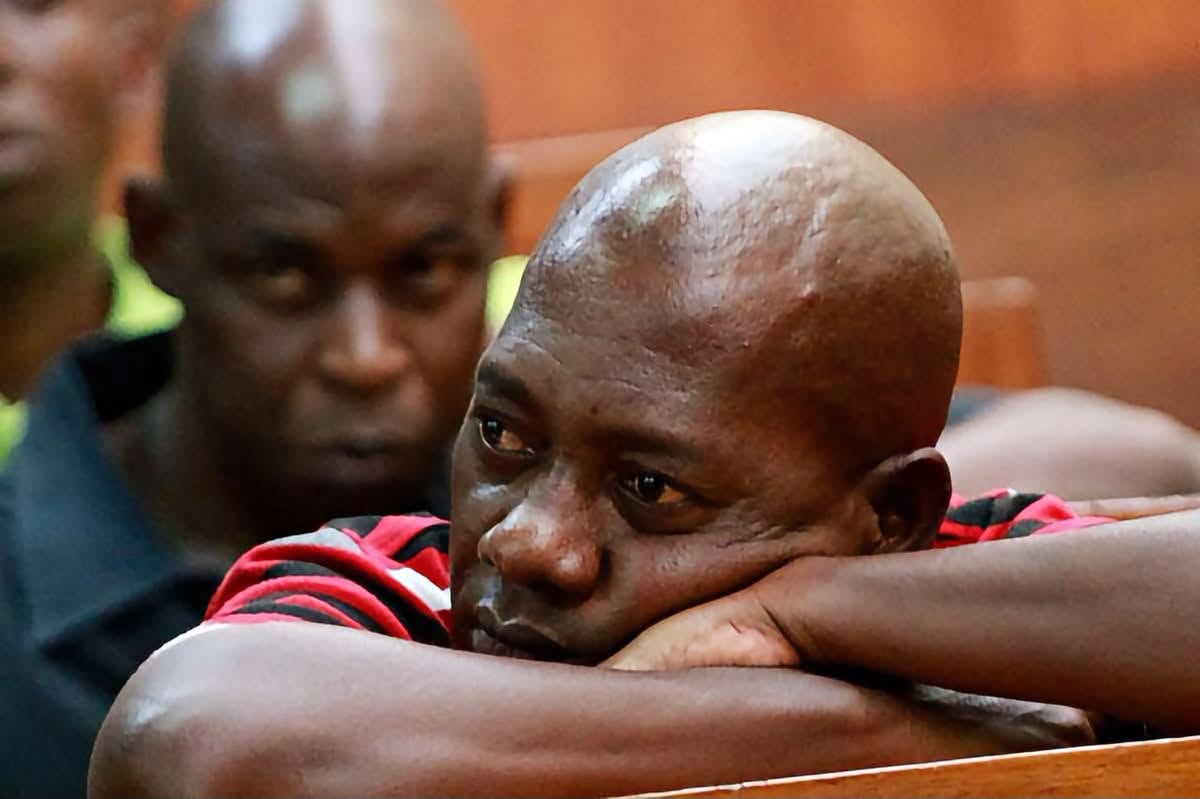
He called himself a messenger of God, built a religious following and preached about the end of the world. Now, as a Kenyan judge delivers a landmark judgment over the deaths of 191 people, the extraordinary story of Paul Nthenge Mackenzie raises disturbing questions about religious extremism, institutional failures and the vulnerability of his followers.


MOMBASA, Kenya, 19 October 2026 — For years, Paul Nthenge Mackenzie presented himself as a man entrusted with a divine message.
To his followers, he was a spiritual guide who claimed to understand the approaching end of the world. To investigators and prosecutors, he became the central figure in one of Kenya's most devastating alleged cases of religiously motivated mass killing.
On Monday, Mackenzie returned to the centre of national attention as High Court Judge Diana Kavedza-Mochache began delivering a judgment running to approximately 1,000 pages in a murder trial arising from the discovery of mass graves in Shakahola Forest, Kilifi County.
Mackenzie and 30 co-accused face 191 murder counts in the proceedings, which have involved testimony from survivors, relatives, investigators and forensic experts.
The court convened at the Mombasa Law Courts, where a temporary courtroom was erected to accommodate the extraordinary public interest. Director of Public Prosecutions Renson Ingonga attended the proceedings.
At the time of the latest verified reports, the judge was still reading her decision. No final verdict or sentence in this murder trial had been independently confirmed.
The case is not merely the story of a controversial preacher. It is also an examination of how religious authority, isolation, apocalyptic teachings and failures of oversight allegedly combined in a catastrophe that claimed hundreds of lives.
Who is Paul Nthenge Mackenzie?
Long before Shakahola became internationally associated with mass graves, Mackenzie led a comparatively ordinary life on Kenya's coast.
According to a Kenyan parliamentary investigation, he was born in 1976 in Lunga Lunga, Kwale County.
He worked as a taxi driver in Malindi between 1995 and 2011, before becoming widely known for his religious activities.
His religious journey took him through several Christian denominations. The parliamentary report records that he was initially associated with the Catholic Church, later joined the African Brotherhood Church and subsequently moved to Ushindi Baptist Church.
After disagreements with church leadership, Mackenzie began developing his own ministry.
In 2003, he established Good News International Ministries, which operated informally for several years before obtaining registration in September 2010.
His rise illustrates how an independent religious movement can develop around a charismatic individual without the organisational structures or accountability mechanisms found in some established denominations.
Over time, Mackenzie's teachings became increasingly associated with warnings about the end of the world, hostility towards secular institutions and claims that conventional education and modern medicine were spiritually dangerous.
Those beliefs would later become central to the prosecution's case.
The preacher who turned against schools and hospitals
One of the most consequential aspects of Mackenzie's ministry was his reported opposition to mainstream education.
Investigations and witness accounts described teachings that discouraged followers from sending their children to school, portraying formal education as incompatible with his religious worldview.
Modern medicine and government institutions also became targets of his preaching.
According to reporting from Monday's judgment proceedings, Justice Kavedza-Mochache discussed evidence that Mackenzie portrayed state institutions as satanic and encouraged followers to reject established social systems.
The court heard how followers were allegedly persuaded to withdraw children from school and avoid medical treatment.
The judge also examined Mackenzie's rejection of democracy, including testimony about his attempts to associate the term with demonic influence.
Such teachings matter because they can gradually separate followers from sources of independent information, education and assistance.
For a family that stops sending children to school, avoids hospitals and increasingly distrusts government institutions, the consequences extend beyond religious belief.
Children lose access to education. Illnesses may go untreated. Families can become more dependent on the religious leader for guidance about nearly every aspect of their lives.
However, holding unconventional religious beliefs is not itself proof of criminal conduct. The central legal question is whether the prosecution established that Mackenzie and his co-accused committed the specific offences charged.
Shakahola: How a remote forest became the centre of the tragedy

The remote Shakahola area in Kilifi County became the focal point of Mackenzie's religious movement.
Reuters investigations in 2023 described how followers lived in makeshift settlements, with sections of the forest given biblical names, including Jerusalem and Judea.
According to relatives and investigators interviewed by Reuters, Mackenzie warned that the world was approaching its end and that followers needed to prepare spiritually.
Some were allegedly instructed to fast to death so they could meet Jesus Christ before the anticipated apocalypse.
Reuters reported that Mackenzie had predicted a dramatic end-times event around April 2023.
Investigators later alleged that the community's isolation was deliberate.
The remote location made outside scrutiny difficult, while restrictions on movement and communication allegedly reduced followers' ability to seek assistance.
A Kenyan Senate investigation described how followers were reportedly required to destroy important personal documents, including identity cards, birth certificates and educational records.
Such actions, if established, would have made it harder for individuals to leave, prove their identities or reconnect with the outside world.
They also complicated efforts to identify victims after the mass graves were discovered.
The discovery that shocked Kenya
The Shakahola tragedy came to national attention in April 2023, when authorities began rescuing severely weakened followers and uncovering bodies in the forest.
An early operation found 15 emaciated people, four of whom subsequently died after being taken for medical treatment, according to Associated Press reporting.
As investigators expanded their search, the scale of the disaster became increasingly apparent.
Grave after grave was discovered.
Families searched desperately for missing relatives, while forensic teams worked to recover and identify human remains.
By early 2024, authorities had recovered 429 bodies linked to the Shakahola investigation.
Postmortem examinations revealed evidence of starvation in many cases, while some victims showed signs consistent with strangulation or suffocation.
The findings raised the possibility that not all victims had died solely from voluntary fasting.
The number of recovered bodies should not be confused with the 191 murder counts in the particular trial before Justice Kavedza-Mochache. Those charges concern a defined group of victims and specific allegations.
The broader Shakahola investigations encompass additional deaths and separate legal proceedings.
The children at the heart of the murder trial
The legal proceedings before Justice Kavedza-Mochache concern 191 counts of murder against Mackenzie and 30 co-accused.
The Court of Appeal's 2025 decision in Republic v Mackenzie & 30 Others records that the indictment concerned 11 identified children and 180 unidentified children.
The alleged offences occurred between January 2021 and September 2023.
The prosecution argued that Mackenzie and other defendants participated in a common plan that resulted in the deaths.
According to prosecutors, different accused persons allegedly performed roles within the Shakahola settlement, including guarding residents, preparing graves and helping enforce the community's rules.
The prosecution relied on medical evidence, survivor testimony, forensic findings and accounts from relatives of the deceased.
The allegations involving children are particularly disturbing because minors cannot be expected to make informed decisions about life-threatening religious practices.
Reports from Monday's court proceedings described evidence of parents allegedly preventing children from eating, even when the children desperately sought food.
The court also examined how religious teachings were allegedly used to override parents' responsibilities to protect their children.
The final judgment must establish the criminal responsibility of each accused person individually, rather than assuming guilt through association with Mackenzie's church.
Why did followers obey Mackenzie?
One of the most difficult questions surrounding Shakahola is why adults would allegedly accept instructions that endangered their own lives and those of their children.
There is no single established explanation for the conduct of every follower.
However, investigators' accounts point to several possible mechanisms: fear of an approaching apocalypse, dependence on a religious authority, separation from outside communities and the rejection of institutions that might otherwise offer protection.
Reuters' 2023 investigation documented accounts from relatives, survivors and investigators describing how Mackenzie's religious movement became increasingly isolated.
The reported destruction of personal documents and restrictions on contact with outsiders could also have made leaving more difficult.
Understanding these circumstances is important without portraying all followers as willing participants.
Some were children. Others may have been subjected to coercion, threats, manipulation or intense social pressure.
Their individual experiences and levels of freedom may have differed considerably.
The tragedy also illustrates the danger of allowing one person's interpretation of religious authority to become immune from questioning or external scrutiny.
The warning signs Kenya failed to act upon
Perhaps one of the most consequential findings to emerge from investigations into Shakahola concerns the actions of public institutions before the mass graves were discovered.
Mackenzie was not entirely unknown to law enforcement.
A parliamentary investigation documented earlier criminal cases involving allegations related to radicalisation, education and unlawful film production.
In a 2017 case involving an unregistered educational institution, Mackenzie and co-accused persons pleaded guilty and entered into a plea agreement. Mackenzie was fined KES 20,000 and ordered to be of good behaviour.
These earlier proceedings are significant because they demonstrate that concerns about his activities had reached public authorities years before the discovery of the Shakahola graves.
The Kenya National Commission on Human Rights subsequently documented serious failures in the state's response.
Its Mashaka ya Shakahola investigation criticised missed opportunities to intervene, delays in investigations and weaknesses in the protection of vulnerable people.
The commission documented 448 deaths and reported that hundreds of people had been declared missing.
It also raised concerns about the slow identification of bodies and the suffering experienced by families seeking answers.
These findings raise questions extending beyond Mackenzie's personal responsibility.
Could earlier intervention have prevented some deaths?
Did agencies share information effectively?
Were reports concerning children denied education or medical treatment adequately investigated?
And why did it take the discovery of mass graves for the full scale of the danger to become apparent?
Such questions remain central to public accountability.
More deaths, more charges: The Kwa Binzaro investigation
The Shakahola case did not end with the original discoveries.
In February 2026, Mackenzie and seven associates faced additional charges arising from the discovery of 52 bodies in shallow graves near Kwa Binzaro, approximately 30 kilometres from Shakahola.
According to Reuters, prosecutors alleged that Mackenzie continued directing activities associated with the religious movement even after his detention in 2023.
Investigators reportedly examined handwritten notes recovered from prison cells and alleged financial transactions involving mobile phones.
Mackenzie and the other defendants denied the new charges.
The allegations include murder and offences relating to organised criminal activity and radicalisation.
These are separate proceedings. Their allegations should not be treated as proven by any decision in the original Shakahola murder trial.
Nevertheless, the emergence of additional suspected burial sites has intensified scrutiny of the extent of the religious network and the effectiveness of institutional safeguards.
The judgment that could define the Shakahola case
The proceedings on 19 October 2026 mark a significant stage in a legal process that has lasted several years.
In April 2026, Justice Kavedza-Mochache ruled that prosecutors had established a prima facie case against Mackenzie and his co-accused, requiring them to present their defence.
That ruling did not establish guilt. It meant that the prosecution had presented sufficient evidence for the trial to proceed to the defence stage.
The case also generated substantial litigation over the structure of the charges.
In 2025, the Court of Appeal overturned an earlier High Court decision that would have required the prosecution to reduce the number of murder counts, allowing the 191-count indictment to proceed.
Monday's judgment must address whether the evidence proves the individual charges beyond reasonable doubt.
A conviction, if entered, would be followed by the appropriate sentencing process. An acquittal would mean the prosecution had failed to establish criminal responsibility on the relevant counts.
The distinction is important: a judgment being delivered is not the same as a sentence being imposed.
Beyond Mackenzie: The questions Kenya must confront
The Shakahola tragedy has exposed tensions between religious freedom, individual autonomy, child protection and the state's responsibility to prevent serious harm.
Kenya's Constitution protects freedom of conscience, religion, belief and worship.
Those protections are fundamental to a democratic society.
But religious freedom does not place conduct involving violence, coercion, child abuse or other criminal offences beyond the reach of the law.
The challenge for policymakers is to protect legitimate religious expression while ensuring that credible reports of abuse are investigated promptly and impartially.
The Shakahola experience also demonstrates the importance of effective coordination between police, children's services, healthcare providers, local administrators and other institutions.
Regulation alone cannot guarantee safety if existing warnings are ignored.
Equally, broad restrictions on religious organisations could undermine constitutional rights without addressing the specific failures that allowed vulnerable people to remain at risk.
A preacher's rise, hundreds of deaths and a nation's search for answers
Paul Nthenge Mackenzie's journey from taxi driver to independent preacher and eventually to the centre of a mass-death investigation is one of the most consequential criminal stories in recent Kenyan history.
What began as a religious movement offering followers a particular understanding of salvation became associated with isolation, extreme fasting and the deaths of hundreds of people.
For investigators, the task has been to establish what happened and who bears criminal responsibility.
For the courts, it is to determine guilt or innocence according to the evidence and the law.
For survivors and bereaved families, the consequences extend far beyond the verdict.
Many continue to live with grief, unanswered questions and the difficulty of recovering and identifying their relatives' remains.
The judgment may establish important legal findings about the conduct of Mackenzie and his co-accused.
But it cannot, by itself, resolve every question surrounding the tragedy.
Kenya must also confront how vulnerable people were drawn into a dangerous environment, why repeated warning signs did not produce an effective response and what safeguards are needed to prevent similar suffering.
The enduring question of Shakahola is not simply how one preacher acquired such influence, but how so many people became vulnerable to it while institutions responsible for their protection failed to intervene effectively.
You may also like
Category: Crime & Justice · Related Topic: Social Health Authority (SHA)
Related Video: Beyond Aid: How Japan Is Shaping Kenya’s SME Future | JICA Training Experience
Related Explainer: Kiharu Technical College September Intake 2026: Courses, Skills and New Opportunities
 Facebook
 Twitter / X
 WhatsApp
 LinkedIn
 Telegram
 Reddit