For many schoolgirls in Kenya, menstruation remains a private struggle shaped by inadequate sanitation facilities, limited access to menstrual products and deeply rooted stigma. A study across eight counties reveals why providing sanitary pads alone is not enough.
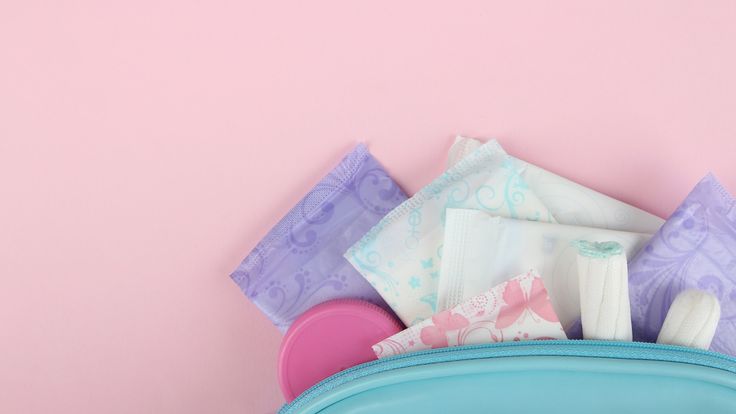
Have you ever tried to open a sanitary pad as quietly as possible in a public toilet?
Perhaps you have waited until everyone else has left, carefully unwrapped the pad and hoped nobody heard that unmistakable crinkling sound.
It is an experience many women and girls may recognise. But it raises an uncomfortable question: Why should something as ordinary as opening a sanitary pad feel like revealing a secret?
For thousands of Kenyan schoolgirls, menstruation is not simply a matter of having a sanitary pad. It can involve navigating inadequate toilets, limited access to clean water and soap, a lack of privacy and the fear of being teased or judged.
And while efforts to improve access to menstrual products have helped bring the issue into public discussion, research suggests that a more complicated challenge remains.
The hidden struggle in Kenyan schools
A May 2025 policy brief titled Menstrual Health and Hygiene Management in Kenya paints a concerning picture of the conditions under which some adolescent girls manage their periods.
The brief draws on a 2024 study conducted by the International Centre for Reproductive Health-Kenya (ICRH-K), with support from USAID and the United Nations Population Fund (UNFPA).
The research involved adolescent girls aged 10 to 19 in eight counties: Bungoma, Garissa, Homa Bay, Kitui, Kwale, Marsabit, Nakuru and West Pokot.
Among the respondents, 85.8% reported concerns about privacy when changing menstrual products at school, while only 45.3% reported access to both water and soap for menstrual hygiene management.
The findings expose a problem that sanitary pad distribution programmes alone cannot resolve.
A girl may have a pad in her schoolbag but nowhere private to change it. She may find a toilet without a functioning door or lack water and soap to wash her hands afterwards.
What should be a routine part of personal hygiene can become an uncomfortable experience, especially during school hours.
The study also found that 45.6% of respondents experienced difficulties accessing menstrual products, while 22.5% lacked access to their preferred products.
These figures suggest that menstrual health interventions must go beyond the supply of sanitary products to address the conditions in which girls use them.
When menstruation becomes a source of shame
Beyond inadequate facilities, the research highlights another barrier: stigma.
According to the policy brief, 13.7% of respondents reported being teased by male students while menstruating.
Another 26.9% said open discussions about menstruation were prohibited in their social environments, while 35.1% reported that menstruating girls were regarded as unclean or impure.
These attitudes can make an already challenging experience even more difficult.
Sometimes, stigma appears in seemingly harmless moments.
A sanitary pad falls out of a schoolbag, and classmates burst into laughter. A girl asks to leave class, and someone makes a joke about her period. A conversation about menstruation begins, and the room suddenly falls silent.
Such experiences can reinforce the idea that menstruation is something to conceal.
Over time, even the sound of opening a sanitary pad may become a source of embarrassment.
Yet menstruation is a normal biological process, not a sign of poor hygiene or something that should invite ridicule.
There is a difference between wanting privacy and being made to feel ashamed.
Every girl deserves privacy when managing her period. But no girl should feel compelled to hide her menstrual needs because she fears humiliation.
Why sanitary pads alone are not enough
Menstrual health programmes often attract attention when sanitary products are distributed to schoolgirls.
While access to affordable and appropriate menstrual products is essential, it represents only one part of menstrual health management.
Girls also need clean and secure toilets, functioning doors, reliable water supplies, soap and safe facilities for disposing of used menstrual products.
Without these basic provisions, even a regular supply of sanitary pads may fail to address the practical difficulties girls encounter.
Accurate information is equally important.
Girls need to understand their menstrual cycles, know how to manage their periods hygienically and feel comfortable seeking help when they experience difficulties.
Menstrual health education should also reach boys.
When boys understand menstruation as a normal biological process, schools have an opportunity to challenge misconceptions and discourage teasing.
The responsibility for addressing menstrual stigma should not rest entirely on girls.
Teachers, parents, school administrators and communities all have a role in creating environments where menstruation is treated with dignity rather than embarrassment.
Breaking the silence at home and in school
Attitudes towards menstruation often develop long before a girl experiences her first period.
In families and communities where the subject is rarely discussed, girls may grow up believing that menstruation is something embarrassing or inappropriate to mention.
This silence can make it harder for them to ask questions, seek advice or request menstrual products when needed.
Open, age-appropriate conversations at home and in school can help change that.
Parents and guardians can support girls by providing accurate information and reassurance. Teachers can create learning environments where questions about menstrual health are answered respectfully.
Schools can also establish practical systems that allow learners to access emergency menstrual products without unnecessary embarrassment.
Importantly, girls should not have to publicly explain their menstrual needs to obtain basic support.
Privacy should be built into school facilities and support systems rather than treated as something learners must negotiate.
Privacy is necessary. Shame is not.
The findings from the eight-county study underline the need to rethink how menstrual health is addressed in Kenya.
The policy brief recommends improvements in sanitation facilities, reliable access to water and soap, menstrual health education and consistent access to suitable menstrual products.
But changing infrastructure without challenging harmful attitudes would leave part of the problem unresolved.
A school can provide sanitary pads and still have an environment where girls are mocked for menstruating.
Equally, encouraging girls to speak confidently about periods achieves little if they must use toilets without adequate privacy or basic hygiene facilities.
Meaningful progress requires both.
It means ensuring that girls have the resources they need while building a culture in which menstruation is understood and respected.
It also means recognising that menstrual dignity is not a luxury or an optional addition to education. It is part of creating a safe and supportive learning environment.
The sound that should never cause embarrassment
The next time a sanitary pad wrapper makes that familiar crinkling sound in a public toilet, perhaps the question should not be why someone is trying so hard to keep it quiet.
Instead, we should ask why an ordinary act of personal hygiene can still feel embarrassing.
The answer lies not in the sound itself, but in the attitudes and circumstances surrounding menstruation.
For Kenyan schoolgirls, progress will not be measured only by how many sanitary pads are distributed.
It will also be reflected in whether schools provide clean, private toilets, whether water and soap are available, whether boys understand menstruation and whether girls can seek support without fear of ridicule.
Opening a sanitary pad is not an announcement, a confession or something to apologise for.
It is simply part of managing one's health.
And no girl should have to become an expert at making herself unheard just to do that.
You may also like
Category: Health · Related Topic: Social Health Authority (SHA)
Related Video: What Dangote’s proposed Lamu oil refinery could mean for East Africa
Related Explainer: Ebola contact tracing: Why the 21-day window matters in Kenya’s response
 Facebook
 Twitter / X
 WhatsApp
 LinkedIn
 Telegram
 Reddit