
MOMBASA, Kenya — Some children reportedly put on new clothes, believing they were about to enter heaven. Others are said to have pointed out where their bodies should be buried.
The disturbing accounts were among the details read out in court on Monday as High Court Judge Diana Kavedza-Mochache delivered her lengthy judgment in the Shakahola mass deaths case involving preacher Paul Nthenge Mackenzie and 30 co-accused.
The accounts paint a harrowing picture of how religious promises allegedly shaped the final days of children and families who had settled in Shakahola Forest, Kilifi County.
As the judge recounted witness testimony, Mackenzie sat quietly in court. His expression appeared largely unchanged as the proceedings continued.
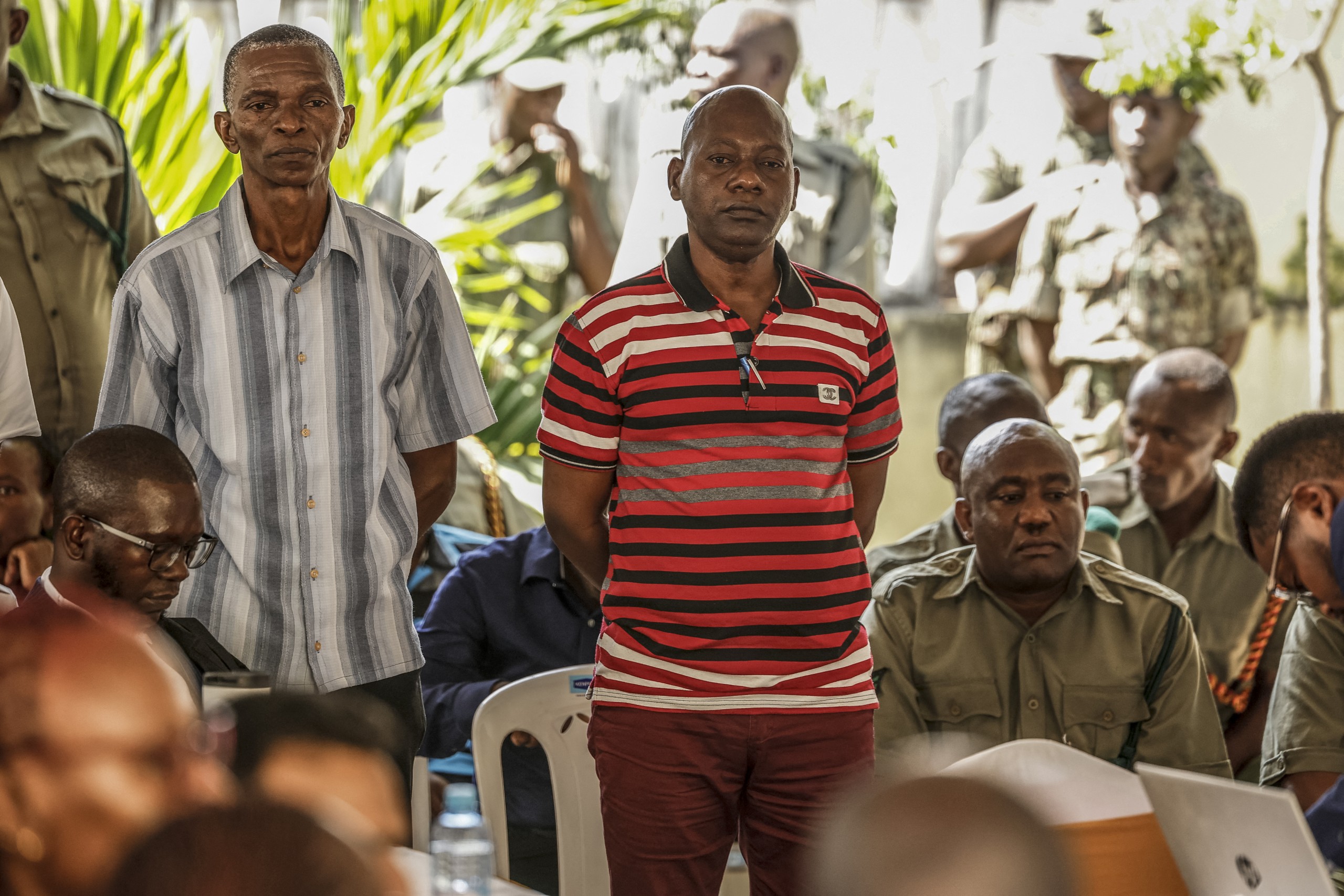
The judgment, reported to run to about 1,000 pages, began at 9.40am at a makeshift courtroom under a tent in the grounds of Mombasa Law Courts. The unusual setting was arranged to accommodate the large number of people attending the high-profile case.
Children caught in the promise of heaven
According to the judge’s account, some parents watched their children weaken and die as they fasted. One witness reportedly described seeing siblings waste away.
The court also heard that some children appeared to welcome what they believed was their journey to heaven. Their reported preparations, including wearing new clothes and indicating burial places, stand in stark contrast to the suffering described in the testimony.
Mackenzie allegedly assured followers that they would reach heaven and told them he would be the last to die, closing the door on earth after the others had ascended.
The judge also referred to his reported assurance that the journey could involve “mangumi na mateke”, a Swahili phrase meaning kicks and blows.
The prosecution’s case centres on allegations that Mackenzie and his followers encouraged people to fast to death in anticipation of meeting Jesus. The accused have faced murder charges linked to 191 victims, and the proceedings have examined the roles allegedly played by people within the settlement.
The accounts read in court are part of the evidence and findings being considered in the judgment. The charges against the accused must be distinguished from the wider number of deaths uncovered during investigations.
429 bodies recovered from Shakahola
A total of 429 bodies were reportedly exhumed from graves in Shakahola. The 191 victims covered by the murder case include one adult and 190 children, according to reports from the proceedings.
The scale of the deaths made the case one of the most disturbing episodes in Kenya’s recent history, raising questions about how the settlement operated and how vulnerable followers came to accept teachings that allegedly put their lives and those of their children at risk.
The forest settlement, spread across thousands of acres, became the focus of national attention in 2023 after authorities began uncovering graves and investigating reports of people missing in the area.
The trial has sought to establish individual responsibility for the deaths. The fact that bodies were recovered from the forest does not, by itself, establish the guilt of every person charged.
A long day in court
The judgment reading continued for hours, with the judge explaining the evidence and how she reached her findings. The Director of Public Prosecutions, Renson Ingonga, attended the proceedings.
The crowded tent held journalists, members of the public, court officials and security officers. Some attendees appeared exhausted as the reading went on, while some accused were allowed to leave temporarily for health breaks.
After more than four hours, the judge called a brief pause. Proceedings resumed at about 2.30pm.
The length of the judgment reflects the volume of evidence and the gravity of the allegations. The case involves accounts from families, survivors and other witnesses, alongside evidence gathered during investigations.
Beyond the courtroom, the Shakahola tragedy has renewed scrutiny of how religious leaders exercise influence, particularly where followers are urged to cut ties with public institutions or reject medical care and other forms of outside support.
For the families who lost children and relatives, the judgment represents a major step in the search for accountability. The central question remains whether the prosecution’s evidence proves the criminal responsibility of Mackenzie and each co-accused beyond reasonable doubt.
You may also like
Category: News · Related Topic: Social Health Authority (SHA)
Related Video: Human Ladder Reaches Dangerous Heights as Climbers Keep Going
Related Explainer: Explainer: What happened to milk in Kenya?
About the Author
Maureen Onyango is a journalist passionate about storytelling, life coaching and spiritual lessons. She studied at the Kenya Institute of Management and enjoys telling stories that inform, inspire and empower communities.
 Facebook
 Twitter / X
 WhatsApp
 LinkedIn
 Telegram
 Reddit