
Kenya has confirmed its first case of Ebola after a Kenyan citizen who had been living in the Democratic Republic of Congo (DRC) died in Nairobi, prompting an urgent contact-tracing operation.
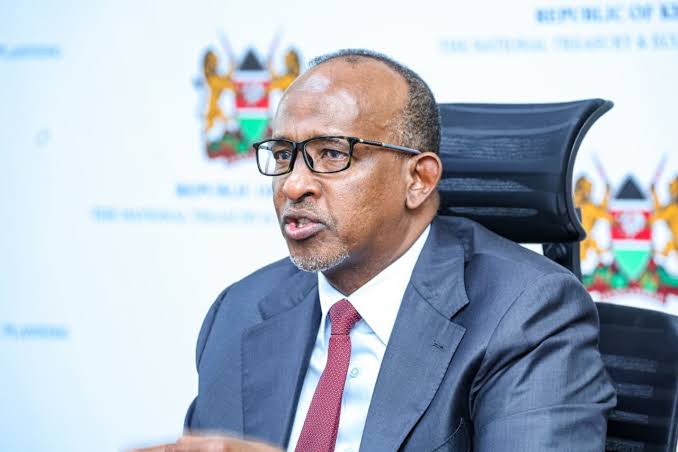
Health Cabinet Secretary Aden Duale said on Tuesday, October 6, that the patient had contracted the Bundibugyo strain of Ebola, the same strain driving a major outbreak in the DRC.
The case is imported. There is currently no confirmation that the virus has begun spreading within the Kenyan community.
Duale said the patient had lived and worked in the DRC for about seven years. He fell ill roughly a month before returning to Kenya and received treatment at several health facilities in the DRC.
He later travelled by road to Kampala, Uganda, before boarding a Jambojet flight to Nairobi.
The flight landed at Jomo Kenyatta International Airport (JKIA) at about 1.10pm on Saturday, October 3.
The passenger went through routine public health screening at the airport before clearing immigration.
He was then driven directly to Nairobi Hospital by a relative and a friend.
Patient isolated after arriving at Nairobi Hospital
At Nairobi Hospital, the patient was immediately placed in isolation after presenting with symptoms including fever, chills, severe fatigue, weakness, muscle pain, painful swallowing and bleeding under the skin.
Doctors considered the patient's travel history and symptoms before requesting laboratory testing.
Samples were tested by the National Virology Reference Laboratory and the Kenya Medical Research Institute (KEMRI). Both confirmed Ebola infection.
Duale said the patient was given supportive treatment but died at about 11.30pm on Monday.
“The patient was given supportive treatment but regrettably passed on last night at around 11.30pm,” the CS said, offering condolences to the family.
Arrangements for a safe and dignified burial were being made under Ebola infection-control procedures.
28 contacts identified
The immediate priority for health authorities is now contact tracing.
Duale said 28 people who had contact with the deceased have so far been identified. They include relatives and healthcare workers involved in his care.
The government is also trying to trace the other people who travelled on the same flight.
The flight had 23 passengers and four crew members, according to the Ministry of Health.
Being identified as a contact does not mean that a person has Ebola. Contacts are monitored because they may have been exposed and need to be watched for symptoms during the incubation period.
Health authorities have prepared quarantine arrangements for people considered to have been at risk, while monitoring continues.
The Ministry said it had screened more than 652,000 travellers by October 6 and tested 267 samples through five laboratories. Only one has so far returned positive for Ebola.
Kenya had been preparing for the threat
The confirmation comes after months of heightened preparedness following the spread of Bundibugyo Ebola in the region.
In September, the World Health Organization reported that Kenya had strengthened surveillance and preparedness at key border points, including Busia, Malaba and Lwakhakha. At the time, the country had not recorded a case.
The Health Ministry said 4,971 healthcare workers at national and county level have since been trained on Ebola prevention and management.
Two mobile laboratories have also been deployed at the Busia and Lwakhakha border points to strengthen testing and surveillance.
Kenya has also notified the World Health Organization of the confirmed case.
Duale urged Kenyans to remain calm while following public health advice.
“I wish to reassure the public not to panic, as all systems are in place to mitigate the spread of the disease,” he said.
Why the case matters
The case comes as the DRC continues to battle a large and expanding Ebola outbreak.
The latest WHO assessment, based on data up to September 23, recorded 7,890 confirmed cases and 3,799 deaths in the DRC. The outbreak had spread across 63 health zones in seven provinces.
WHO has assessed the risk as very high within the DRC and high for countries sharing a land border with it. The risk to the wider African region and globally remains lower, provided surveillance and preparedness measures are maintained.
Uganda, which had also experienced the outbreak, was declared free of Ebola in August after completing the required monitoring period.
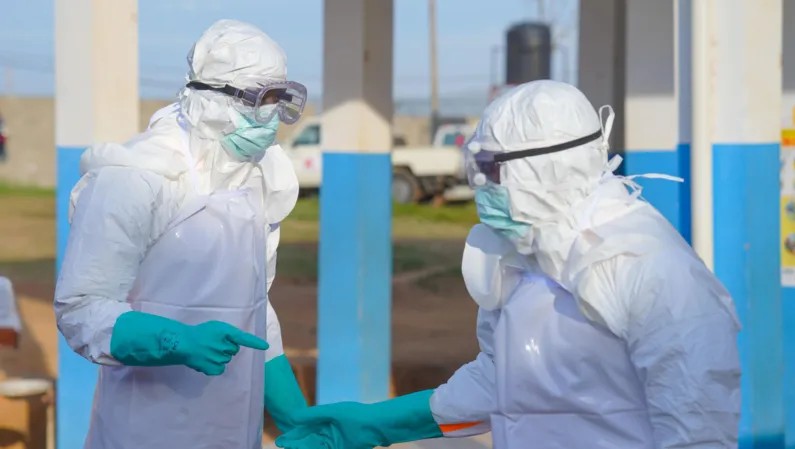
Ebola is mainly spread through direct contact with the blood or other bodily fluids of an infected person, or through contaminated materials. It is not an airborne infection like measles or influenza.
For Kenya, the immediate test is therefore not simply whether more cases emerge, but how quickly health teams can identify and monitor everyone who may have been exposed.
The Ministry has urged the public to rely on official updates and has provided the toll-free public health emergency line 719 for enquiries and suspected exposures.
You may also like
Category: Health
Related Video: What Dangote’s proposed Lamu oil refinery could mean for East Africa
Related Explainer: Explainer: Why Kenya is moving hospitals to HMIS and what it means for SHA patients
About the Author
Maureen Onyango is a journalist passionate about storytelling, life coaching and spiritual lessons. She studied at the Kenya Institute of Management and enjoys telling stories that inform, inspire and empower communities.
 Facebook
 Twitter / X
 WhatsApp
 LinkedIn
 Telegram
 Reddit