
Monday, 19 October 2026 | LiveNow Africa
Kenya begins the new week facing growing concern over Ebola infections, a disputed security operation on property claimed by the family of former President Daniel arap Moi, and fresh questions about preparations for the 2027 General Election.
Meanwhile, the Ebola outbreak in the Democratic Republic of Congo continues to expand, while Kenyan commuters face uncertainty over higher fuel prices and a threatened legal challenge.
Here are the five major developments shaping the news this Monday morning.
1. Kenya's Ebola cases rise to eight as another hospital attendant tests positive
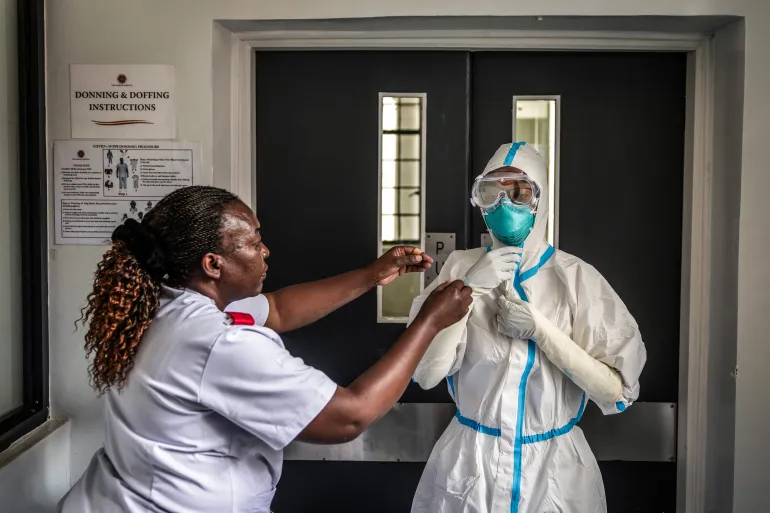
Kenya has confirmed an eighth Ebola infection, raising fresh questions about infection prevention and the protection of people working in healthcare facilities.
Director-General for Health Patrick Amoth said a 49-year-old patient attendant tested positive on Sunday after developing fever, headache and muscle pain.
The man reportedly cleaned utensils and linen and was likely exposed to the country's first Ebola patient, who died in Nairobi on October 5 after travelling from the Democratic Republic of Congo.
The latest infection follows four cases announced on Saturday, including three healthcare workers who treated the first patient.
The growing number of infections linked to healthcare settings has intensified scrutiny of protective equipment, early detection procedures and the handling of potentially contaminated materials.
Health authorities have not reported evidence of uncontrolled community transmission.
What to watch: Whether additional infections emerge among monitored contacts and what measures the Ministry of Health introduces to strengthen infection prevention in hospitals.
2. Congo's Ebola outbreak reaches eighth province as deaths exceed 4,500
The Ebola outbreak in the Democratic Republic of Congo has spread to North Ubangi province, near the border with the Central African Republic.
The country's National Institute for Biomedical Research confirmed two cases in the province, including one death.
By October 16, Congo had recorded 9,415 confirmed infections and 4,536 deaths.
The outbreak has become a major regional public-health emergency, with infections also reported beyond Congo's borders.
For Kenya, the expansion underscores the importance of cross-border surveillance, rapid laboratory testing and cooperation between neighbouring health authorities.
What to watch: Whether regional governments introduce additional surveillance measures and whether ongoing transmission places greater pressure on already stretched health services.
3. Moi family protests GSU occupation of disputed Eldoret property
The family of former President Daniel arap Moi is challenging the reported occupation of a five-acre property near the Eldoret State Lodge by armed General Service Unit officers.
Through lawyer Moses Mutisya, the family says officers ordered workers and private guards to leave the property without prior formal notice.
The land, identified as Eldoret Municipality Block 8/62, is claimed by the family, which says it has held ownership documents since 1996.
The family's representatives have questioned whether the operation was connected to security arrangements around the State Lodge or another dispute.
They have also alleged possible political motives, although those allegations have not been independently established.
The government has previously discussed efforts to address alleged encroachment on land associated with presidential residences, but it has not publicly clarified whether this particular operation forms part of that programme.
What to watch: Whether the government explains the legal basis for the deployment and whether the family files a court case seeking restoration of access to the property.
4. IEBC faces key election technology procurement milestone
Kenya's electoral commission faces an important procurement milestone as it prepares to acquire technology for the August 2027 General Election.
The Independent Electoral and Boundaries Commission initially announced Monday, October 19, as the closing date for bids to supply its Integrated Electoral Management System, hardware and accessories.
The tender resumed after the Public Procurement Administrative Review Board dismissed a challenge that had interrupted the process.
However, a subsequently amended tender listing indicates that the deadline may have moved to October 22, making confirmation of the latest official notice essential.
The technology is expected to support election operations, including voter identification.
Delays in procurement could reduce the time available for equipment testing, staff training and deployment.
What to watch: IEBC's confirmed closing date, the outcome of bid evaluation and whether the commission secures sufficient funding to prepare the equipment before the election.
5. Commuters challenge fuel-price increases as pressure grows over transport costs
A commuters' organisation has given the Energy and Petroleum Regulatory Authority 14 days to reverse the latest fuel-price increases or face legal action.
The Counties Commuters Welfare Association argues that the October price review did not involve adequate consultation with commuters and transport stakeholders.
The group is demanding greater transparency over the pricing formula and measures to protect passengers from rising transport costs.
Under the current EPRA schedule, petrol costs Sh226.96 per litre in Nairobi, diesel Sh227.76 and kerosene Sh219.87.
The increases have raised concerns about matatu fares, transport expenses and household budgets.
The association's demands do not automatically suspend EPRA's prices, which remain in effect unless the regulator or a competent court changes them.
What to watch: EPRA's response to the ultimatum, possible court proceedings and whether transport operators introduce further fare adjustments.
The bigger picture
This week's developments place public-health preparedness, accountability and the cost of living at the centre of Kenya's national conversation.
The Ebola outbreak will test the country's ability to protect frontline workers and prevent wider transmission. The Eldoret property dispute raises questions about administrative procedure and property rights, while IEBC's procurement process will remain under scrutiny as the 2027 election approaches.
For ordinary Kenyans, rising transport costs add another immediate concern.
LiveNow Africa will continue following these developments, focusing on what changes next and how the decisions affect the public.
You may also like
Category: News · Related Topic: 2027 Elections
Related Video: What Dangote’s proposed Lamu oil refinery could mean for East Africa
Related Explainer: Ebola contact tracing: Why the 21-day window matters in Kenya’s response
 Facebook
 Twitter / X
 WhatsApp
 LinkedIn
 Telegram
 Reddit