
Good morning. Here are the five most important things to know in Kenya this Tuesday morning.
1. Court clears the way for tomorrow’s Sh2.2 trillion Lamu refinery groundbreaking
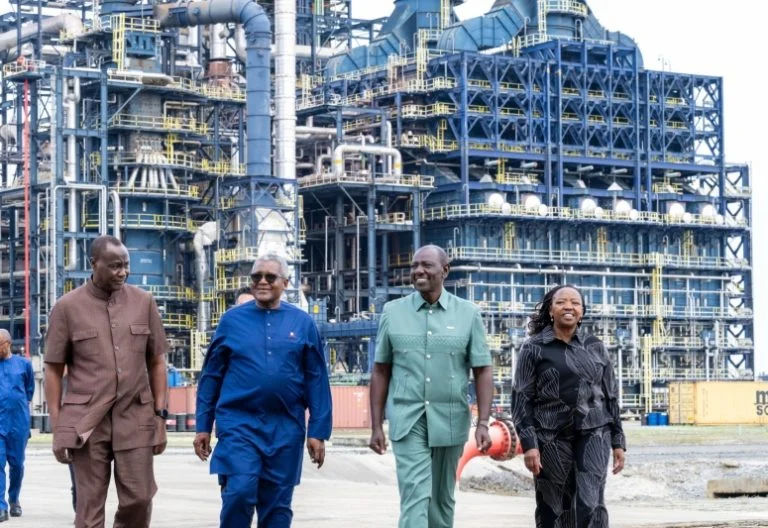
President William Ruto is preparing for one of the biggest investment announcements of his presidency after the High Court declined to stop tomorrow’s groundbreaking of the proposed Sh2.2 trillion East Africa Refinery in Lamu. Heavy equipment has already arrived at Lamu Port ahead of the ceremony involving Nigerian billionaire Aliko Dangote.
The planned refinery would process about 700,000 barrels a day, but a key question remains unresolved: where will all the crude come from? Kenya’s own planned Turkana production would cover only a fraction of that capacity, meaning much of the feedstock would initially have to be imported. The project also faces scrutiny over land, environmental approvals, financing and its promised economic benefits.

2. Turkana oil project gets fresh momentum as drilling equipment arrives
Kenya’s separate effort to become a commercial oil producer is also moving forward. Large onshore drilling equipment destined for Lokichar in Turkana County has arrived at the Port of Mombasa ahead of planned drilling operations.
The timing is significant. The government is simultaneously pushing the Lamu refinery and a wider policy of processing Kenya’s natural resources locally rather than exporting them raw. If commercial Turkana production finally gets under way, it could eventually provide domestic crude for refining, although production volumes would initially be far below the Lamu facility’s proposed capacity.
3. Murkomen admits government misread the Gen Z uprising
Interior Cabinet Secretary Kipchumba Murkomen has offered a striking assessment of the 2024 Gen Z protests, acknowledging that government initially failed to understand the nature of the movement. Murkomen says authorities wrongly viewed the protests through Kenya’s traditional political framework rather than recognising a decentralised youth movement without conventional political leadership.
The admission is politically important as Kenya moves towards the 2027 General Election, with unemployment, taxation, governance and corruption still prominent concerns among younger voters.
4. Education reform hearings continue as six major Bills head towards Friday deadline
Public participation on six proposed laws that could substantially reshape Kenya’s education system continues today after Parliament extended hearings to ensure all 47 counties are covered. The exercise concludes on Friday, October 2.
The Bills cover basic education, university placement and funding, national examinations and assessments, teacher training, curriculum development and the national qualifications framework. The reforms have already divided education stakeholders, with KUPPET among those demanding more time for consultation.
5. Rain, chilly nights and strong winds expected in several parts of Kenya
Kenyans in several regions should prepare for wet conditions today. The latest five-day forecast indicates moderate afternoon rainfall in Kakamega, Bungoma and Kericho, with Busia expected to receive moderate showers tonight. Other parts of Western Kenya, the Rift Valley, Central region and Coast are also experiencing intermittent rainfall.
The changing weather is being watched particularly closely as Kenya approaches the October-to-December short-rains season and authorities prepare for the possibility of El Niño-enhanced rainfall.
Top global headlines
US-Iran talks resume through mediators: American and Iranian officials have resumed indirect contacts with mediators in another attempt to end the conflict and resolve the crisis around the Strait of Hormuz. Washington and Tehran have previously discussed a phased arrangement under which Iran would reopen the crucial waterway while the United States gradually eases its blockade. President Donald Trump rejected Iran’s earlier proposal, but diplomatic channels remain open.
Oil climbs above $107: Global oil prices have risen more than 1.5 per cent to around $107 a barrel as markets remain concerned about supplies from the Middle East. For Kenya, which imports petroleum products, prolonged high prices represent a direct risk to fuel prices, transport costs, inflation and the import bill.
Russia intensifies attacks on Ukraine: A major wave of Russian drone attacks has hit Kyiv and other Ukrainian cities, striking residential buildings, offices and the National Academy of Sciences. The latest attacks have killed civilians and injured dozens, while Ukraine has responded with long-range strikes against Russian oil and defence facilities.
UN warns of massive humanitarian funding crisis: The UN refugee agency says a severe financing shortfall could leave 8.3 million refugees and displaced people without essential assistance. UNHCR says it had received only 32 per cent of the $8.5 billion it needs for 2026 as of July, amid sharp reductions in international aid budgets.
Australia raises interest rates again: Australia’s central bank has raised its benchmark interest rate by another quarter point to 4.60 per cent, its fourth increase this year, as policymakers confront renewed inflation pressure partly linked to higher global energy costs. The decision illustrates how the Middle East conflict is increasingly spilling over into monetary policy and household finances far beyond the region.
You may also like
Category: News · Related Topic: William Ruto
Related Video: What Dangote’s proposed Lamu oil refinery could mean for East Africa
Related Explainer: Kiharu Technical College September Intake 2026: Courses, Skills and New Opportunities
 Facebook
 Twitter / X
 WhatsApp
 LinkedIn
 Telegram
 Reddit