
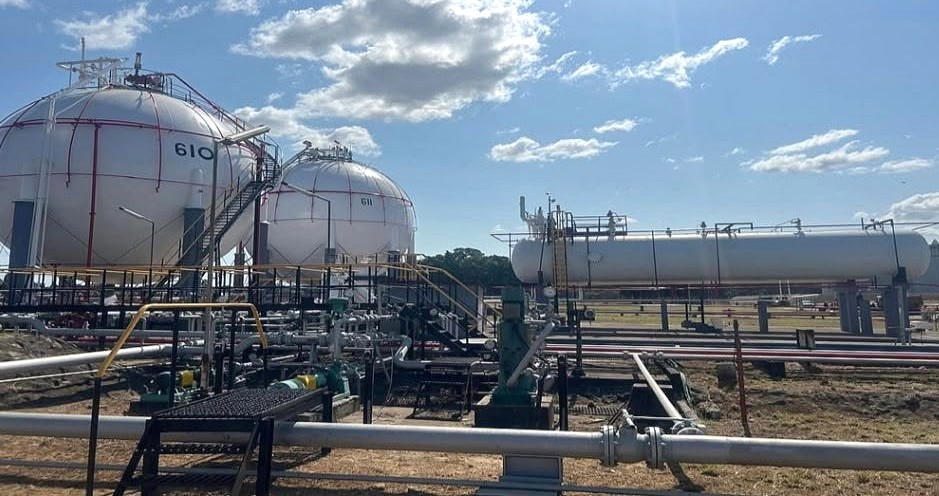
President William Ruto is preparing to break ground on one of Kenya's most ambitious industrial projects, but one question is following the proposed Lamu refinery into its launch: where will it get enough crude oil?
The proposed Dangote East Africa Refinery and Petrochemical Complex is expected to have capacity to process about 700,000 barrels of crude oil a day.
That would make it a project of a scale rarely seen in East Africa and potentially turn Lamu into an important regional energy hub.
But Kenya does not currently produce anything close to the amount of crude required to keep such a facility running.

That means imported crude is likely to be central to the refinery's business model, at least initially.
The issue has come into sharper focus as equipment arrives in Lamu ahead of the planned groundbreaking. President Ruto has presented the development as part of his government's attempt to attract large-scale private investment and expand Kenya's manufacturing base.
The government is also reviving efforts to commercially exploit oil discovered in the South Lokichar Basin in Turkana. Drilling equipment has arrived at the Port of Mombasa ahead of operations in Turkana.
But even if Turkana finally begins commercial production, its expected initial output would represent only a fraction of the proposed refinery's capacity.
That leaves the refinery looking towards international suppliers.
Location could work in its favour. Lamu sits on the Indian Ocean and already has a modern deep-water port capable of receiving large vessels. Crude could therefore be shipped from producing countries in the Middle East, Africa or elsewhere before being refined for Kenya and neighbouring markets.
The project nevertheless faces another challenge.
Residents claiming ancestral ownership of part of the proposed development area have gone to court. The Environment and Land Court in Malindi declined to stop the groundbreaking but ordered the status quo to be maintained on a disputed parcel pending further proceedings.
The case is due back in court on 14 October.
The refinery could reduce East Africa's reliance on imported finished petroleum products if successfully developed. But its economics will depend on crude supply, financing, infrastructure, environmental approvals and whether there is sufficient regional demand for its products.
The groundbreaking, therefore, is only the beginning.
For Kenya, the bigger test will be whether a Sh2 trillion proposal can move from an ambitious announcement to a commercially sustainable industrial operation.
You may also like
Category: Business · Related Topic: William Ruto
Related Video: What Dangote’s proposed Lamu oil refinery could mean for East Africa
Related Explainer: Kenya’s inflation holds near 30-month high as transport and food costs squeeze households
 Facebook
 Twitter / X
 WhatsApp
 LinkedIn
 Telegram
 Reddit