
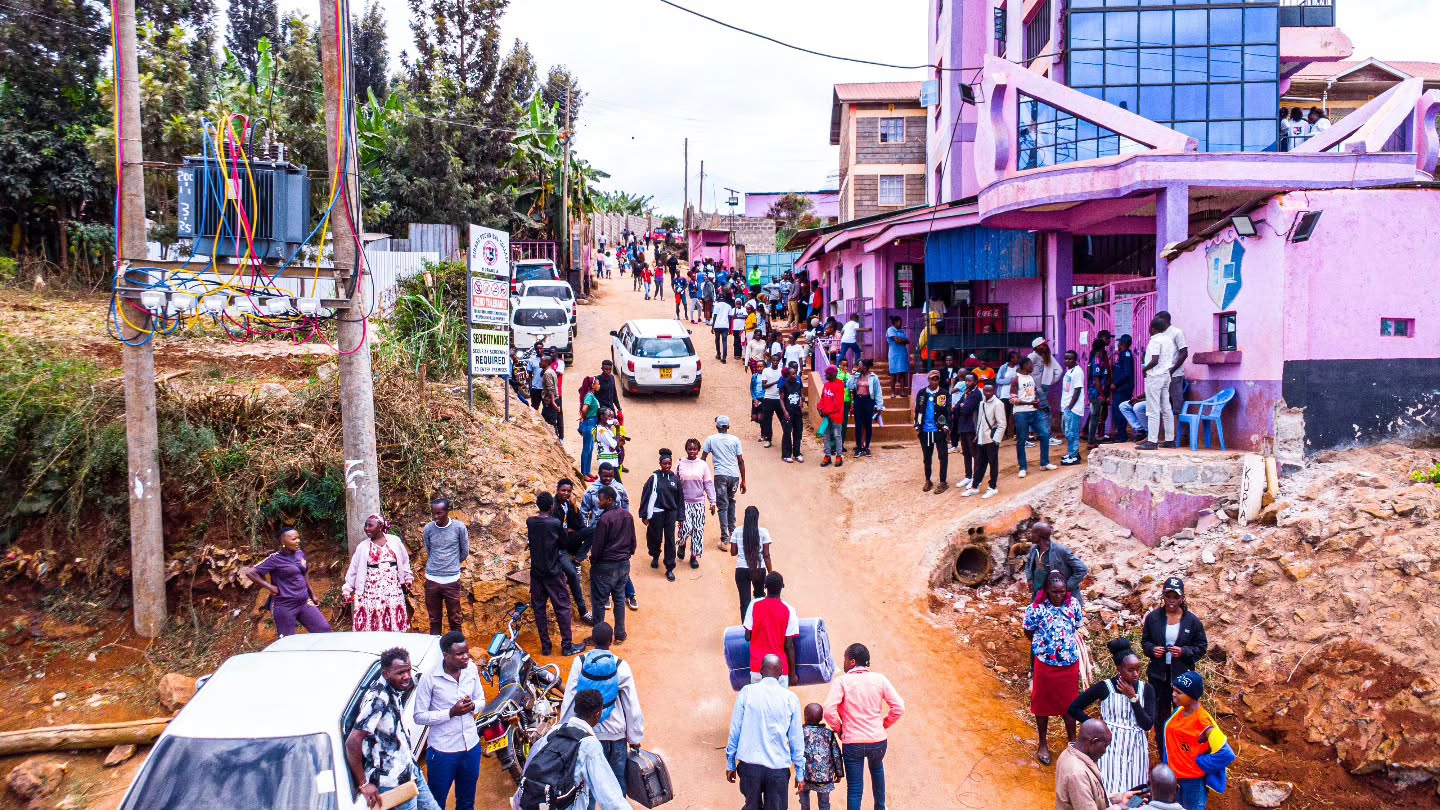
As the September intake runs from September 7 to 11, Kiharu Technical College Murang’a is offering more than a place in a classroom - it is presenting technical education as an alternative route for young Kenyans seeking practical skills, employment and a second chance.
For a generation that grew up being told that a university degree was the surest route to success, the meaning of education is changing.
Across Kenya, young people are increasingly being pushed to ask a more practical question: What can I do with what I have learnt?
That question sits at the heart of the September intake at Kiharu Technical College Murang’a (KTCM), where new students are being admitted from September 7 to 11, 2026.
The college, located along the Murang’a-Mugoiri Road about 500 metres from Mukuyu Town, describes its approach as hands-on and market-driven, with training designed around practical skills and real-world application. Its website currently lists 69 programmes across several schools.
The bigger story, however, is not simply about another college opening its doors.
It is about a generation that increasingly needs an education system capable of translating learning into something tangible: a job, a profession, a business, a trade or the confidence to create one.
When a certificate is no longer enough
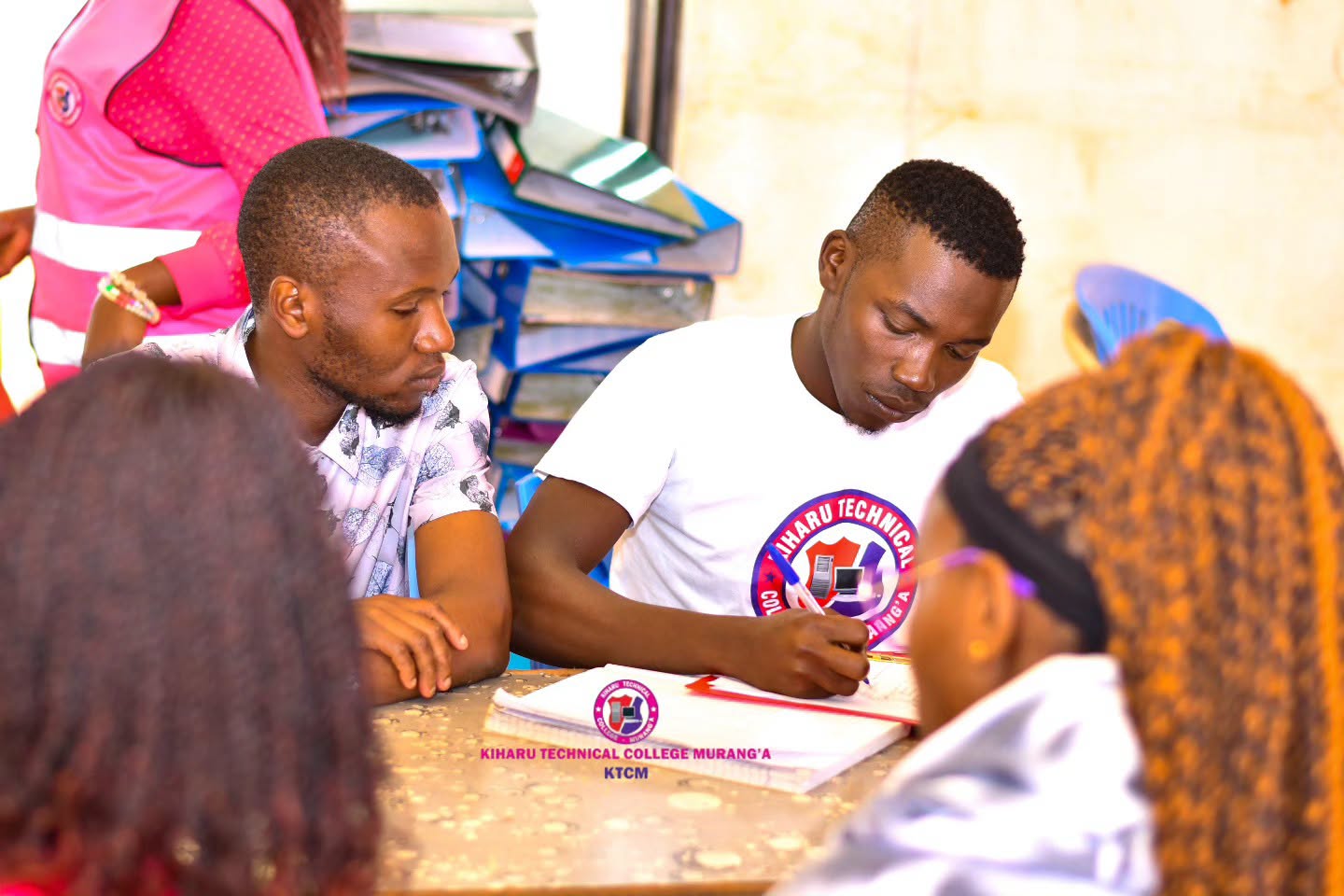
For decades, the Kenyan education conversation has often revolved around grades, certificates and academic progression.
But a certificate alone does not necessarily tell an employer what a graduate can actually do.
Can they build?
Can they code?
Can they repair?
Can they design?
Can they write?
Can they operate equipment?
Can they manage a business?
Can they solve a problem for a customer?
These are the questions that make technical and vocational education increasingly relevant.
Kenya's TVET Authority has itself identified the need for training to remain relevant to labour-market demands, with stronger links between institutions and industry to improve employability. TVETA has described TVET as important in addressing challenges including youth unemployment and poverty through relevant training and skills development.
That makes the KTCM intake part of a much larger national conversation.
The future of education may not be about choosing between a degree and a technical qualification. For many young people, it may be about finding the form of education that gives them the most useful combination of knowledge, practical ability and opportunity.
A second chance is still a chance
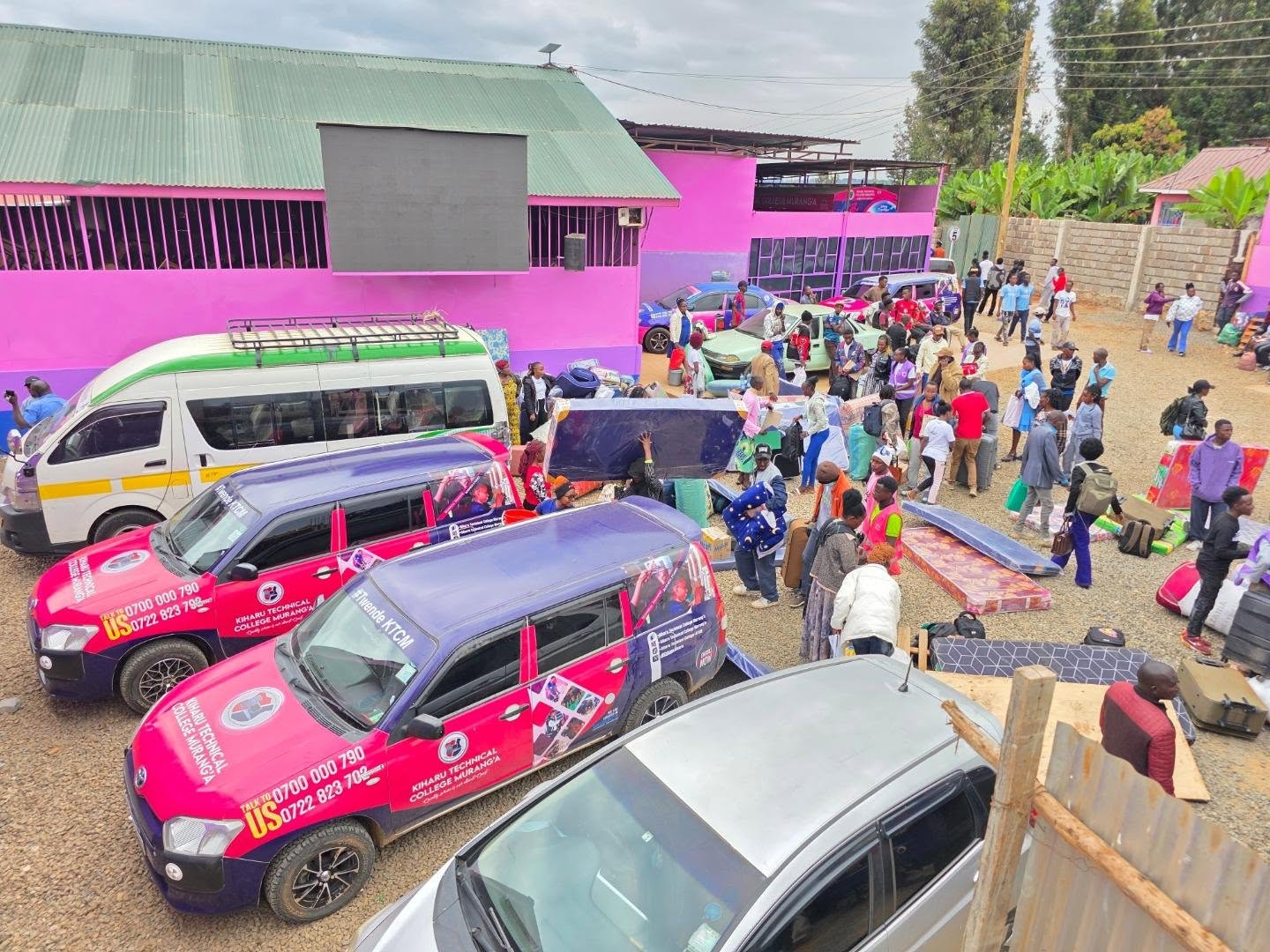
There is another group for whom the September intake carries a different meaning: young people who believe they have already fallen behind.
Some did not achieve the KCSE grade they wanted.
Others could not afford their preferred course.
Some started university but had to leave.
Others completed secondary school and have spent months at home without knowing what comes next.
There is a dangerous assumption that one examination result can permanently determine the direction of a young person's life.
It cannot.
Technical education provides alternative pathways for learners to acquire specific competencies without necessarily following the conventional university route.
At KTCM, the current course catalogue includes programmes at different levels and in different fields, meaning prospective students can explore pathways according to their academic qualifications and career interests.
The message is particularly important for young people who have lost confidence after an unsuccessful application or disappointing examination result.
A closed door is not necessarily the end of the journey. Sometimes it is a reason to change direction.
What can students study at KTCM?
KTCM's current academic offering cuts across several areas, giving students options beyond the traditional academic disciplines.
Among the programmes listed by the college are:
-
Civil Engineering
-
Electrical Wireman
-
Computer Engineering
-
ICT
-
Web Design and Development
-
Graphic Design and Visual Branding
-
Journalism and Media Studies
-
Business Management
-
Procurement
-
Banking and Finance
-
Secretarial Studies
-
Human Nutrition and Dietetics
-
Community Health Assistant
-
Health Records and IT
-
Perioperative Theatre Technology
-
General Agriculture
-
Water Technology
-
Land Survey
-
Computer Proficiency
The college also offers programmes in areas including hospitality, cosmetology, building and construction and other technical fields.
This diversity matters because the skills economy is not built around one profession.
It requires people who can work with technology, construct infrastructure, provide healthcare support, produce content, manage businesses, design visual identities, work in hospitality and provide technical services.
KTCM is not operating outside Kenya's regulatory system
For students and parents considering a technical college, accreditation is one of the questions that should come before excitement about a course.
KTCM is listed by the Technical and Vocational Education and Training Authority (TVETA) as a private Technical and Vocational College and is currently registered and licensed.
That distinction is important.
A prospective student should not choose a college simply because of attractive advertising or social media campaigns. They should verify the institution's regulatory status, confirm that the specific programme is available and establish which examination or assessment body oversees the course.
KTCM's own course listings identify different examining or assessment bodies depending on the programme, including KNEC, CDACC, NITA and KASNEB.
The real test begins after admission
The strongest argument for technical education is not the number of courses on a prospectus.
It is what a student can do after completing the training.
A student studying electrical installation should leave with practical competence.
A student studying journalism and media should be able to gather information, write, produce and communicate.
A computing student should be able to work with technology.
A student studying graphic design should be able to turn an idea into a visual product.
That is the promise — and also the responsibility — of skills-based education.
Training institutions must continue updating their programmes, equipment, trainers and industry connections as technology and employment patterns change.
For students, the lesson is equally important: enrolling is only the beginning. The value of technical education ultimately depends on what the learner does with the skill.
September could be the beginning, not the deadline
The September intake at KTCM runs until September 11, 2026, but for anyone who misses this window, the broader lesson remains.
There will be another opportunity to learn.
Another course.
Another application.
Another beginning.
The most important thing is not to remain stuck because the first plan did not work.
For young Kenyans who have spent months wondering whether their education journey has come to an end, technical training offers a reminder that there is more than one route into the world of work.
The generation entering the workforce today may need fewer people who simply know how to pass examinations and more people who know how to create, repair, build, communicate, design, manage, innovate and solve problems.
That is why the conversation around KTCM's September intake is bigger than admission.
It is about redefining what success looks like.
A degree can be valuable.
So can a diploma.
So can a certificate.
So can a technical skill that enables someone to earn a living, start a business or solve a problem in their community.
Your first result does not have to be your final destination.
Sometimes, the next chapter begins when you decide to learn something you can do with your own hands, mind and talent.
You may also like
Category: Explainers
Related Video: Dolly Parton’s Family Announces Her Passing in Emotional Tribute
Related Explainer: Kenya’s short rains: What the 2026 forecast means for you
About the Author
Eugene Stephen Were, popularly known as Steve O’clock, is a Kenyan journalist, digital media specialist and multimedia storyteller. He holds a Bachelor of Arts in Journalism and Digital Media from Murang’a University of Technology, with expertise in news reporting, environmental journalism, digital content, photography, videography and film production. Contact & Social Media: Phone: +24795699374 | Facebook: https://www.facebook.com/share/1BhhxUAYmk/ | Instagram: https://www.instagram.com/steve_oclock__mwenyewe | TikTok: https://www.tiktok.com/@oclockcityc.e.o?_r=1&_t=ZS-98czWCBnRxg
 Facebook
 Twitter / X
 WhatsApp
 LinkedIn
 Telegram
 Reddit