
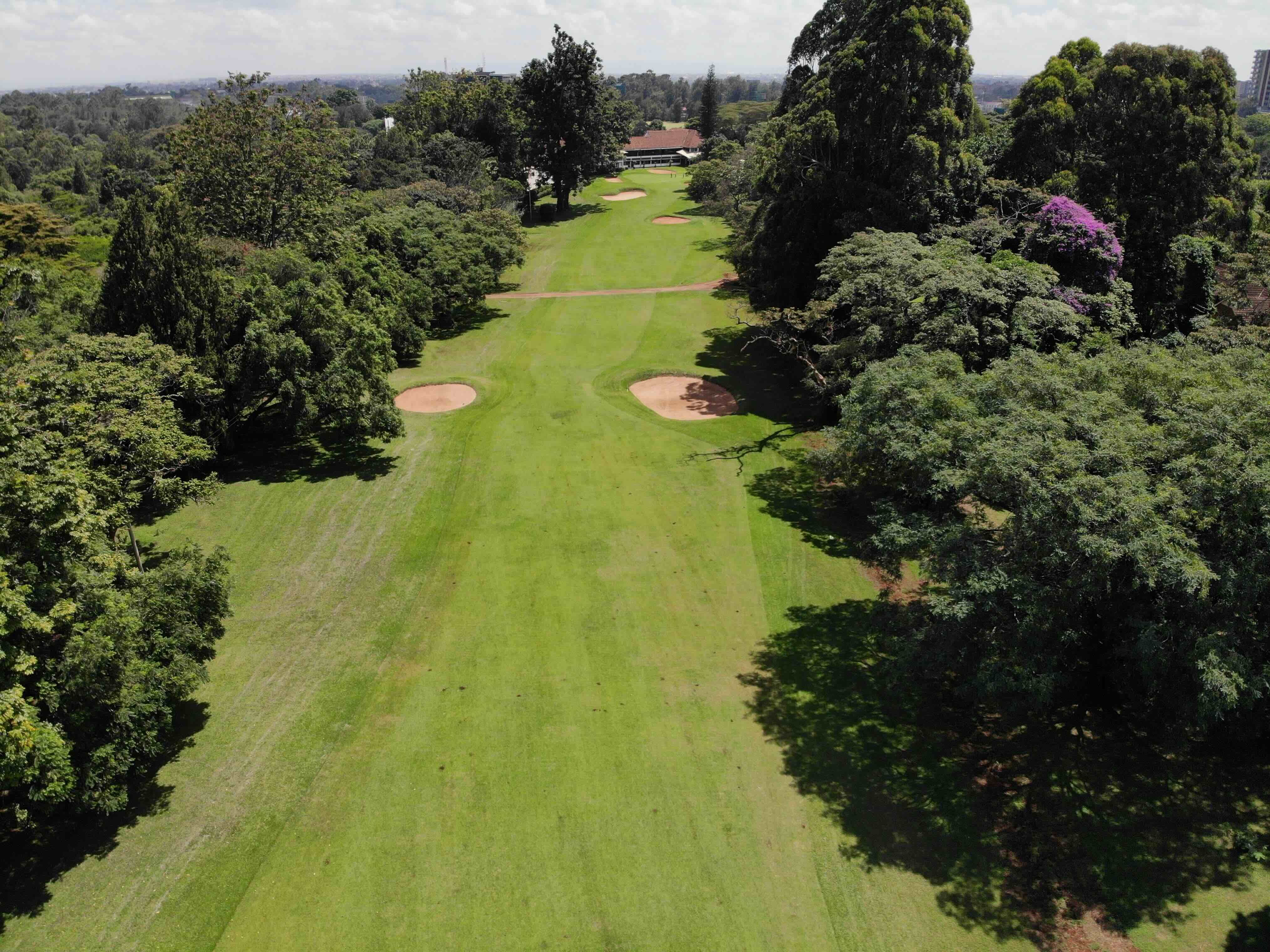
A dispute over eight holes of one of Nairobi's best-known golf courses has developed into a much larger question about the boundaries and protection of Karura Forest.
The Kenya Forest Service says part of the land occupied by Muthaiga Golf Club falls inside the gazetted forest and that available records do not demonstrate a lawful basis for the club's occupation of the disputed section.
Muthaiga Golf Club disputes that position and has challenged KFS's move onto the property.
At the centre of the disagreement is land associated with the club's Front Nine, particularly holes two to nine.

KFS says the disputed area forms part of Karura Forest, which was gazetted as a forest reserve in 1932 and later declared a Central Forest.
The agency has identified Land Reference Number 13134/3 as central to the dispute and says the parcel overlaps the gazetted forest by approximately 21.8 hectares.
Karura itself covers about 1,044 hectares.
The numbers make this more than a disagreement over where golfers can play.
The dispute raises a fundamental land-governance question: what legal instrument, if any, allowed the golf club to occupy the contested area?
That question can ultimately be answered only through documents.
Survey plans, gazette notices, leases, allocations, title records and historical boundary maps will be critical.
If the land falls within the legally gazetted forest, any private occupation would require a valid legal basis.
If Muthaiga Golf Club possesses documentation establishing lawful rights over the property, those records will have to be considered against KFS's evidence.
Until that process is completed, claims about definitive ownership require caution.
Karura's history makes the dispute especially sensitive.
The forest is one of Nairobi's most important remaining green spaces and became a national symbol of environmental conservation following earlier battles against attempts to excise sections for private development.
Its importance has increased as Nairobi has become more densely built.
Urban forests absorb rainfall, help regulate temperatures, protect biodiversity and provide recreational space for residents.
They also sit on increasingly valuable land.
That creates a persistent tension between conservation and development.
The Muthaiga dispute could consequently have implications beyond the golf club.
Nairobi contains institutions occupying land under arrangements dating back decades, including some originating in the colonial period.
Historical leases, administrative allocations, surveys and later title records do not always fit neatly together.
For many years, ambiguities may remain largely unnoticed.
They become much more consequential when land values rise or government agencies begin enforcing historical boundaries more aggressively.
That is why this case should ultimately turn on documentation rather than the prestige of either institution.
KFS has a statutory responsibility to protect public forests.
Muthaiga Golf Club, meanwhile, is entitled to present whatever legal documentation it believes establishes its rights.
The public interest lies in establishing where Karura's gazetted boundary actually runs and ensuring that the same legal standard applies to everyone.
There is another reason the case matters.
Once forest land is permanently converted to another use, recovering it can be extremely difficult.
That makes boundary enforcement an important part of conservation.
But enforcement must also follow due process and reliable land records.
The dispute over eight golf holes may therefore become an important test of how Kenya resolves historical occupation of protected public land.
For Nairobi residents, the central question is not really about golf.
It is much simpler: where exactly does Karura Forest begin and end, and can the government prove it?
Category: News
Related Video: What Dangote’s proposed Lamu oil refinery could mean for East Africa
 Facebook
 Twitter / X
 WhatsApp
 LinkedIn
 Telegram
 Reddit