
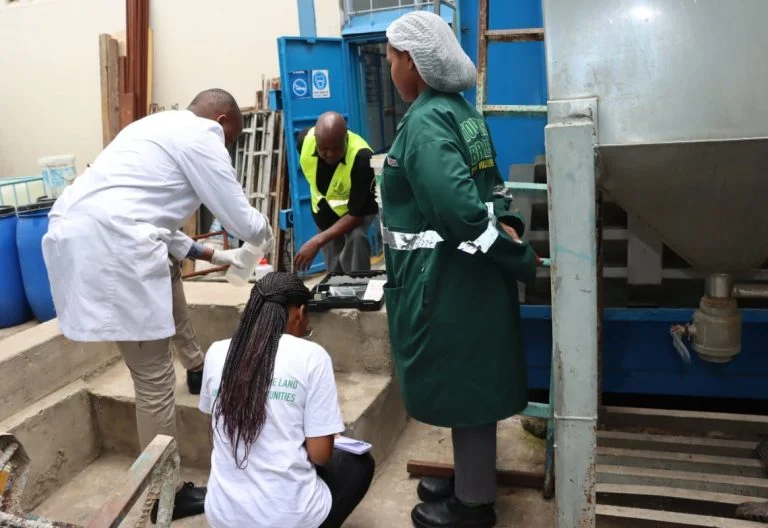
A major change affecting Kenyan importers takes effect on Monday, September 28, with the process of obtaining environmental compliance clearance moving to a fully automated system.
The change concerns Extended Producer Responsibility, commonly known as EPR, and could affect businesses importing products and packaging that eventually become waste in Kenya.
The National Environment Management Authority and Kenya Trade Network Agency have automated the process through which importers' Kenya Revenue Authority PINs are opted into the EPR permit system.
Previously, officials were involved in manually enabling the PIN before an importer could proceed with an EPR certificate application.

From September 28, that intervention is being removed.
Importers will instead be able to have their KRA PINs opted in directly through the Single Window System, also known as the Trade Facilitation Platform.
NEMA and KenTrade say the change should provide round-the-clock availability while reducing delays caused by manual processing.
It may appear to be a technical change to an online platform.
But behind it is a much bigger transformation in how Kenya intends to deal with waste.
Extended Producer Responsibility shifts some of the cost and responsibility for products after their useful life back to the businesses that put them into the market.
The principle is essentially that responsibility does not end when a manufacturer or importer sells a product.
Packaging, plastics, electronics and other materials eventually become waste. Under an EPR system, producers and importers can be required to participate in systems for collection, recycling, recovery or environmentally responsible disposal.
For importers, that means environmental compliance increasingly becomes part of the customs and trade process rather than an issue dealt with only after goods enter the country.
The automation is therefore significant for clearing agents as well.
Businesses that discover compliance problems only when cargo reaches a port or customs facility risk delays and additional costs.
Automating the process could reduce one source of administrative delay, but it also makes electronic compliance easier for authorities to track.
Kenya has been tightening its waste-management regime as it confronts rapidly growing volumes of plastic packaging, electronic waste and other discarded products.
The policy direction is moving towards a circular economy in which manufacturers, importers, retailers, consumers and recyclers all carry some responsibility for what happens to products after use.
For businesses, there is another deadline approaching.
Kenya Revenue Authority has told licensed customs agents to submit applications for renewal of their 2027 licences through the Integrated Customs Management System by October 31, according to the published notice reported alongside the NEMA changes. Current licences generally expire at the end of December.
The practical message for an importer is therefore straightforward: environmental permits are becoming more deeply integrated with digital trade systems.
Companies should check whether the products they import fall under EPR requirements, confirm that their KRA details are correct and ensure the organisations handling their waste obligations are compliant.
Automation does not eliminate the environmental requirement.
It eliminates one manual step in obtaining the permit.
And that distinction matters.
Kenya is trying to make legitimate trade faster while simultaneously making it harder for businesses to operate outside environmental rules.
For importers accustomed to treating environmental paperwork as an afterthought, September 28 marks another step towards a system in which compliance begins before goods enter the country.
Category: Business
Related Video: What Dangote’s proposed Lamu oil refinery could mean for East Africa
Related Explainer: Explainer: What happened to milk in Kenya?
 Facebook
 Twitter / X
 WhatsApp
 LinkedIn
 Telegram
 Reddit