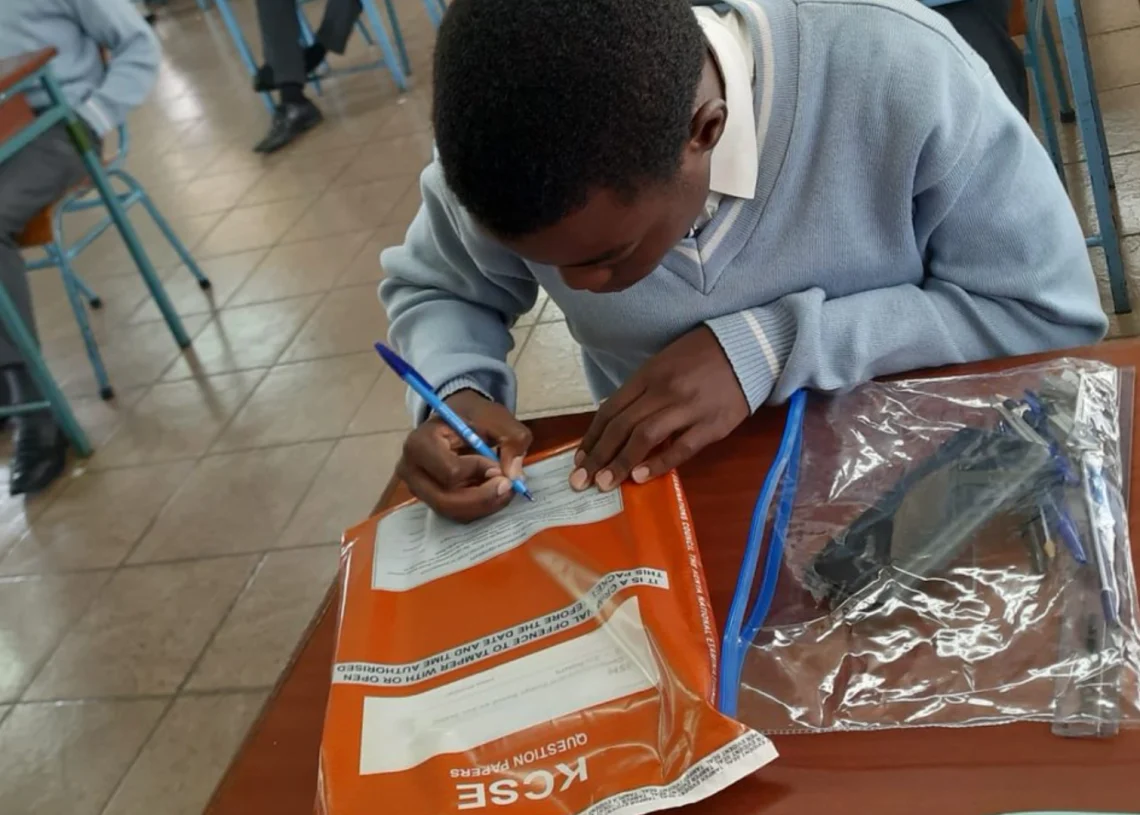
The Kenya National Examinations Council (KNEC) has released its 2025 Kenya Junior School Education Assessment (KJSEA) and Kenya Certificate of Secondary Education (KCSE) feedback reports, giving schools and other education stakeholders a deeper look at how learners performed and where improvement is needed.
The reports are more than a record of marks. They provide analysis of candidates’ performance and are designed to help teachers and schools identify areas of strength, weaknesses in learning and opportunities to improve teaching and assessment.
According to Education News, the 2025 KJSEA feedback reports are contained in three volumes:
- Volume 1: Languages
- Volume 2: Mathematics, Science, Agriculture and Pre-Technical Studies
- Volume 3: Humanities, Creative Arts and Sports
Each KJSEA feedback volume is reported to cost KSh950. KNEC has also made the KJSEA question papers and marking schemes available at KSh1,550.
For the 2025 KCSE, the feedback reports are contained in four volumes covering Languages; Mathematics and Sciences; Humanities; and Technical subjects. Question papers and marking schemes are also available.
Why this matters to schools
The real value of the reports is what schools do with the information.
Instead of simply asking, “What grade did our learners get?”, teachers can use the feedback to ask:
Which concepts did learners understand?
Which questions caused the most difficulty?
Were learners able to apply knowledge, or were they mainly recalling information?
What teaching gaps need to be addressed before the next assessment?
This makes the reports particularly relevant as schools continue adjusting to competency-based approaches to teaching, learning and assessment.
What parents should know
Parents may hear a lot about national examination grades, but the more useful question is whether assessment results are being turned into better learning.
A learner who struggles in a particular topic is not simply a “low performer”. The feedback can help teachers identify the specific skills or concepts requiring additional support.
For parents, this means asking schools questions such as:
- Which areas did learners generally struggle with?
- What interventions are being put in place?
- How will teachers use the feedback to improve classroom instruction?
- How is the school supporting learners who have specific learning gaps?
The numbers behind the assessments
The 2025 KCSE was sat by 993,226 candidates.
The 2025 KJSEA, meanwhile, involved more than 1.1 million Grade 9 learners, marking one of the largest assessment cohorts under Kenya’s competency-based education system.
That scale makes the feedback reports significant beyond individual schools: they offer a window into broader patterns in teaching, learning and assessment across the country.
Where can institutions get the reports?
KNEC says its Bookshop is located at New Mitihani House, South C, Nairobi, and offers examination publications including feedback reports, questions and marking schemes.
Institutions and other interested stakeholders can therefore obtain the 2025 reports and use them alongside their own internal assessment data.
The bigger lesson
The release of the reports should not be treated simply as another education headline.
The important question is what happens after schools read them.
If the findings are used to identify learning gaps, strengthen lesson planning, improve assessment questions and provide targeted support to learners, the reports can become a practical tool for improving classroom outcomes.
Assessment should not end with a grade. The real value comes when the evidence is used to improve learning.
#KNEC #KJSEA2025 #KCSE2025 #KenyaEducation #CBC #EducationKE
You may also like
Category: Education
Related Video: Dolly Parton’s Family Announces Her Passing in Emotional Tribute
Related Explainer: Ebola contact tracing: Why the 21-day window matters in Kenya’s response
 Facebook
 Twitter / X
 WhatsApp
 LinkedIn
 Telegram
 Reddit