

Kenya has made significant progress in getting children into school, but new research suggests that access is not translating into equal opportunities to learn.
Two education reports released by Usawa Agenda on Wednesday paint a stark picture of an education system in which a child’s chances of academic success can depend heavily on the school they attend, the resources available to that school and their family’s ability to meet education-related costs.
The findings come at a critical point in Kenya’s transition to Competency-Based Education (CBE), with the first cohort of learners already in Senior School and another cohort preparing to make the transition.
Usawa Agenda, a Kenyan education-focused civil society organisation, says the evidence raises fundamental questions about whether the country’s education system is delivering equal opportunities for children.
The organisation’s 2026 Junior School Education Report found that enrolment among children of Junior School age is high, with 96 in every 100 children aged 12 to 17 enrolled in school.
But participation is not necessarily translating into learning.
Three in 10 Grade 7 learners, according to the report, cannot read with comprehension a Grade 3-level English story. By Grade 9, the proportion falls but remains significant: one in five learners still cannot comprehend a Grade 3-appropriate English story.
The report also found that only about three in 10 junior schools have functional science laboratories.
Public junior schools were found to underperform private schools in literacy and numeracy across the grades, pointing to persistent differences in the learning environments available to children.
The findings from Senior School are even more striking.
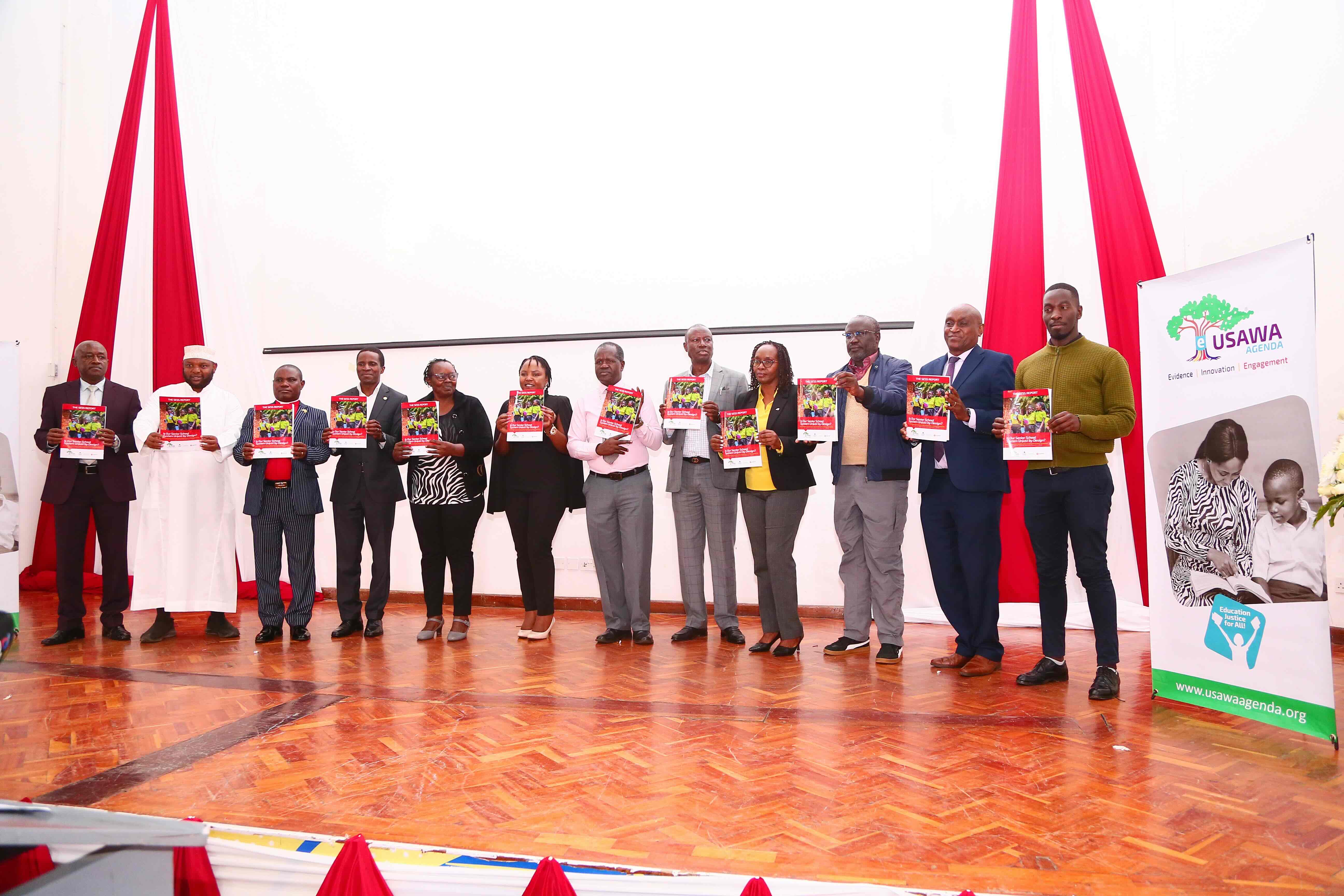
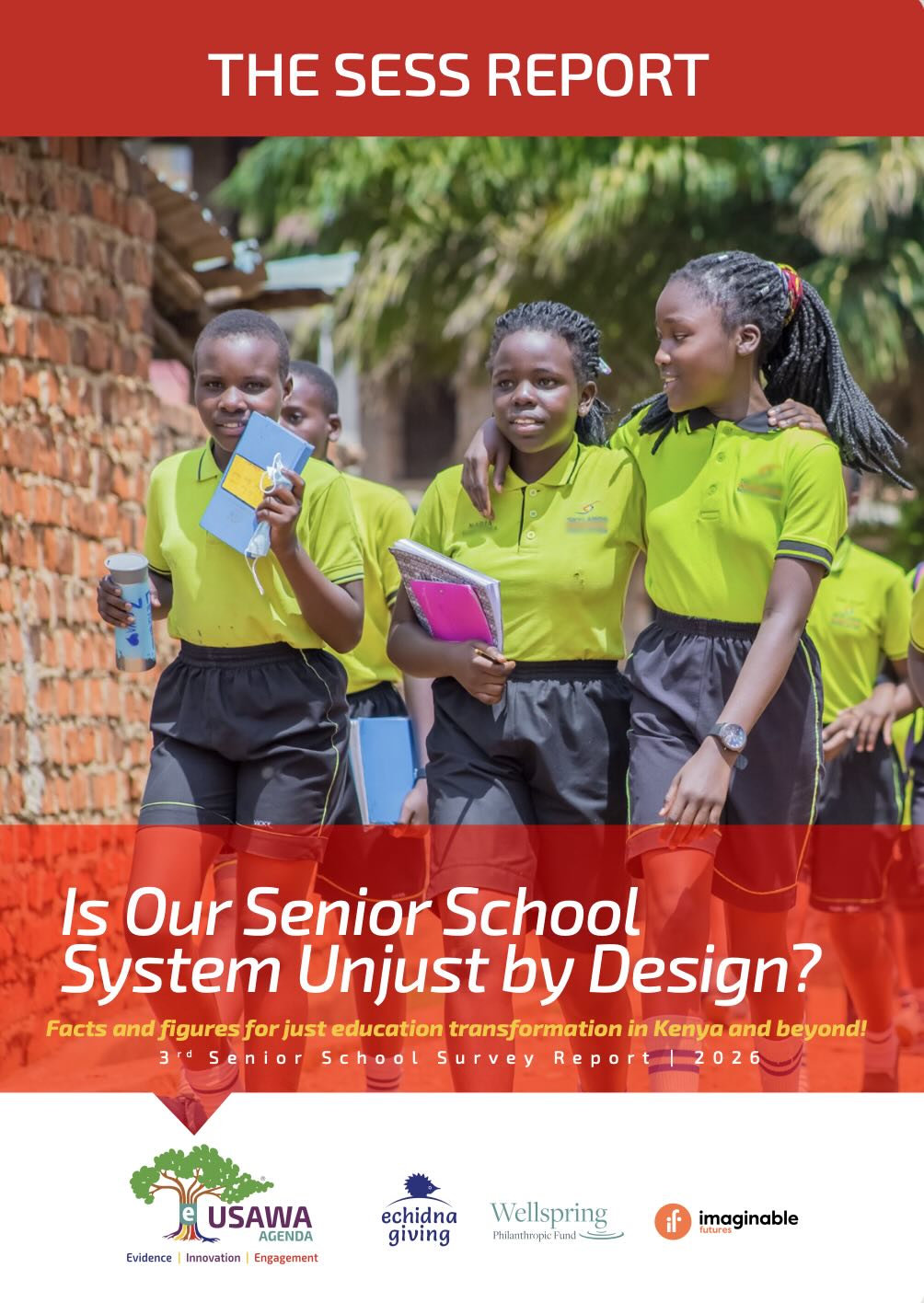
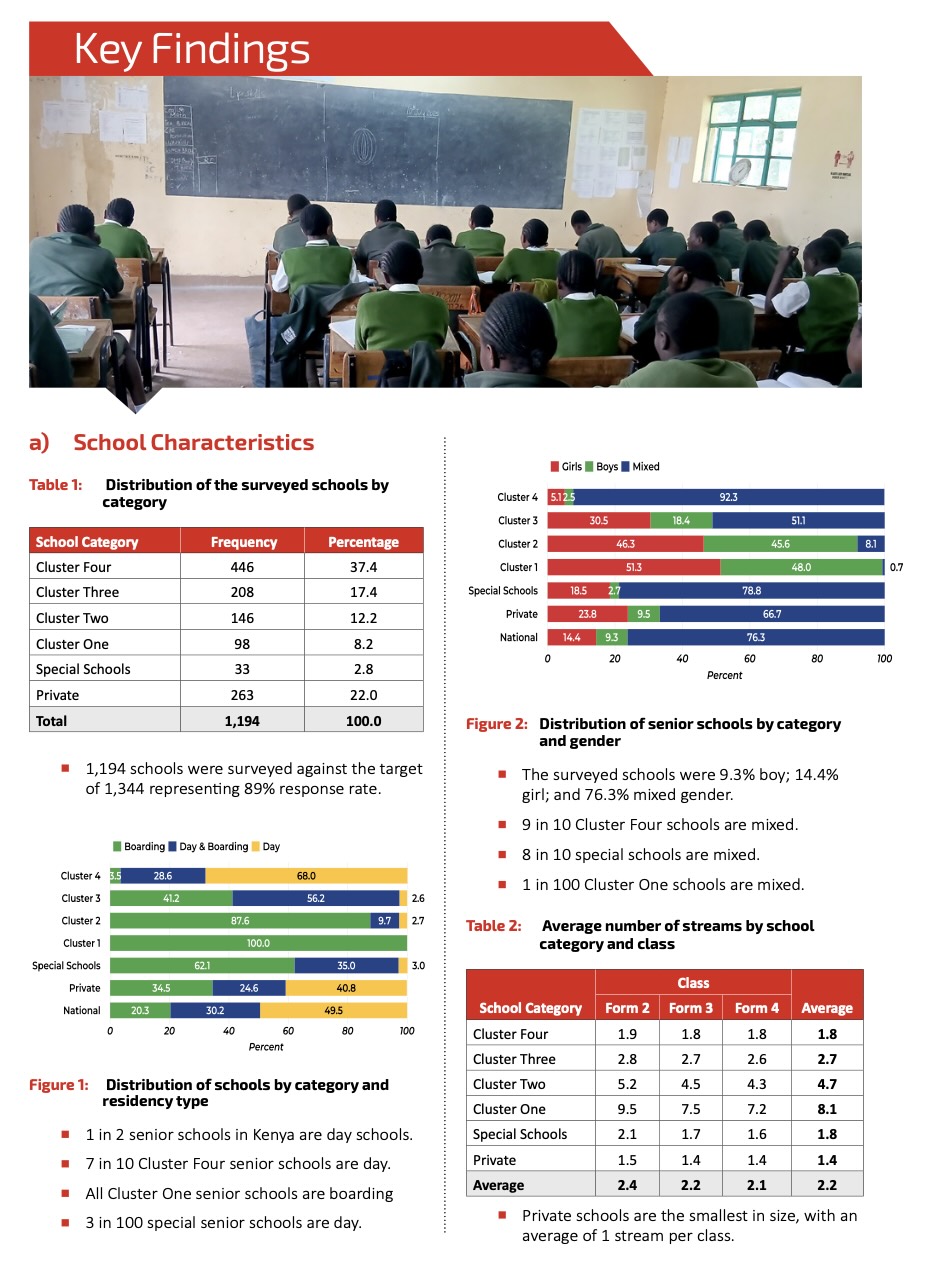
Usawa Agenda's third Senior School Survey, titled Is Our Senior School System Unjust by Design?, is based on a nationally representative survey of senior schools. Researchers reached 1,194 schools, including Cluster One to Four schools, private schools and special schools.
The report concludes that the inequalities that existed under Kenya's former school categorisation system have not disappeared following the transition to the new Cluster One-to-Four structure.
Cluster One schools generally remain better resourced, while Cluster Four schools, which educate the majority of learners, face greater constraints in infrastructure, staffing, ICT, health, safety and learner support.
That divide is visible in classrooms.
A typical Cluster One school has more than seven times as many learners per class as a typical Cluster Four school, according to the survey. A typical Cluster One school also has 29 usable classrooms, compared with seven in a typical Cluster Four school.
The differences extend to digital learning.
Nationally, only 32.2% of senior schools have operational computer laboratories and 32.5% have digital devices for teachers. Just 8.7% own tablets.
In Cluster Four schools, the figures are considerably lower: only 18.6% have operational computer laboratories and 26.6% have teacher digital devices. Only one in five Cluster Four schools offers computer lessons, compared with nine in 10 Cluster One schools.
The consequences appear in academic outcomes.
Usawa Agenda's analysis of 2024 KCSE results found that a learner attending a Cluster One senior school was more than eight times as likely to attain a mean grade of C+ or higher as a learner in a Cluster Four school.
Even after accounting for entry marks, the research found that school-level conditions mattered. Learners in schools with medical personnel were 40% more likely to attain C+ and above than those in schools without such personnel.
The report does not suggest that school category alone determines a learner's performance. Rather, its statistical analysis points to a combination of learner entry characteristics and the conditions within schools.
For families, the cost of keeping a child in school remains another barrier.
Four in 10 senior schools charge more than KES5,000 for a complete set of uniform. The burden is particularly pronounced in Cluster One schools, where nine in 10 reported uniform costs above KES5,000.
And despite Kenya's commitment to free basic education, school fees remain closely linked to absenteeism.
Seven in 10 principals surveyed said that sending learners home because of unpaid fees was the main reason for absenteeism.
The survey estimates that three in every 100 senior school learners dropped out during the year preceding the study. Cluster Four schools recorded the highest dropout rate, at 3.4%, compared with 0.5% in Cluster One schools.
A learner in a Cluster Four school was more than 11 times as likely to drop out as one in a Cluster One school.
The inequalities are also particularly severe for learners with special needs.
Lack of specialised personnel was identified by 61% of principals as a major challenge in providing quality education to learners with special needs. High costs of learning materials, inadequate government funding and inadequate infrastructure were also among the leading concerns.
Nationally, only about 2% of senior school teachers are trained in Special Needs Education.
Basic school facilities remain unevenly distributed.
Only 38% of senior schools have a library, while just 17% have libraries linked to online resources. Eight in 10 Cluster One schools have libraries, compared with about three in 10 Cluster Four schools.
Healthcare provision shows an even wider gap. Nine in 10 Cluster One schools have a sick bay, sanatorium or school clinic, compared with only 5% of Cluster Four schools.
For Usawa Agenda, the findings point to a problem that cannot be solved simply by increasing enrolment.
The organisation argues that Kenya needs to examine how resources are distributed and give greater support to schools serving disadvantaged communities.
“Evidence must inform action,” Usawa Agenda said at the launch, warning against allowing the findings to become another report that sits on a shelf.
The report's central argument is that expanding access to education is not enough. Resources, infrastructure, teachers, ICT, specialised support, healthcare, safety, water and sanitation and psychosocial services must be distributed according to need.
The findings also come as Kenya continues to implement CBE.
The Senior School Survey is the first Usawa Agenda report published after the first cohort of CBE learners entered Senior School. It therefore provides an assessment of whether schools are equipped to support the new system and highlights continuing challenges around placement and school capacity.
The question now facing policymakers is increasingly difficult to avoid: if two children have the same ambition and ability but attend schools with radically different resources, are they really being given the same opportunity to succeed?
Usawa Agenda says Kenya's education debate must move beyond how many children are enrolled and focus instead on whether every child can attend school consistently, learn effectively and have a fair chance of succeeding.
With Kenya approaching 2030, the reports suggest that the country's education challenge is no longer simply one of access.
It is increasingly a question of equity.
Keywords: Kenya education, Usawa Agenda, Junior School Education Report 2026, Senior School Survey 2026, Competency-Based Education, CBE Kenya, education inequality Kenya, Cluster One schools, Cluster Four schools, KCSE, school fees, learner absenteeism, education justice
Meta description: New Usawa Agenda reports expose deep inequalities in Kenya’s schools, from literacy and laboratories to fees, ICT, staffing and KCSE outcomes.
Suggested headline: Kenya’s education divide exposed as new report finds stark inequality between schools
Alternative headline: New report exposes stark inequalities in Kenya’s education system
You may also like
Category: Education
Related Video: The tears of a mother - nothing was wrong with my daughter, how did she DlE in school?
Related Explainer: Kiharu Technical College September Intake 2026: Courses, Skills and New Opportunities
About the Author
Maureen Onyango is a journalist passionate about storytelling, life coaching and spiritual lessons. She studied at the Kenya Institute of Management and enjoys telling stories that inform, inspire and empower communities.
 Facebook
 Twitter / X
 WhatsApp
 LinkedIn
 Telegram
 Reddit