
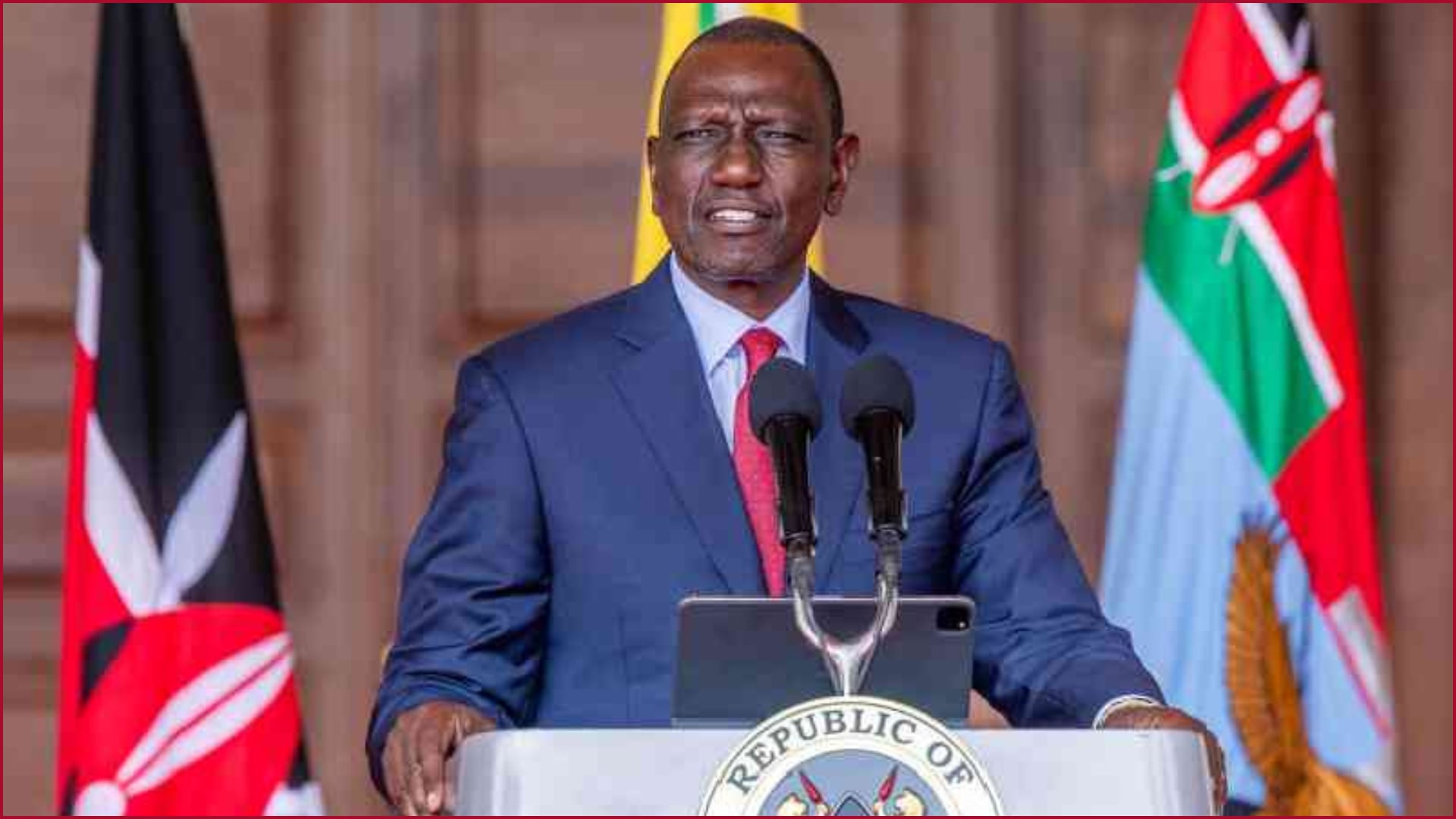
President William Ruto has challenged critics of Kenya’s Government-to-Government fuel importation model to compare the actual cost of petroleum delivered to Kenya and Uganda, as a fresh dispute over fuel procurement strains the spotlight on the two countries’ competing supply arrangements.
Speaking to Kenyans in New York on Sunday, Ruto defended Kenya’s system and rejected suggestions that the G-to-G framework had failed.
He said the arrangement was introduced after his administration took office in 2022 amid fuel shortages and a shortage of US dollars needed to finance petroleum imports.
“If there is anything we got right immediately when we took over the leadership of the country in 2022, it was to eliminate brokers in the importation of fuel,” Ruto said.

He said the government had consulted oil marketers before implementing the system and had since addressed the difficulties that emerged.
“We have sorted out the problem in a permanent way,” Ruto said. “I can tell you without contradiction as President that we have the right model, better than any other.”
His comments came days after Ugandan President Yoweri Museveni reignited debate over how Uganda previously sourced petroleum products through Kenya.
Museveni's middlemen claim
Museveni said on September 17 that Uganda had been buying petroleum products through intermediaries in Kenya without his knowledge.
He said a Kenyan politician alerted him to the arrangement around 2019.
The Ugandan leader initially referred to the person only as a Kenyan senator. He later identified him as the late former senator and Cabinet minister Cyrus Jirongo.
“It was a Kenyan Senator called Jirongo who told me this around 2019,” Museveni said in a subsequent statement.
Museveni said he then asked his Energy Minister at the time, Irene Muloni, to investigate the arrangement.
His comments were made during the groundbreaking of a 320-million-litre petroleum storage terminal in Mpigi, Uganda.
According to figures cited by Museveni and Ugandan energy officials, the premium paid on diesel imports fell from US$118 to US$83 per metric tonne under the country's current procurement arrangement.
For petrol, the figure fell from US$97.50 to US$61.50, while the aviation fuel premium fell from US$114.25 to US$79.25.
Those figures are Ugandan government figures presented in support of its current procurement model. They do not, on their own, establish the overall cost of fuel to consumers or prove that Kenya's current G-to-G system is more expensive or cheaper.
Ruto says Kenya's model is different
Kenya entered its own G-to-G petroleum supply arrangements in March 2023 with Aramco Trading Fujairah, ADNOC Global Trading and Emirates National Oil Company.
The Treasury said the framework was introduced largely to ease pressure on Kenya's foreign exchange market at a time when oil importers needed large amounts of US dollars.
Under the arrangement, suppliers agreed to provide petroleum on deferred payment terms, reducing the immediate demand for dollars from Kenyan oil marketers.
Ruto now says the model has also reduced the role of brokers in Kenya's fuel imports.
He challenged those questioning the arrangement to compare landed costs rather than rely on political claims.
“Check the landed cost of petrol products between Kenya and Uganda and see which one is cheaper,” he said.
“We have a better model than even what Uganda is using today.”
Ruto also said Kenya's system had attracted interest from other African countries.
“Malawi came to ask us. Burundi came to ask us how we are doing it,” he said.
Uganda did not completely walk away from Kenya
Despite the political differences over procurement, Uganda remains heavily dependent on Kenya's petroleum infrastructure.
Uganda National Oil Company says about 95 per cent of the country's petroleum imports are routed through Kenya via the Port of Mombasa and the Kenya Pipeline system.
UNOC became the sole importer of bulk petroleum products destined for Uganda under Uganda's current framework.
In May 2024, UNOC signed an agreement with the Kenya Pipeline Company allowing it to use Kenyan pipeline and storage infrastructure to move imported fuel into Uganda.
Uganda also supplements its supplies through Tanzania.
The two countries' fuel systems are therefore more interconnected than the latest political exchange might suggest.
The real issue is the cost of getting fuel to market
At the heart of the disagreement is not simply whether a country uses a G-to-G model.
It is what consumers ultimately pay to get fuel from the international supplier to the pump.
Kenya's Treasury has defended the G-to-G framework as a way of reducing foreign exchange pressure and securing more predictable petroleum supplies.
The government has also argued that deferred payment arrangements help ease pressure on the shilling.
But Museveni's account has shifted attention to the margins charged between the international supplier and the final buyer.
That makes landed cost an important measure in comparing the two systems.
Landed cost, however, is not the same as the final pump price. It covers the cost of getting the product into the country before other charges, including taxes, transport, storage and other components of the domestic pricing structure are added.
A meaningful comparison therefore requires the same product, comparable delivery points, similar periods and a clear breakdown of all costs.
The controversy is unlikely to end with the political exchange
Ruto has presented Kenya's system as a solution to the foreign exchange and fuel supply problems his administration inherited.
Museveni, meanwhile, has used Uganda's experience to argue for greater direct involvement by his government in petroleum procurement.
Both countries are pursuing greater control over their fuel supply chains, even though Uganda continues to rely heavily on Kenya's transport infrastructure.
For Kenya, the latest exchange places renewed attention on whether the G-to-G framework delivers the cost and supply benefits the government says it does.
For Uganda, its move towards direct imports has already changed the role of UNOC in the regional petroleum market.
The clearest test of the competing claims will therefore not be political rhetoric.
It will be the documented cost of sourcing, transporting and delivering the same petroleum products to consumers in the two countries.
You may also like
Category: News · Related Topic: William Ruto
Related Video: Dolly Parton’s Family Announces Her Passing in Emotional Tribute
Related Explainer: Explainer: What happened to milk in Kenya?
About the Author
Maureen Onyango is a journalist passionate about storytelling, life coaching and spiritual lessons. She studied at the Kenya Institute of Management and enjoys telling stories that inform, inspire and empower communities.
 Facebook
 Twitter / X
 WhatsApp
 LinkedIn
 Telegram
 Reddit