
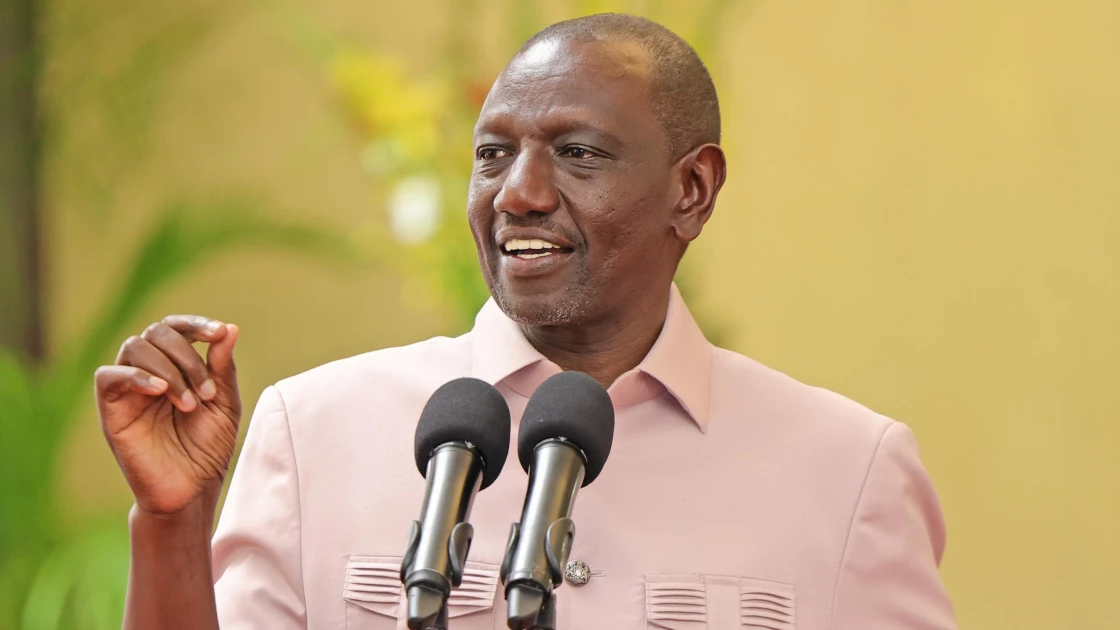
President William Ruto has denied claims that his administration pushed matatu operators to abandon a planned strike, saying the decision came after open discussions on Kenya’s fuel situation.
Speaking on Thursday at the National Prayer Breakfast in Nairobi, the President said transport leaders had met him for talks that lasted several hours, where the state of fuel supply and pricing was laid out.
He said the meeting focused on the current fuel market, past shortages, and lessons from earlier crises, including the queues witnessed in 2022.
“I did not influence them to call off the strike,” Mr Ruto said. “They looked at the facts. Many people said they were influenced this way or the other, but they responded to the situation as it is.”
He added that fuel was now available across the country, and the government had stepped in with subsidies to soften prices for consumers and businesses.
“Today, the government is subsidising fuel,” he said. “The actual price of diesel should be Sh273, but it is Sh232.”
The remarks come days after matatu operators called off a planned nationwide strike that had threatened to disrupt public transport across major towns. The decision followed negotiations between industry leaders and government officials.
On May 22, the Matatu Owners Association confirmed the suspension of the industrial action, citing progress in talks and new measures on fuel pricing. The operators had initially threatened the strike after a sharp increase in fuel costs strained transport operations.
The President said the discussions had also revisited earlier fuel subsidy policies and broader economic pressures facing the transport sector.
According to him, once the information was shared, operators opted to step back from the strike plan.
“At the end of it, they told me they would call off the strike,” he said. “I did not tell them to do so. They made that decision after seeing the facts.”
Transport leaders have acknowledged the government’s recent steps to ease pressure on fuel prices, including a planned reduction in diesel costs in the upcoming pricing cycle.
Matatu Owners Association national chair Albert Karakacha said earlier that engagement with government had helped avert disruption.
“We have called off the strike,” he said. “We will not have a strike next week; we are going to work.”
The fuel dispute traces back to an earlier price review by the Energy and Petroleum Regulatory Authority, which significantly raised pump prices and triggered widespread concern among transport operators and consumers.
While the immediate threat of industrial action has eased, the broader debate over fuel pricing, subsidies, and transport costs in Kenya remains unresolved.
You may also like
Category: News · Related Topic: William Ruto
Related Video: What Dangote’s proposed Lamu oil refinery could mean for East Africa
Related Explainer: Kenya G-to-G Oil Deal Explained: How It Works, Who Supplies the Fuel and Why It Is Controversial
 Facebook
 Twitter / X
 WhatsApp
 LinkedIn
 Telegram
 Reddit