
A fragile US-Iran truce is rapidly unravelling after Washington launched fresh strikes on Iranian military targets and Tehran responded with missiles and drones aimed at American forces and facilities across the Middle East.
Iran attacked targets linked to the United States in Jordan, Bahrain, Kuwait and Iraq on Wednesday, according to Iranian officials and regional authorities. The strikes came hours after the US military said it had completed a new wave of attacks against Islamic Revolutionary Guard Corps (IRGC) positions in Iran.
The renewed fighting has also brought a deeply troubling civilian incident to the centre of the crisis.
Iranian authorities say a US strike hit a home hosting a wedding celebration near Kuhestak in Sirik county, in southern Iran, killing five people, including a child, and injuring more than 50 others.
Local Iranian officials later put the number of wounded at 63, saying women and children made up a large share of those injured. Images released by the Iranian Red Crescent showed damage to the building and injured children receiving treatment. The claims have not been independently established in full.
The US military has acknowledged being aware of the reports but denied deliberately targeting civilians.
US Navy Captain Tim Hawkins, speaking for US Central Command, said American forces “never target civilians”.
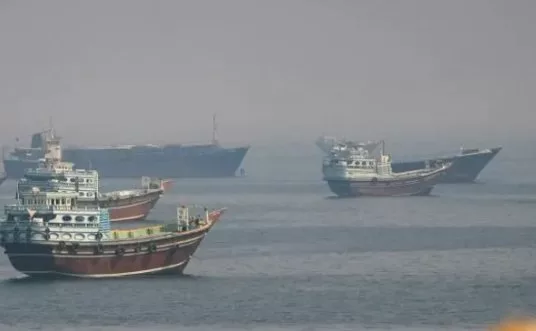
Washington says its latest operation was aimed at Iranian military infrastructure after what it described as attempted attacks by the IRGC on commercial shipping in the Strait of Hormuz and on American personnel in the region.
Iran widens retaliation
Tehran's response quickly spread beyond Iran's borders.
Jordan said its air defences intercepted Iranian ballistic missiles headed towards the country. Iranian attacks were also reported against US-linked facilities in Bahrain, Kuwait and Iraq.
Jordanian authorities said missiles were intercepted and that there were no reported casualties from the Iranian attack.
Kuwait also reported responding to Iranian missiles and drones. In one incident, a drone caused a fire in a residential area, although no deaths were reported.
Iran's Revolutionary Guards also claimed to have attacked US positions in Iraq's Kurdistan region with missiles and drones.
The United States has disputed Iranian claims of heavy American casualties from the attacks.
The widening geography of the attacks is significant.
What began as a US-Iran confrontation is now once again drawing in countries that host American military personnel and facilities. Jordan, Bahrain, Kuwait and Iraq have all been pulled into the latest exchange despite not being direct parties to the US-Iran dispute.
Trump threatens a harder response
US President Donald Trump has warned Tehran that further retaliation will bring an even stronger American response.
The latest US operation was confirmed by CENTCOM, which said its forces struck IRGC air-defence sites, radar systems, maritime facilities, mine-laying capabilities and communications infrastructure.
CENTCOM said the operation followed recent attempts by the IRGC to attack commercial shipping in the Strait of Hormuz and American forces in the region.
More than 50,000 US service members are currently deployed across the Middle East, according to CENTCOM.
That presence gives the conflict a much wider potential reach.
Iran does not need to strike the United States directly to escalate the confrontation. American bases and personnel are spread across several countries in the Gulf and wider Middle East, creating multiple points where another exchange could quickly develop.
The Strait of Hormuz is at the heart of the crisis
Beyond the missiles and drones, the biggest concern may be the Strait of Hormuz.
The narrow waterway is one of the world's most important energy routes. Disruption there can quickly affect oil prices, shipping costs and economies far beyond the Middle East.
The US says Iran has attempted to interfere with commercial shipping and has targeted maritime activity linked to the strait.
Iran, meanwhile, has insisted that its position on the waterway is tied to the wider conflict and has previously threatened to restrict access when it believes its interests are under attack.
The latest American strikes specifically included Iranian maritime facilities and mine-laying capabilities, showing how central the strait has become to Washington's military strategy.
A June peace deal has now been badly tested
The latest escalation comes only weeks after Washington and Tehran agreed to a memorandum of understanding in June intended to end military operations and create space for negotiations.
The agreement included commitments to reduce hostilities, ease the US naval blockade and facilitate commercial shipping through the Strait of Hormuz.
But implementation quickly became disputed.
Iranian President Masoud Pezeshkian said on Tuesday that Tehran remained prepared to reciprocate if Washington returned to its commitments under the agreement.
His comments came just as the latest military confrontation was gathering pace.
The renewed strikes now raise a difficult question: can the June agreement still serve as a basis for negotiations, or has the latest exchange pushed both sides back towards open conflict?
For now, neither side appears ready to back down.
Civilian toll raises fresh questions
The reported deaths at the wedding have added a human dimension to an already widening military confrontation.
Iranian officials have portrayed the incident as evidence that American strikes are harming civilians. Washington insists that civilians are not targets.
International humanitarian law requires parties to an armed conflict to distinguish between military objectives and civilians and to take feasible precautions to minimise civilian harm. It also prohibits attacks directed against civilians and indiscriminate attacks.
Establishing what happened at the Sirik-area wedding will therefore matter beyond the competing political claims.
For now, the available evidence establishes that a civilian gathering was hit and that people were killed and injured. The circumstances surrounding the strike, including the intended target and whether the attack complied with the laws of war, remain contested.
A dangerous new phase
The latest exchange marks one of the most serious setbacks to the relative calm that followed the June agreement.
American aircraft are striking deeper into Iranian military infrastructure. Iran is responding across several countries where US forces are based. The Strait of Hormuz remains under intense military pressure.
And civilians are once again paying the price.
The danger now is not only another round of US and Iranian strikes. It is the possibility of a wider regional confrontation involving American allies, Gulf states, commercial shipping and energy markets.
For families in southern Iran, the consequences are already painfully real.
A wedding that should have marked the beginning of a new chapter for one family has instead become one of the latest symbols of a conflict that refuses to stay contained.
You may also like
Category: International
Related Video: What Dangote’s proposed Lamu oil refinery could mean for East Africa
Related Explainer: Kenya’s short rains: What the 2026 forecast means for you
About the Author
Maureen Onyango is a journalist passionate about storytelling, life coaching and spiritual lessons. She studied at the Kenya Institute of Management and enjoys telling stories that inform, inspire and empower communities.
 Facebook
 Twitter / X
 WhatsApp
 LinkedIn
 Telegram
 Reddit