
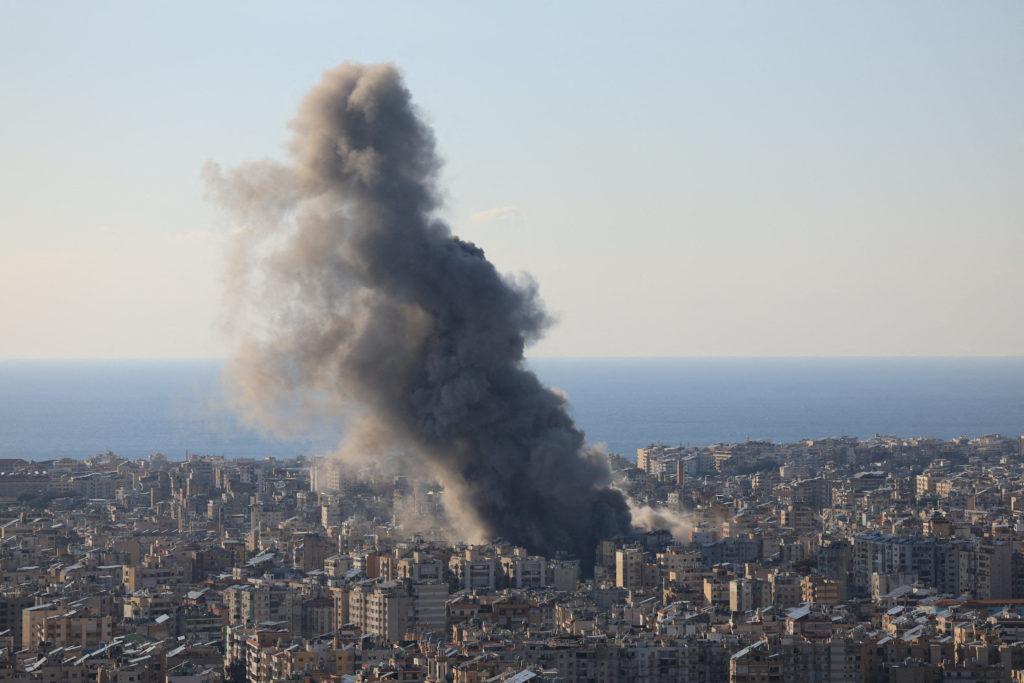
The conflict between the United States and Iran has sharply escalated after the two countries exchanged their heaviest attacks in weeks, renewing fears of a wider Middle East war and sending fresh jitters through global energy markets.
US forces launched extensive strikes against Iranian military targets along the country's southern coast, with Washington saying it targeted facilities belonging to Iran's Islamic Revolutionary Guard Corps.
Iran retaliated with missile and drone attacks targeting US military positions and American allies across the Middle East.
The latest exchange marks the most significant confrontation between Washington and Tehran since July, ending a period of relatively reduced military activity.

The escalation is particularly significant because of its proximity to the Strait of Hormuz, one of the world's most important energy corridors.
Iran widens retaliation
Iran said it targeted American military assets across the region, including positions in Bahrain, Jordan, Kuwait and Iraq.
Jordan said its military dealt with 13 missiles, intercepting 10 while three landed in remote areas. Initial US assessments indicated there were no American casualties.
Kuwait also reported an Iranian attack, while Bahrain said Iranian drones had been intercepted.
Iran's Revolutionary Guards separately claimed attacks against US positions in northern Iraq.
The widening geographical scope of the confrontation has raised concerns that countries hosting American military installations could increasingly be drawn into the conflict.
Iran has warned countries cooperating with the US military that they could face consequences.
Civilian casualties reported in Iran
Iranian authorities accused the United States of hitting civilian areas during the latest bombardment.
Iran said at least 12 people were killed during the strikes, including five people reportedly killed when a home hosting a wedding celebration in Sirik, near the Strait of Hormuz, was struck.
Dozens were reported injured.
The circumstances surrounding the reported wedding strike have not been independently established, and US officials had not publicly addressed the specific allegation at the time of reporting.
The US military said its strikes targeted military infrastructure, including Iranian air defence systems, radar installations, maritime assets, communications facilities and mine-laying capabilities.
Strait of Hormuz back at centre of conflict
Beyond the military confrontation, control and security of the Strait of Hormuz has emerged as one of the central issues in the conflict.
The narrow waterway connecting the Persian Gulf with the Gulf of Oman is crucial to the global energy market, with roughly a fifth of the world's traded oil normally passing through it.
Disruption to shipping has already affected global energy supplies.
Oil prices rose again on Wednesday following the renewed US-Iran attacks, with Brent crude climbing amid concerns that further escalation could restrict supplies.
For oil-importing economies such as Kenya, prolonged disruption could eventually translate into higher import costs and increased pressure on fuel prices, transport costs and inflation.
Trump threatens further action
US President Donald Trump has defended the latest American attacks and warned Iran against further retaliation.
Washington says its military campaign is aimed at weakening Iran's military capabilities and preventing Tehran from threatening American forces and regional allies.
Iran, however, has maintained that it will respond to American military action and has sought to increase pressure on Washington through attacks on US interests and disruption around the Strait of Hormuz.
The renewed fighting comes despite earlier efforts to reduce hostilities between the two countries.
Iranian President Masoud Pezeshkian said this week that Tehran would reciprocate if Washington returned to commitments made under an interim agreement reached earlier this year.
The latest military confrontation has made the prospect of an immediate diplomatic breakthrough increasingly uncertain.
Why the escalation matters globally
The consequences of the conflict extend well beyond Iran and the United States.
A prolonged disruption of the Strait of Hormuz could push global oil and shipping costs higher, while attacks on American bases could draw additional Middle Eastern countries deeper into the confrontation.
Renewed instability could also complicate diplomatic efforts elsewhere in the region and increase pressure on governments already struggling with the economic consequences of higher energy prices.
For African economies heavily dependent on imported petroleum products, another sustained surge in global oil prices could feed directly into transport, electricity, manufacturing and food costs.
The immediate question is whether Washington and Tehran will contain the latest exchange or whether the attacks mark the beginning of another sustained phase of the conflict.
With both sides warning of further retaliation, the risk of a broader regional confrontation remains high.
You may also like
Category: International
Related Video: BOMB!! Action Movie Online | Powerful American Blockbaster Axtion Films HD
Related Explainer: Kenya’s short rains: What the 2026 forecast means for you
 Facebook
 Twitter / X
 WhatsApp
 LinkedIn
 Telegram
 Reddit