With Israelis questioning Washington’s priorities and the Iran conflict reshaping regional politics, Trump’s silence on Netanyahu’s re-election bid carries fresh significance.
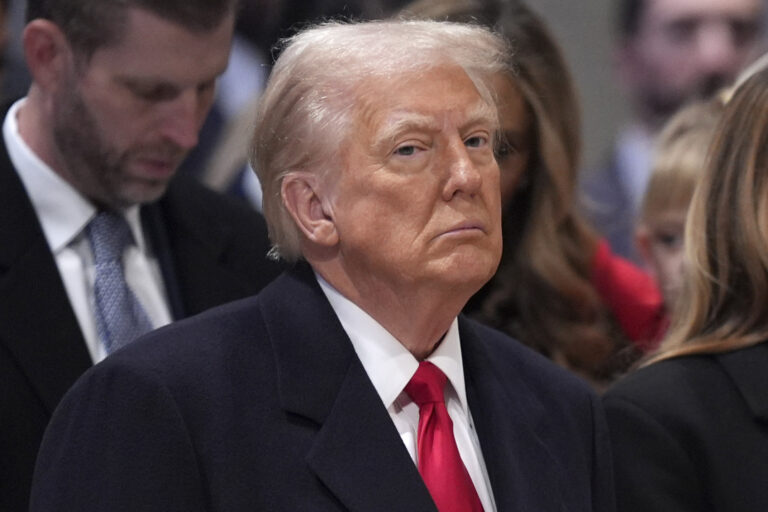
US President Donald Trump has long been one of Israeli Prime Minister Benjamin Netanyahu’s most influential international allies. But as Israel heads towards a closely contested election on October 27, Trump has stopped short of giving the Israeli leader the public endorsement he might once have expected.
The hesitation comes at a sensitive moment for Netanyahu, whose political future is being challenged by former military chief Gadi Eisenkot and a wider opposition seeking to unseat his right-wing coalition.
It also raises a broader question: can Netanyahu still count on his close relationship with Trump to strengthen his campaign, or are changing American and Israeli priorities making that alliance less politically valuable?
Recent polling suggests the relationship is not viewed as favourably by the Israeli public as it once was. Meanwhile, Washington’s handling of the conflict with Iran has exposed differences between the two leaders over security and regional strategy.
The election is therefore shaping up as more than a contest over Netanyahu’s record. It is also a test of how Israelis view their country’s dependence on its most important ally.
Trump avoids a clear endorsement
Trump has not publicly thrown his weight behind Netanyahu’s campaign in the way he has supported other conservative political allies.
In a recent interview with Time magazine, Trump repeatedly avoided directly endorsing the Israeli prime minister. He defended Netanyahu’s leadership in the period leading up to the Hamas-led attacks of October 7, 2023, but also indicated that he had no particular objection to Eisenkot.
The cautious approach contrasts with the close relationship the two leaders have cultivated over the years.
During Trump’s first term, from 2017 to 2021, his administration moved the US embassy from Tel Aviv to Jerusalem, recognised Israeli sovereignty over the Golan Heights and withdrew from the 2015 Iran nuclear agreement.
Trump also backed the Abraham Accords, which established diplomatic relations between Israel and several Arab countries.
Since returning to the White House in January 2025, he has continued to offer Israel significant political and military support. He has also called for Netanyahu to receive a pardon in his ongoing corruption trial.
Yet personal ties have not prevented disagreements over the region’s future.
The difference now is that Trump’s public support for Netanyahu is no longer as clear-cut as it once appeared, even as the US president remains central to decisions affecting Israeli security.
Iran conflict puts the relationship under pressure
The conflict involving Iran has become a major source of tension between Washington and Jerusalem.
In June, Trump and Netanyahu found themselves at odds over a US-Iran agreement intended to halt hostilities. Netanyahu’s government was concerned that an arrangement limiting military action could leave important Israeli security concerns unresolved.
Trump, meanwhile, sought to end the fighting and pursue an agreement with Tehran.
Reuters reported in June that the two leaders had diverged over the terms of the proposed halt to hostilities, particularly after Israeli strikes in Lebanon threatened to undermine the agreement.
The tensions have not ended their cooperation. But they have demonstrated that Trump is prepared to pursue American objectives even when they conflict with Netanyahu’s preferred approach.
More recent reporting suggests the question of renewed military action against Iran remains open.
On October 7, Axios reported that the Pentagon had been instructed to prepare options for possible renewed major combat operations in Iran. No date had been set, and Trump had not made a final decision.
The report also said Trump and Netanyahu had spoken twice in recent days after a prolonged period with little direct contact.
Any renewed conflict could have consequences for both leaders. It could reshape the Israeli campaign, affect regional security and influence American domestic politics ahead of the US midterm elections.
For Netanyahu, the challenge is to show voters that he can protect Israel’s security while maintaining a productive relationship with Washington.
For Trump, the priority is to decide how far the United States should go in supporting Israel without being drawn into a conflict on terms it does not favour.
Israeli confidence in Trump has fallen
The uncertainty surrounding the alliance is reflected in Israeli public opinion.
A survey published by the Israel Democracy Institute on June 9 found that 44 per cent of Israelis considered their country’s security a central consideration for Trump. That was down from 61 per cent in the previous measurement.
The figures fell further in the institute’s July survey. Only 28 per cent of respondents said Israel’s security was a central consideration for the US president.
The findings suggest that many Israelis have become less confident that Washington’s decisions will necessarily prioritise their country’s interests.
The surveys do not, on their own, establish why public confidence has declined. However, the disagreements over Iran and Lebanon offer important context for understanding the shift.
The change also matters politically for Netanyahu, who has repeatedly presented his relationship with Trump as evidence of his ability to secure international backing for Israel.
That message may carry less weight with voters who believe the US president is increasingly guided by his own political and strategic calculations.
Netanyahu changes his campaign message
Netanyahu has traditionally highlighted his international relationships as a central part of his political appeal. Images and slogans emphasising his access to world leaders have featured prominently in previous campaigns.
This time, his messaging has placed greater emphasis on Israel’s adversaries.
His campaign has highlighted figures such as Hezbollah leader Naim Qassem, Turkish President Recep Tayyip Erdogan and New York City Mayor Zohran Mamdani, according to the original report.
The shift reflects an effort to focus attention on security threats and Netanyahu’s claim that his leadership is best equipped to confront them.
It also comes as his government faces questions about the October 7, 2023, attacks, the subsequent wars and the absence of an independent state commission investigating the security failures.
A report published by The Washington Post on October 7 found that survivors and bereaved families remain divided over Netanyahu’s leadership. Some want him held politically accountable for the failures preceding the attacks, while others support his continued leadership and argue that Israel needs a strong hand against its enemies.
The dispute illustrates the competing priorities shaping the election: security, accountability, the future of the wars and confidence in the country's leadership.
Eisenkot offers an alternative, but change has limits
Eisenkot, a former chief of staff of the Israel Defence Forces, is seeking to build an opposition capable of defeating Netanyahu’s coalition.
His political appeal rests partly on promises of more restrained governance, improved relations with international partners and action against extremist settler violence in the occupied West Bank.
The opposition also wants to restore Israel’s standing abroad after years of criticism over its military operations and policies towards Palestinians.
However, a change of government would not necessarily mean a fundamental shift in Israel’s relationship with the United States.
Washington and Jerusalem have deep security ties, and much of their cooperation extends beyond the personal relationship between their leaders.
An Eisenkot-led government could seek a different tone on Gaza, the West Bank and diplomacy. But the extent of any change would depend on coalition negotiations, security developments and the policies of the incoming government.
Nor does a potential opposition victory automatically imply a breakthrough in efforts to establish a Palestinian state. The opposition’s various parties have different positions, and major changes to Israeli policy remain uncertain.
The choice facing voters is therefore not simply between close ties with Trump and a complete break from his administration. It is also about how Israel should manage those ties while pursuing its own security and political priorities.
What the election means for Trump
Trump’s decision not to offer Netanyahu an unequivocal public endorsement does not mean he has abandoned the Israeli leader.
The two administrations continue to communicate, and the latest reports of renewed discussions over Iran show that their relationship remains strategically important.
But Trump has demonstrated that his foreign policy can be shaped by his own priorities, including efforts to contain regional conflicts and avoid commitments that could carry wider costs for the United States.
A renewed military confrontation with Iran could alter the political calculations in Israel. It could strengthen Netanyahu’s argument that wartime experience is essential, or deepen concerns about the risks and consequences of his approach.
The election result will also depend on coalition arithmetic. Recent polling averages show neither Netanyahu’s camp nor the opposition bloc with a clear path to the 61 seats needed for a majority in Israel’s 120-seat parliament.
That leaves room for negotiations and political manoeuvring after the vote.
For now, Trump’s stance leaves Netanyahu without the unambiguous campaign boost he might have hoped for from Washington. But the alliance remains intact, and the outcome of the election could determine how its next chapter unfolds.
The central question is whether Netanyahu can persuade Israeli voters that his international relationships and security record justify another term — even as confidence in Trump’s priorities appears to weaken.
You may also like
Category: International
Related Video: What Dangote’s proposed Lamu oil refinery could mean for East Africa
Related Explainer: Kiharu Technical College September Intake 2026: Courses, Skills and New Opportunities
About the Author
Maureen Onyango is a journalist passionate about storytelling, life coaching and spiritual lessons. She studied at the Kenya Institute of Management and enjoys telling stories that inform, inspire and empower communities.
 Facebook
 Twitter / X
 WhatsApp
 LinkedIn
 Telegram
 Reddit