
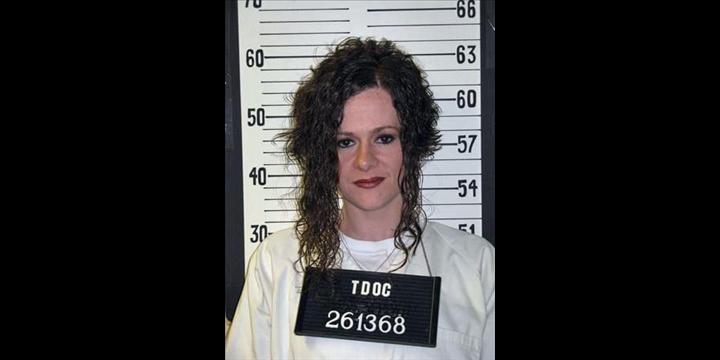
Emergency calls from a Tennessee prison were initially dismissed as false after a lethal injection failed, raising fresh questions about procedures and accountability.
Emergency responders spent about 31 minutes trying to verify a call for medical help after Tennessee’s attempt to execute death row inmate Christa Pike failed, newly released records show.
The recordings reveal confusion between prison officials and emergency dispatchers on the night of 30 September, when Pike survived two doses of the lethal injection drug pentobarbital.
The first emergency call was made at about 8.40pm. But the caller could not provide a verification code, prompting dispatchers to question whether the request was genuine.
At 9.03pm, a dispatcher told colleagues they had been informed that the call was false and that no medical assistance was needed at Riverbend Maximum Security Institution in Nashville.
It was not until around 9.11pm that prison officials confirmed the call was legitimate and emergency responders were allowed through the gates.
The timeline, documented in recordings obtained by the Associated Press through a public records request, has intensified scrutiny of the events surrounding the failed execution.
It also raises a troubling question: what happens when a prison’s execution procedures end in a medical emergency that staff are not prepared to handle?
How confusion delayed emergency assistance
The first call reportedly came from inside the prison, where officials had administered the lethal injection but Pike remained alive.
The caller explained that an execution had taken place and requested an ambulance. However, the inability to verify the caller’s identity complicated the response.
The situation became more confusing when staff at the prison’s Central Control told emergency officials they had not made the call.
According to the AP’s account of the recordings, Central Control said it would normally have been responsible for requesting emergency assistance.
Meanwhile, first responders were being told that someone at the prison gates was insisting the call was genuine and demanding that they enter.
The emergency was eventually confirmed, allowing responders to enter the facility at approximately 9.11pm. An ambulance and fire trucks arrived at the building within the prison grounds at about 9.14pm.
The confusion had not entirely ended by the time Pike was being transported to hospital.
At 9.34pm, one medic asked dispatchers to ensure prison officials knew which hospital was receiving her.
The medic explained that this was necessary because there had already been so much confusion.
The records do not establish who was ultimately responsible for the delay. That question remains central to the wider investigation into the failed execution.
A second emergency call came from Pike’s lawyer
The records also show that the first call was not the only request for urgent medical assistance.
At about 9.08pm, attorney Kelly Gleason contacted emergency services on Pike’s behalf.
Gleason told the dispatcher that her client had gone through the stages of the execution procedure but was still alive and breathing. She stressed that Pike needed immediate life-saving care.
The call highlights the efforts by Pike’s legal team to obtain medical assistance while officials were still trying to establish what had happened inside the prison.
Pike’s lawyers had been present as witnesses to the execution. Her legal team has since described the ordeal as medically unprecedented and raised concerns about the state’s handling of the aftermath.
A Tennessee judge has also ordered the state to preserve evidence connected to the failed execution, including relevant records and communications.
The order could prove important in establishing the sequence of events and determining whether the prison followed its own procedures.
Why did the lethal injection fail?
Tennessee has not yet publicly established the precise reason Pike survived.
The state Department of Correction said on the night of the incident that it had followed the execution protocol approved by the Attorney General’s Office. It also maintained that the drug used had consistently been effective.
However, surviving two doses of the drug has raised questions about how it was administered and whether the execution protocol adequately addressed the possibility of failure.
Medical experts have identified several possible explanations, including problems with the drug itself or the placement of the intravenous lines.
Pike’s lawyers had previously raised concerns about a blood disorder that could cause clotting at injection sites. Her legal team has suggested that the drug may have entered surrounding tissue instead of reaching her bloodstream in a sufficient amount.
That explanation has not been confirmed by the state or an independent investigation.
Tennessee’s protocol provides for a second dose of pentobarbital if the first does not result in death. But the AP reported that it does not specify what officials should do if an inmate remains alive after the second dose.
That gap has become particularly significant because the state was forced to shift from carrying out an execution to arranging emergency medical treatment.
Pike recovers enough to return to prison
Pike, 50, was taken to hospital after the failed execution and spent several days in critical condition.
Her lawyers initially feared she might not survive. She was placed on a ventilator and later regained consciousness, began speaking and was able to walk with assistance.
Her legal team confirmed on 10 October that she had been discharged from hospital and returned to the Debra K. Johnson Rehabilitation Center in Nashville, where she had been held for more than 30 years.
In a statement reported by local broadcaster WSMV, her lawyers said: “She is continuing to receive medical care at the prison, and we will continue to track her recovery.”
Her long-term medical condition remains a concern. Her lawyers have previously reported injuries and cognitive difficulties following the failed execution.
Pike’s survival is considered unprecedented in the modern US practice of lethal injection, although the precise circumstances of previous execution failures differ.
Tennessee pauses executions as pressure mounts
The incident has already had consequences for Tennessee’s prison administration.
Governor Bill Lee has paused further executions for the remainder of 2026 while the state reviews what went wrong.
The state’s Department of Correction commissioner, Frank Strada, also announced plans to step down in October, making his departure the first major leadership change following the failed execution.
The resignation does not, on its own, establish that he was personally responsible for the incident.
The state has yet to announce whether it will attempt to execute Pike again. Her lawyers are asking Lee to commute her death sentence to life imprisonment without the possibility of parole.
Pike was sentenced to death for the 1995 murder of 19-year-old Colleen Slemmer, a fellow student whom Pike and her then-boyfriend, Tadaryl Shipp, attacked. Pike was 18 at the time of the crime.
Shipp remains in prison after receiving a life sentence rather than the death penalty because he was a minor when the crime was committed.
Slemmer’s family has sought justice for decades. Her mother has described the failed execution as a mess, reflecting the frustration surrounding an event that was meant to bring the state’s long-running case to its conclusion.
The family’s position underscores another dimension of the case: the impact of the failed execution extends beyond prison officials and Pike’s legal team to the relatives of the victim, who have waited years for the sentence to be carried out.
Questions that the investigation must answer
The newly released recordings provide a clearer picture of the confusion after the injection failed, but they do not resolve the central questions.
Investigators will need to establish why the first emergency call could not be verified, why prison staff appeared to give conflicting information and whether the delay affected Pike’s medical outcome.
They must also determine why the execution procedure failed and whether existing rules adequately cover a situation in which a prisoner survives the prescribed doses.
The distinction matters. The failure of the injection and the delay in emergency assistance are related events, but they require separate explanations.
Tennessee authorities have maintained that the approved execution protocol was followed. The state’s review will need to address that position alongside the timeline recorded by emergency dispatchers.
For now, Pike remains in prison, receiving medical care, while the state has suspended further executions.
The case has left Tennessee facing difficult questions about the reliability of its execution procedures, the handling of medical emergencies and the accountability required when a state-sanctioned execution does not go as planned.
You may also like
Category: International
Related Video: Dolly Parton’s Family Announces Her Passing in Emotional Tribute
Related Explainer: Ebola contact tracing: Why the 21-day window matters in Kenya’s response
About the Author
Maureen Onyango is a journalist passionate about storytelling, life coaching and spiritual lessons. She studied at the Kenya Institute of Management and enjoys telling stories that inform, inspire and empower communities.
 Facebook
 Twitter / X
 WhatsApp
 LinkedIn
 Telegram
 Reddit