
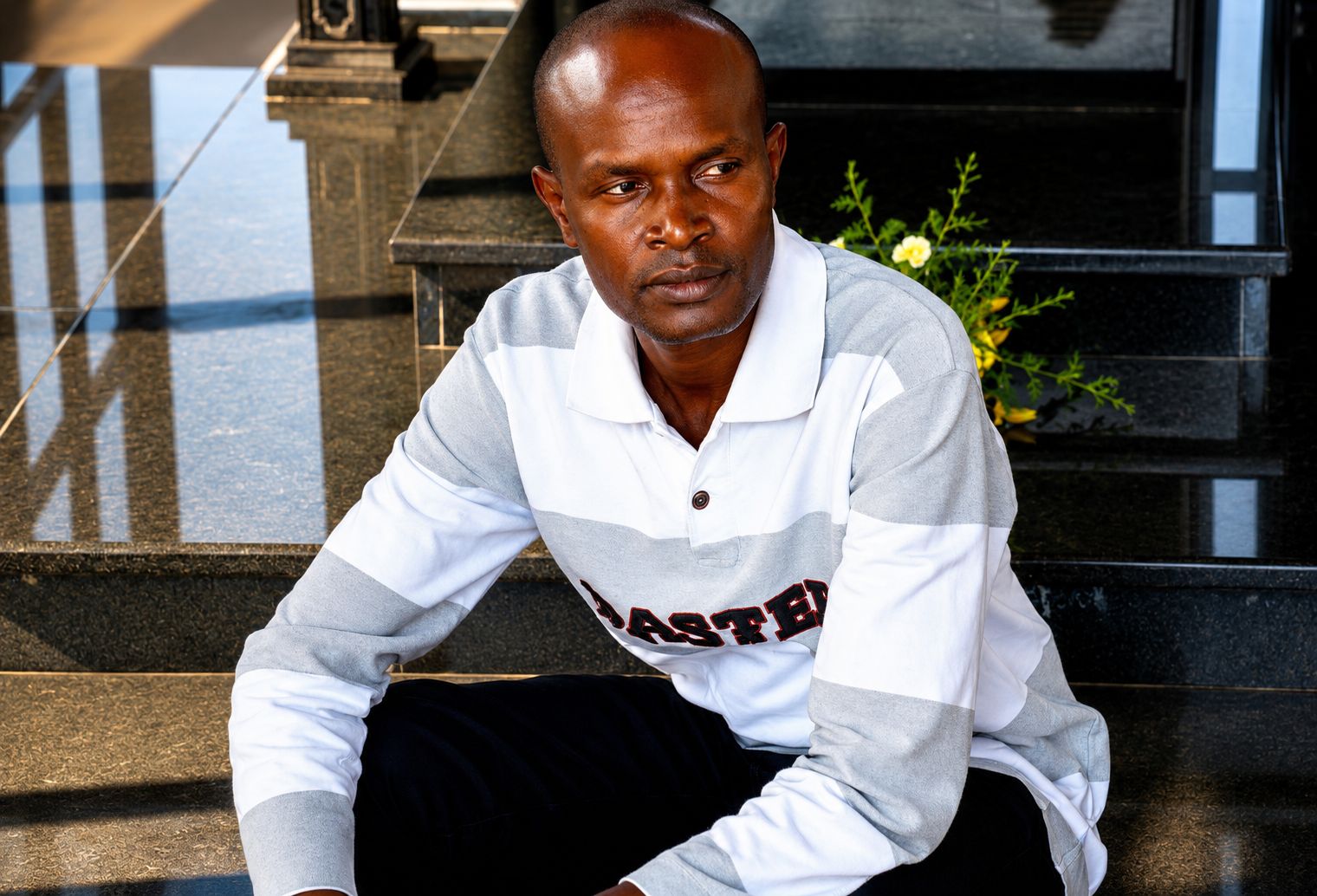
For years, Alex Kiprotich operated largely away from the public spotlight.
He was the kind of journalist whose influence was more readily understood inside newsrooms and political circles than by the ordinary newspaper reader: reporter, bureau chief, deputy news editor, former press secretary to retired President Daniel arap Moi and, eventually, Associate Editor at the Standard Group.
Now he is at the centre of one of Kenya's most consequential media freedom controversies in recent years.
Kiprotich was abducted by armed masked men along the Gilgil-Nakuru Road on the night of September 1, 2026, before being driven more than 200 kilometres and abandoned near Masinga Dam hours later.
It was the second time in just over two months that armed men had targeted him.
But perhaps the most revealing detail from his latest ordeal is what his abductors allegedly wanted to know.
According to accounts Kiprotich gave his colleagues after his release, his captors repeatedly questioned him about where The Standard gets its stories, how the newspaper decides its headlines and whether former Baringo Senator Gideon Moi receives visitors at Kabarak.
Those questions go directly to Kiprotich's unusual position at the intersection of journalism, editorial power and the Moi family's political history.
So, who exactly is Alex Kiprotich?
From Moi University to journalism
Kiprotich's path to one of the most influential editorial positions at The Standard was built through both journalism and academia.
Available biographical records show that he studied Linguistics and Literary Studies at Moi University, graduating with a Bachelor of Arts degree.
He subsequently obtained a postgraduate diploma in Journalism and Mass Communication from Kenyatta University and later a Master of Arts in Journalism and Mass Communication from Egerton University.
He also pursued a Master of Science degree in Human Resource Management at Jomo Kenyatta University of Agriculture and Technology.
Before becoming a prominent Standard journalist, Kiprotich worked at Kabarak University as a speechwriter and public relations officer.
That position placed him within an institution closely associated with former President Daniel arap Moi and would become an important part of the political and professional network surrounding his later career.
The Standard journey begins
Kiprotich joined the Standard Group in July 2007.
He initially worked as an investigative and special features writer, building a reputation around stories that required extensive sourcing and reporting.
His career received a significant boost in 2010 when he won the David Astor Journalism Award.
The fellowship took him to Britain, where he was attached to The Independent newspaper in London.
It was an important professional milestone.
On returning to Kenya, Kiprotich continued rising through The Standard's editorial hierarchy.
He eventually moved from the company's Nairobi headquarters to Nakuru, becoming the newspaper's Nakuru Bureau Chief while also holding the position of Deputy News Editor.
The move placed him at the heart of coverage of the Rift Valley — one of Kenya's most politically consequential regions.
The Nakuru years
Kiprotich's years in Nakuru were important in shaping the editor he would eventually become.
As bureau chief, he oversaw coverage extending beyond routine county news into national politics, security, banditry and the affairs of the Moi family.
Archived Standard articles bearing his byline show him reporting extensively on insecurity in Baringo and Laikipia, police operations and political developments involving Gideon Moi.
His journalism occasionally brought him into direct confrontation with security agencies.
In May 2015, Kiprotich, then Deputy News Editor and Nakuru Bureau Chief, was summoned by the Criminal Investigation Department over The Standard's reporting on the Nadome killings in Baringo.
Investigators wanted details about the sources behind the newspaper's reporting after senior police officers were reportedly ambushed by bandits.
Kiprotich appeared before investigators accompanied by lawyer Juma Kiplenge.
His lawyer subsequently said investigators had sought information about the sources used by the newspaper.
The episode attracted the attention of media freedom organisation ARTICLE 19, which later cited Kiprotich's case in a report examining intimidation of journalists and threats to source confidentiality in Kenya.
More than a decade before his 2026 abduction, therefore, Kiprotich had already experienced pressure from authorities seeking to establish where sensitive information published by his newspaper had originated.
That history makes what allegedly happened during his latest abduction particularly striking.
From covering the Moi family to working for Mzee Moi
Kiprotich's relationship with the Moi establishment eventually extended beyond reporting.
In May 2018, reports emerged that he had been appointed press secretary to former President Daniel arap Moi at Kabarak.
The appointment was confirmed at the time by Moi's personal secretary John Lokorio.
Kiprotich was reported to have replaced veteran presidential press secretary Lee Njiru, although the transition became embroiled in an internal dispute over whether Njiru had actually retired.
Business Today reported at the time that Kiprotich had previously been moved from Nairobi to Nakuru, where he was positioned close to Kabarak and could understudy Njiru.
The appointment was unusual because Kiprotich was simultaneously an established Standard Group editor.
It placed him even closer to the Moi family, whose interests have historically been associated with the Standard Group.
This proximity would later become politically significant.
While there are references to Kiprotich's close association with the Moi family and Gideon Moi, available credible records reviewed for this story do not establish that he separately held a formal position as Gideon Moi's communications officer.
What is established is his work for former President Moi, his long coverage of the Rift Valley and Moi family politics, and his eventual rise to senior editorial leadership at the Standard Group.
Rise to Associate Editor
By 2025, Kiprotich had risen to Associate Editor at the Standard Group.
The title understates the operational influence associated with his job.
Kiprotich himself described his position to the Committee to Protect Journalists in June in more direct terms: he was “the editor responsible for The Standard's content.”
That places him close to the centre of decisions over which stories receive prominence, how major investigations are packaged and, critically, what appears on the newspaper's front page.
Standard Group CEO Chaacha Mwita has similarly described Kiprotich as being at the forefront of the company's editorial output.
In practical newsroom terms, that makes him much more than another senior journalist.
When The Standard publishes an aggressive political headline or places an investigation prominently on its front page, Kiprotich is among the senior editorial figures associated with shaping that output.
And in 2026, those headlines have become politically contentious.
The Standard versus Ruto
Relations between President William Ruto's administration and the Standard Group have deteriorated sharply.
The newspaper and its other platforms have increasingly scrutinised the government's record on governance, corruption, police conduct and promises made since Ruto came to power.
The tension became unusually public on June 24.
President Ruto directly attacked the Standard Group's coverage in a social media post addressed to “GMoi” — an apparent reference to Gideon Moi.
Ruto accused the media organisation of publishing what he called “EXTORTIONIST propaganda HEADLINES” about him and his administration five days a week.
The accusation was significant.
Rather than treating The Standard's editorial position purely as a newsroom matter, the President publicly connected its coverage with Gideon Moi and the political relationship between the two men.
The Standard Group has rejected attempts to intimidate it over its journalism.
Three days after Ruto's post, Kiprotich says armed men came for him.
June 27: First attempt
On June 27, Kiprotich was driving to work in Nakuru when a vehicle intercepted him.
According to his account to the Committee to Protect Journalists, three men in civilian clothes carrying AK-47 rifles emerged from the vehicle.
One opened the passenger door to establish whether Kiprotich was alone before moving towards the driver's side.
Kiprotich locked his doors and accelerated away.
He later reported the incident to police.
The Standard subsequently conducted its own investigation and alleged that the Toyota Probox used in the attempted abduction was linked to the National Police Service's Crime Research and Intelligence Bureau.
The allegation has not resulted in any publicly announced prosecution.
Police spokesperson Muchiri Nyaga rejected suggestions of police involvement when questioned by CPJ.
Kiprotich, however, told the press freedom organisation something revealing about why he believed he had been targeted.
“As the editor responsible for The Standard's content, I knew I had become a target,” he said.
September 1: This time they got him
Sixty-seven days later, the second attempt succeeded.
Kiprotich left the Standard Group headquarters on Mombasa Road shortly after 7pm on September 1 and headed towards Nakuru.
According to subsequent reporting, a vehicle allegedly followed him from Nairobi and repeatedly attempted to intercept him.
Near Gilgil, armed masked men finally blocked his vehicle.
Video footage of the incident shows armed individuals confronting the vehicle.
Kiprotich can be heard asking what he had done.
He was taken shortly before 9.20pm.
Hours later, he was abandoned near Masinga Dam, more than 200 kilometres from the site of his abduction.
He eventually sought help from a nearby household before colleagues reached him.
Reuters independently reported his recovery and said dashcam footage showed masked men forcibly taking the editor from his vehicle.
What the abductors allegedly wanted to know
What happened inside the vehicle may provide the most important clue to why Kiprotich was targeted.
According to The Standard's account of what he told colleagues, the abductors repeatedly questioned him about the newspaper.
They allegedly wanted to know where The Standard gets its stories.
They wanted to know how its headlines are decided.
And they allegedly asked about Gideon Moi and whether people visit him at Kabarak.
These are not ordinary questions for kidnappers seeking ransom.
No ransom demand has been publicly reported.
Instead, the questions described by Kiprotich concern confidential journalistic sources, editorial decision-making and the political relationship between the Standard Group and Gideon Moi.
The claims have not yet been independently established by investigators, but they have intensified demands for authorities to determine who organised the operation and why.
The headlines at the centre of the storm
The controversy cannot be separated from The Standard's increasingly combative coverage of the Ruto administration.
Its reporting has scrutinised government spending, corruption allegations, police conduct and unfulfilled government promises.
KTN News has also run critical programming examining the administration's record, including a series titled “The Gallery of Ruto's Lies.”
Ruto's own June intervention demonstrated that State House was paying attention to the newspaper's front pages.
His complaint specifically referred to the frequency of critical headlines.
That matters because determining headlines is precisely one of the subjects Kiprotich says his abductors questioned him about.
It creates a troubling sequence:
The Standard publishes increasingly critical coverage.
The President publicly attacks its headlines and links the media house to Gideon Moi.
Three days later, armed men allegedly attempt to seize the editor responsible for its content.
The attempt fails.
Just over two months later, armed men intercept him again.
This time they take him.
And during his captivity, according to Kiprotich's account, they ask how The Standard chooses those headlines.
None of this proves who ordered the abduction.
Establishing that requires an independent criminal investigation.
But the sequence explains why media organisations are refusing to treat Kiprotich's case as an ordinary kidnapping.
Where Nelson Amenya fits in
The wider story of The Standard's confrontational journalism also intersects with whistleblower Nelson Amenya.
Amenya became nationally prominent after exposing documents surrounding the controversial proposed Adani takeover and development of Jomo Kenyatta International Airport.
The Standard extensively covered his revelations and interviewed him about alleged threats he received after exposing the deal.
The proposed Adani arrangements eventually became one of the defining accountability controversies of Ruto's presidency.
Amenya has since become a prominent government critic and commentator on corruption and accountability.
Following Kiprotich's September abduction, Amenya publicly questioned the political logic of targeting a journalist at a time when the government was already under pressure over enforced disappearances and media freedom.
He argued that abducting a journalist would cause greater political damage to President Ruto than the criticism authorities might be seeking to suppress.
An editor with unusual connections
Kiprotich's career is unusual because it traverses several worlds that normally remain separate.
He has been an investigative reporter.
He has managed a regional newsroom.
He has been questioned by detectives seeking journalistic sources.
He worked as a speechwriter and public relations officer at Kabarak University.
He was appointed press secretary to former President Moi.
He maintained deep professional connections to the Rift Valley.
And he eventually became one of the senior editors shaping the output of a national media organisation associated with the Moi family.
Today, that media organisation is locked in an increasingly hostile relationship with a government led by a President who is also preparing for a potentially difficult re-election campaign in 2027.
That makes Kiprotich's role particularly sensitive.
Police now under pressure to answer the biggest question
Inspector General Douglas Kanja has ordered an investigation into Kiprotich's abduction.
Police say investigators will seek to identify the heavily armed individuals captured on video during the incident.
The investigation must also confront several uncomfortable questions.
Who owned and controlled the vehicles used in the June and September incidents?
Who were the armed men?
Why was Kiprotich allegedly questioned about journalistic sources and editorial headlines?
Why was Gideon Moi allegedly discussed?
Were the June and September incidents connected?
And, most importantly, who ordered the operation?
The Standard Group, Kenya Editors Guild, Media Council of Kenya, Media Owners Association, Amnesty International and the Committee to Protect Journalists have all demanded accountability.
For Kiprotich, the latest incident brings his career full circle in a disturbing way.
In 2015, investigators summoned him and sought information about the confidential sources behind The Standard's reporting.
Eleven years later, according to his account, armed masked men abducted him and again demanded to know where his newspaper gets its information.
The difference is that this time there was no summons, lawyer or interview inside a police station.
There were guns, masks and a journey through the night that ended beside Masinga Dam.
That is why the question of who Alex Kiprotich is has become inseparable from a much bigger question facing Kenya:
Who is so interested in what The Standard knows — and how far are they prepared to go to find out?
You may also like
Category: Features
Related Video: Murkomen Says Kenya Is Safe: “Stop Creating a Crisis” | Political Goons & Security Under Scrutiny
Related Explainer: Inside Kenya’s crude supply puzzle as Dangote prepares to break ground in Lamu
 Facebook
 Twitter / X
 WhatsApp
 LinkedIn
 Telegram
 Reddit