
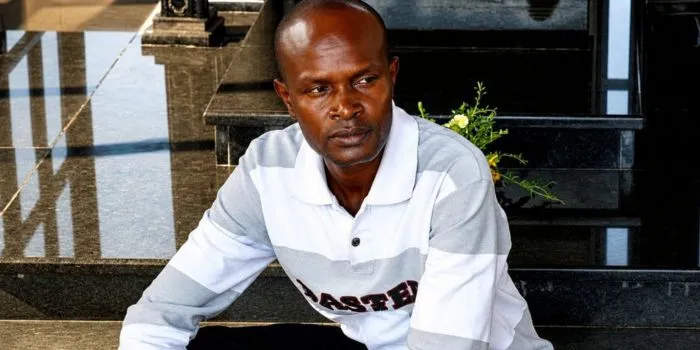
A senior Standard Group editor has been found safe after armed men allegedly forced him from his vehicle along the Gilgil-Nakuru road, holding him for about nine hours before abandoning him near Masinga Dam.
The incident has now triggered an investigation by the National Police Service, even as questions mount over why Alex Kiprotich has been targeted twice in just over two months.
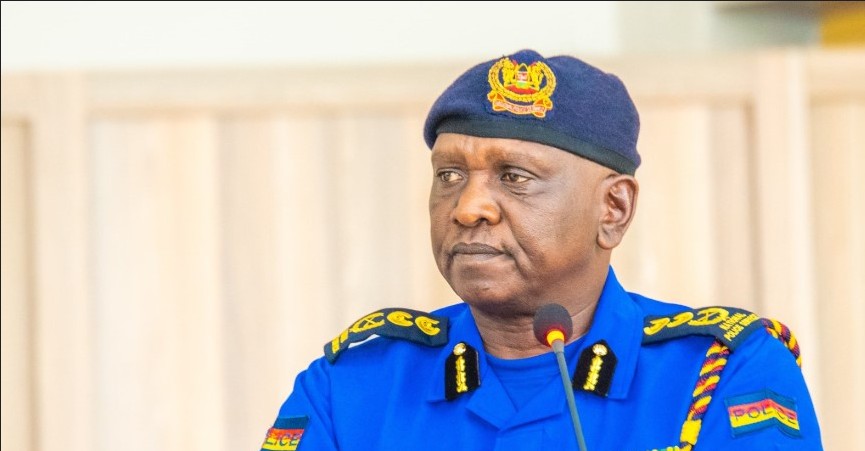
Inspector General of Police Douglas Kanja has directed the Anti-Abduction Unit to establish what happened and identify the men involved.
The police order came hours after Kiprotich was found alive in the early hours of Wednesday, September 2.
NPS spokesperson Muchiri Nyaga said the Service was treating the matter seriously.
“The NPS treats kidnapping and abduction with the utmost seriousness, as these grave offences threaten the lives, liberty and security of Kenyans,” Nyaga said.
He added that investigators would establish “the identity of the heavily armed individuals reportedly seen ordering occupants out of their vehicle”.
Nine hours of uncertainty
Kiprotich was travelling towards Nakuru on Tuesday night when his vehicle was reportedly blocked along the Gilgil-Nakuru road.
According to accounts given by the Standard Group, masked and armed men pulled him from the vehicle and drove away in a Subaru.
His driver, Geoffrey Kamau, was also seized during the incident, according to Standard Group CEO Chaacha Mwita.
The editor was later abandoned near Masinga Dam in Machakos County.
He sought refuge at a nearby home, where residents took him in and cared for him.
A Standard Group team eventually found him at about 6.30am.
The media house said he was physically safe but visibly shaken by the ordeal.
The safe recovery brought relief after hours of uncertainty.
But it did not answer the central questions surrounding the incident.
Who were the men?
Who sent them?
And why was a senior editor singled out?
Those questions are now at the centre of the police investigation.
A troubling repeat
What makes the latest incident particularly concerning is that it was not the first time Kiprotich had reportedly been targeted.
On June 27, armed men in a Toyota Probox allegedly attempted to force him from his vehicle as he travelled to work in Nakuru.
He escaped by locking his doors and driving away.
The Committee to Protect Journalists (CPJ) reported the June incident and called on Kenyan authorities to investigate it. At the time, Kiprotich told the organisation that he believed he had become a target in his role as an editor.
The Standard Group has since said investigations by its own team linked the Probox used in that incident to the National Police Service's Crime Research and Intelligence Bureau.
That is an allegation by the media house, not an established finding by investigators.
No one has publicly been held responsible for the June incident.
The fact that Kiprotich was reportedly targeted again has therefore intensified calls for the authorities to establish whether the two incidents are connected.
Standard raises concerns over media freedom
The Standard Group has described the latest incident as a serious threat to press freedom.
The media house has also raised concerns about the possibility that the attack was connected to its editorial work, particularly its coverage of the government.
That claim remains unproven.
There is currently no public finding by investigators establishing who ordered or carried out the abduction, or whether Kiprotich's journalism was the motive.
The distinction is important.
The latest police investigation will have to establish the facts rather than rely on competing claims from either side.
The Media Council of Kenya has called for an immediate and transparent investigation.
MCK CEO David Omwoyo said those behind the incident must be identified and brought to justice, warning that failure to act on attacks against journalists can create a climate of impunity.
The Kenya Editors Guild has also condemned the incident and called for an investigation into both the latest abduction and the June attempt.
Police reject claims of involvement
The police have denied involvement in the abduction and say their focus is now on identifying the perpetrators.
The NPS also took issue with a headline published by The Standard concerning alleged police brutality.
Nyaga described the headline as “misleading, inflammatory, and unsupported by evidence”.
The police said allegations of misconduct by officers should be investigated through the appropriate oversight mechanisms, including the Independent Policing Oversight Authority.
That response has created a second layer to the story.
The police are investigating an alleged abduction involving armed men while, at the same time, publicly disputing claims made by the media house about police conduct.
For the investigation to command public confidence, it will need to establish the facts independently and transparently.
The wider concern over disappearances
The incident comes at a sensitive time for Kenya's human rights record.
On August 31, the Kenya National Commission on Human Rights again called for an end to abductions, secret detention and enforced disappearances.
The commission said the State has an obligation to investigate allegations promptly and independently, establish the whereabouts of missing people and hold perpetrators accountable.
The concern is not confined to journalists.
But when a media professional is allegedly seized by armed men, the implications extend beyond the individual involved.
Article 34 of the Constitution protects freedom of the media, while Article 29 protects every person's right to freedom and security.
That makes the Kiprotich case both a criminal investigation and a test of how effectively those constitutional protections work in practice.
What happens next?
The immediate priority is finding the people behind the incident.
The Anti-Abduction Unit now has the task of establishing how Kiprotich was intercepted, where he was taken, who was involved and why he was released near Masinga Dam.
Investigators will also face pressure to establish whether the latest incident is connected to the June attempt.
The police have promised action.
Media organisations and rights groups want more than assurances.
They want answers.
For now, Kiprotich is alive and back with his colleagues.
But his safe return does not close the case.
It opens the more difficult part of it.
Who abducted him, and why?
You may also like
Category: News
Related Video: Murkomen Says Kenya Is Safe: “Stop Creating a Crisis” | Political Goons & Security Under Scrutiny
About the Author
Maureen Onyango is a journalist passionate about storytelling, life coaching and spiritual lessons. She studied at the Kenya Institute of Management and enjoys telling stories that inform, inspire and empower communities.
 Facebook
 Twitter / X
 WhatsApp
 LinkedIn
 Telegram
 Reddit