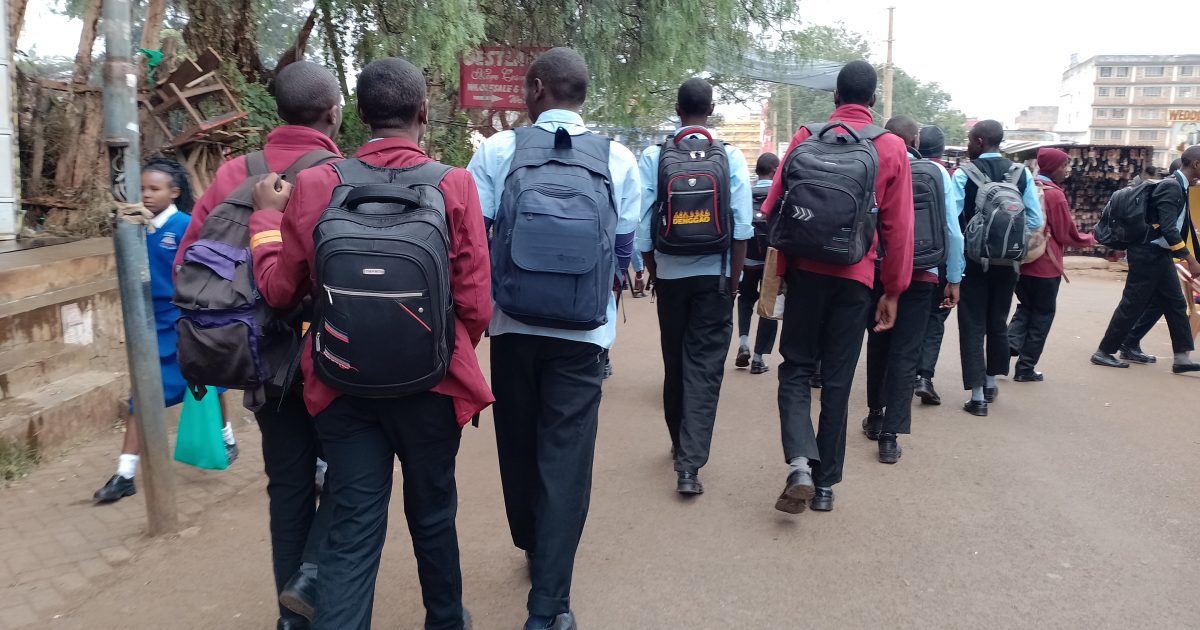
The government has released Sh18.508 billion in capitation to public basic education institutions as schools begin the third and final term of the 2026 academic year, but the latest disbursement has not fully resolved the funding pressure facing schools.
Education Cabinet Secretary Julius Migos Ogamba said the money had been released to support operations and learning activities in public pre-primary, primary, junior and senior schools.
The announcement comes after school heads and education stakeholders had raised concerns over delayed and inadequate capitation ahead of the reopening.
The immediate question for parents and schools is therefore not simply whether money has been released, but whether the amount reaching individual institutions will be enough to cover their needs for the nine-week term.
How the Sh18.5 billion is divided
The Ministry of Education gave the following breakdown:
| Programme | Term 3 allocation |
|---|---|
| Free Primary Education | Sh1.401 billion |
| Free Day Junior School Education | Sh6.144 billion |
| Free Day Secondary Education | Sh10.963 billion |
| Total | Sh18.508 billion |
Free Day Secondary Education receives the largest share, accounting for about 59 per cent of the total release, followed by junior schools at about 33 per cent and primary schools at roughly 8 per cent.
The funds are intended to support school operations and learning during the final term.
Why the release does not end the funding debate
The government says the money has already been released, but the funding question is more complicated.
A report by Nation says schools remain 28 per cent short of the capitation they require, indicating that the latest disbursement may not cover the full funding need.
The issue has also been raised by education stakeholders.
Before schools reopened, the Kenya Union of Post Primary Education Teachers (KUPPET) said school heads were under financial pressure because of delayed funding and could be forced to seek additional money from parents.
The competing claims point to an important distinction: a government announcement that funds have been released does not necessarily mean every school has enough money to clear its obligations or meet all its operational costs.
What does the money mean for parents?
The capitation system is intended to reduce the cost of basic education for families.
But parents should not assume that the Sh18.5 billion is money that will be paid directly to individual learners.
It is institutional funding distributed across government education programmes.
The actual amount available to a particular school depends on factors including the number of learners covered under the relevant programme and the applicable allocation formula.
For parents, the more immediate issue is whether schools continue asking them to meet costs that should ordinarily be covered through government funding.
Ogamba has specifically directed school heads and principals not to impose unauthorised levies.
He also warned that the Ministry would take action against verified cases of misuse of public resources or illegal charges imposed on learners.
The pressure schools are carrying
The latest release comes after months of complaints about capitation delays and inadequate funding.
A government monitoring report also identifies insufficient funding to fully finance learner capitation as an ongoing challenge and recommends that the National Treasury increase capitation funding.
That means the problem is not necessarily solved by one term's disbursement.
Schools still have to meet recurring expenses, including teaching and learning requirements, utilities, administration and maintenance.
Where funding arrives late or falls below what institutions require, schools can accumulate bills and face pressure to find alternative sources of money.
Why the third term matters
The third term is the shortest term of the 2026 academic year and runs from August 24 to October 23, according to the approved school calendar.
It is also an important period for schools completing the academic year and preparing learners for scheduled assessments and examinations.
The government therefore faces a test beyond simply releasing the money: whether schools receive and can use the funds in time to keep learning activities running without transferring unauthorised costs to families.
What happens next?
The Ministry's warning puts school administrators under greater scrutiny.
Schools have been directed to use the public funds prudently and for the benefit of learners, while parents have been given a clear basis to question charges that are not authorised.
The next measure of whether the latest disbursement has eased the crisis will be what happens inside schools over the coming weeks:
- Are schools able to meet their operational costs?
- Are outstanding bills being cleared?
- Are parents still being asked for additional charges?
- Are all schools receiving their allocations on time?
- And is the current level of capitation sufficient for the number of learners being supported?
You may also like
Category: Education
Related Video: The tears of a mother - nothing was wrong with my daughter, how did she DlE in school?
Related Explainer: Kiharu Technical College September Intake 2026: Courses, Skills and New Opportunities
 Facebook
 Twitter / X
 WhatsApp
 LinkedIn
 Telegram
 Reddit