
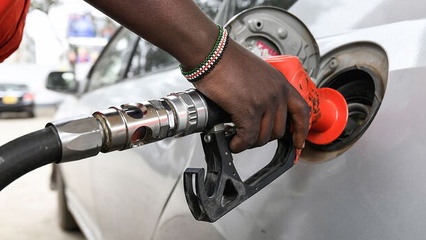
Nairobi, Kenya — Kenyan motorists who rely on diesel will get some relief from Saturday, but petrol and kerosene users will see no change at the pump.
The Energy and Petroleum Regulatory Authority (EPRA) has cut the maximum retail price of diesel by KSh5 per litre, bringing it down from KSh222.86 to KSh217.86 in Nairobi.
Super petrol will remain at KSh214.03 per litre, while kerosene will continue to retail at KSh191.38.
The new prices take effect on August 15 and remain in force until September 14, 2026.
But the headline diesel cut tells only part of the story.
Government spends KSh938 million to cushion consumers
EPRA said petrol and kerosene would otherwise have faced price changes, but additional government stabilisation support worth KSh938 million was used to keep their prices unchanged.
“The maximum allowed petroleum pump prices for Diesel decreases by KSh5.00/litre while the price of Super Petrol and Kerosene remain unchanged due to additional Government Stabilisation Support Measures of KSh938 million,” EPRA said.
The intervention comes as the government tries to shield households and businesses from swings in the international oil market.
It also means the latest pump prices are not simply a reflection of what imported petroleum products would have cost without government intervention.
Why diesel became cheaper
The biggest driver of the diesel reduction was a sharp fall in the cost of importing the fuel.
EPRA said the average landed cost of diesel fell by 13.08 per cent, from about KSh127,692 per cubic metre in June to KSh111,004 in July.
Kerosene also became cheaper to import, with its landed cost falling by 11.01 per cent.
Petrol moved in the opposite direction. Its average landed cost rose by 6.99 per cent, from KSh108,565 to KSh123,113 per cubic metre.
That divergence helps explain why motorists are getting a diesel cut while petrol prices remain unchanged.
What motorists will pay across major towns
The new maximum prices vary depending on location.
In Mombasa, motorists will pay KSh210.87 for petrol, KSh214.58 for diesel and KSh188.09 for kerosene.
In Nakuru, the prices will be KSh212.92, KSh217.27 and KSh190.81 respectively.
In Eldoret, petrol will cost KSh213.69, diesel KSh218.09 and kerosene KSh191.63.
In Kisumu, petrol will retail at KSh213.69, diesel at KSh218.08 and kerosene at KSh191.63.
Relief for diesel users, but pressure remains
The diesel reduction could offer some breathing room to transport operators, farmers, manufacturers and businesses that depend heavily on diesel.
However, the wider cost of living picture remains more complicated.
Kenya imports refined petroleum products, meaning local pump prices remain exposed to international oil prices, shipping costs, the exchange rate, taxes and other charges included in the pricing formula.
Recent international oil movements have also been mixed. The Central Bank of Kenya reported that Murban crude fell from $78.24 a barrel on July 30 to $72.54 on August 6, offering some relief to importing economies.
At the same time, global oil markets remain sensitive to geopolitical developments.
For Kenyan consumers, that leaves the next EPRA review firmly on the radar. If international prices rise again, the government may face renewed pressure to intervene. If they continue falling, motorists will want to know whether the benefit will eventually reach the pump without further subsidies.
For now, diesel users get a modest break. Petrol and kerosene prices stay where they are.
You may also like
Category: Business · Related Topic: Kenya Economy
Related Video: What Dangote’s proposed Lamu oil refinery could mean for East Africa
Related Explainer: Inside Kenya’s crude supply puzzle as Dangote prepares to break ground in Lamu
About the Author
Maureen Onyango is a journalist passionate about storytelling, life coaching and spiritual lessons. She studied at the Kenya Institute of Management and enjoys telling stories that inform, inspire and empower communities.
 Facebook
 Twitter / X
 WhatsApp
 LinkedIn
 Telegram
 Reddit