
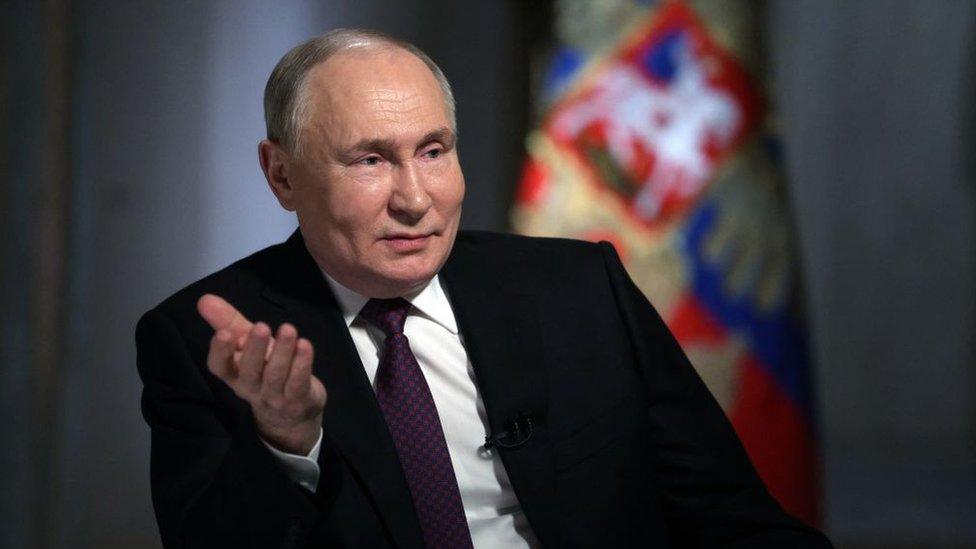
Russian President Vladimir Putin has warned that Moscow could use its full military arsenal, including nuclear weapons, if Russia’s heavily militarised Baltic exclave of Kaliningrad comes under direct attack.
The warning marks a sharp escalation in rhetoric between Moscow and NATO over the strategically important territory, which sits between NATO members Poland and Lithuania.
Speaking at the Valdai Discussion Club in Moscow on Thursday, Putin said Russia had no plans to attack European countries but would respond if it faced what it considered aggression.
“If it comes to a direct attack on the Russian Federation — in this case we are referring to Kaliningrad, and perhaps other territories — the question of using all the weapons at our country's disposal will inevitably and immediately be on the agenda,” Putin said.
He added that Russia was not planning an attack on Europe “in 2029, in 2030, or in 2050”, but warned that Moscow would respond to any aggression.
His remarks came a day after Russia warned NATO that it could resort to nuclear weapons if the alliance attempted to isolate Kaliningrad from the rest of Russia.
Why Kaliningrad matters
Kaliningrad is unlike most Russian territory.
It is separated from mainland Russia and lies between Poland and Lithuania, both members of NATO. It also has direct access to the Baltic Sea.
The territory is home to Russia's Baltic Fleet and is heavily militarised. It is also known to host nuclear-capable Iskander missile systems, making it a strategically important part of Russia's western military posture.
That geography has made Kaliningrad a longstanding flashpoint in relations between Moscow and the alliance.
The concern is particularly focused on the Suwalki Gap, the narrow stretch of land linking Poland and Lithuania and separating Kaliningrad from Russia's ally Belarus.
A conflict in the region could therefore create a direct confrontation between Russia and NATO members.
Russia says NATO is preparing a blockade
Moscow has accused NATO of preparing an air and naval blockade of Kaliningrad.
Russia's diplomatic warning, sent to NATO this week, said such a move would carry a serious risk of direct armed conflict.
However, there is no evidence that NATO is preparing to blockade Kaliningrad.
NATO Secretary General Mark Rutte rejected the suggestion that the alliance's exercises and activities were intended to threaten Russia.
“We are a defensive alliance,” Rutte said, while calling Moscow's nuclear rhetoric unhelpful and urging Russia to stop its war against Ukraine.
Rutte has also said NATO sees no immediate threat to its territory, while maintaining that the alliance is prepared to defend its members if necessary.
That distinction is important.
Military exercises in the Baltic region are taking place, but that does not establish that NATO is preparing an operation to seize or blockade Kaliningrad.
The warning comes amid rising Baltic tensions
The latest exchange comes as European countries report a series of security incidents involving Russian aircraft, drones, vessels and other suspected hybrid activity.
Poland has increased its air-defence posture following reported Russian airspace incidents.
European governments have also raised concerns about sabotage, cyberattacks and other forms of pressure that they attribute to Moscow.
German Chancellor Friedrich Merz said this week that Europe should prepare for potentially serious hybrid attacks.
Russia has rejected Western accusations and has repeatedly portrayed NATO's military preparations as a threat to its security.
The competing claims have created an increasingly tense security environment around the Baltic Sea.
Putin also addressed Ukraine's attacks on Russian energy sites
Putin's remarks were not limited to Kaliningrad.
He also acknowledged the impact of Ukrainian attacks on Russian oil infrastructure, saying strikes on refineries had cost Russia about 1 per cent of GDP, according to Reuters reporting of his comments.
Ukraine has defended such attacks by arguing that Russia's energy infrastructure helps generate revenue for its war effort.
Putin said Russia was responding to Ukrainian attacks by striking Ukrainian economic and energy targets.
The comments came as the war in Ukraine continues into its fifth year, with both sides maintaining long-range attacks against military and infrastructure targets.
Putin warns about the danger of nuclear escalation
The Russian leader also spoke more broadly about the risk posed by the world's nuclear arsenals.
He said major powers possess weapons capable of causing catastrophic destruction and argued that no country could be certain such weapons would never be used.
At the same time, he said Russia did not want to cross that threshold.
His remarks reflect the broader nuclear-risk debate that has intensified during the war in Ukraine, particularly whenever Moscow and NATO exchange warnings over possible direct confrontation.
NATO has repeatedly said its position is defensive and that it does not seek a war with Russia.
No indication of an imminent NATO-Russia war
Despite the increasingly forceful language, neither Putin's speech nor NATO's public statements indicate that a direct NATO-Russia war is underway or imminent.
Instead, the immediate confrontation is centred on competing claims about military exercises, the security of Kaliningrad and the possibility of future escalation.
The danger lies in what could happen if an incident involving Russian and NATO forces were to move beyond rhetoric.
For now, Moscow is using the threat of a wider military response to warn against any attempt to isolate Kaliningrad, while NATO says its activities are defensive and that it has no plan to threaten the Russian exclave.
That leaves the Baltic region facing another period of heightened tension, with both sides signalling that miscalculation could carry consequences far beyond Kaliningrad.
You may also like
Category: International
Related Video: Murkomen Says Kenya Is Safe: “Stop Creating a Crisis” | Political Goons & Security Under Scrutiny
About the Author
Maureen Onyango is a journalist passionate about storytelling, life coaching and spiritual lessons. She studied at the Kenya Institute of Management and enjoys telling stories that inform, inspire and empower communities.
 Facebook
 Twitter / X
 WhatsApp
 LinkedIn
 Telegram
 Reddit