
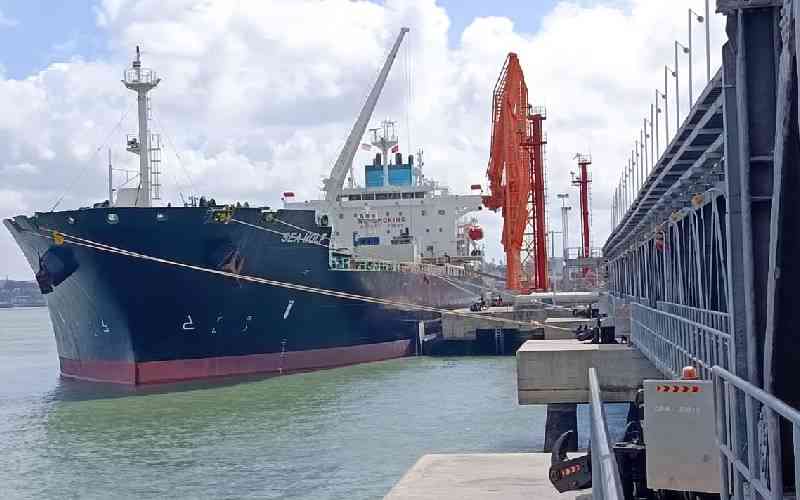
Kenya’s role as a regional petroleum gateway has received a boost after Rwanda received its first major consignment of refined fuel through the Northern Corridor under a new import arrangement.
A vessel carrying approximately 40,000 metric tonnes of petroleum products arrived at the Port of Mombasa this week, marking the activation of the new supply route.
The development gives landlocked Rwanda another option for sourcing and transporting fuel while strengthening the importance of Kenya’s ports, pipelines, roads and logistics infrastructure to the wider East African economy.
Rwanda has traditionally relied heavily on regional transport corridors for petroleum supplies because it has no direct access to the sea.
Fuel entering through Mombasa can move inland through Kenya’s petroleum and transport infrastructure before continuing towards Rwanda.
The arrangement could increase the volume of transit petroleum passing through Kenya.
That means additional business for port operators, transport companies, storage facilities, petroleum infrastructure and other firms involved in regional logistics.
The timing is particularly significant.
Kenya has just launched the proposed Sh2.2 trillion Dangote refinery in Lamu, a development intended to transform the country from a major importer of refined petroleum products into a potential regional processing and distribution centre.
The refinery is expected to process around 700,000 barrels of crude oil per day when completed.
Its target market extends beyond Kenya to neighbouring countries in East and Central Africa.
Rwanda’s decision to expand its use of the Kenyan corridor therefore demonstrates the size of the regional market the Lamu project hopes eventually to serve.
But Kenya faces competition.
Tanzania’s Dar es Salaam corridor also serves several landlocked countries and has invested heavily in port and transport infrastructure.
Uganda is simultaneously pursuing its own refinery and crude-oil export strategy.
East Africa’s petroleum logistics are therefore becoming increasingly competitive.
For Kenya, reliability will be crucial.
Importers will consider port efficiency, pipeline capacity, road conditions, border clearance, transport costs and the predictability of fuel supply when choosing routes.
The arrival of the first 40,000-tonne consignment is consequently more than a single shipping event.
It is a test of Kenya’s ability to capture additional regional transit business.
If the route proves efficient and commercially competitive, Rwanda could increase the amount of petroleum it imports through Kenya.
That would strengthen Mombasa’s position as an energy gateway even before the proposed Lamu refinery enters production.
For consumers in Rwanda, diversified import routes could also improve security of supply by reducing dependence on a single corridor.
For Kenya, the opportunity lies in turning its geographic position and infrastructure into a larger share of East Africa’s growing petroleum trade.
You may also like
Category: Business
Related Video: What Dangote’s proposed Lamu oil refinery could mean for East Africa
Related Explainer: Explainer: Why Kenya is moving hospitals to HMIS and what it means for SHA patients
 Facebook
 Twitter / X
 WhatsApp
 LinkedIn
 Telegram
 Reddit