Good morning. Here are five major developments to start your Friday, from a nationwide university lecturers’ strike and Kenya’s ambitious oil plans to changes affecting hospitals and the rising cost of living.
1. Public university lecturers begin nationwide strike today
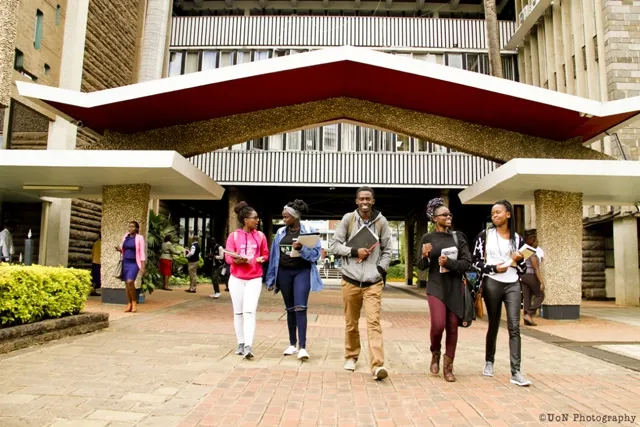
Students in Kenya’s public universities face disruption from today after lecturers and other university staff moved ahead with a nationwide strike following the collapse of negotiations over a new pay agreement.
The industrial action follows a seven-day strike notice by the Universities Academic Staff Union (UASU). The dispute centres on negotiations for the 2025–2029 Collective Bargaining Agreement.
Talks aimed at averting the strike failed on Thursday after unions rejected a counter-offer from the Inter-Public Universities Councils Consultative Forum.
UASU has accused university management, the Ministry of Education and the National Treasury of delays in resolving the dispute.
The immediate concern for students is whether lectures, examinations, research supervision and other academic activities will continue normally if the strike is prolonged.
2. Kenya plans Turkana-Lamu oil pipeline to feed massive Dangote refinery
The scale of Kenya’s proposed entry into oil refining is becoming clearer following the groundbreaking for Aliko Dangote’s refinery in Lamu.
President William Ruto says Kenya and Dangote have agreed to invest in a pipeline linking the Turkana oilfields to Lamu, allowing domestically produced crude to be transported to the planned refinery. Ruto has also said Kenya expects to begin extracting and transporting Turkana crude before December.
But Kenyan crude alone would not be sufficient to run the planned facility at full capacity. The government says additional crude could therefore be sourced internationally.
The refinery is planned to process about 700,000 barrels per day. Reuters reported the investment at about $16 billion, with completion targeted for 2030. The project has also attracted questions around environmental impact, land rights and the source of sufficient crude for such a large facility.
For Kenyans, the bigger questions will be whether the project eventually lowers fuel costs, creates the promised jobs and industrial activity, and whether its environmental and financing implications withstand scrutiny.
3. Government extends deadline for hospitals to move to new SHA system
Health facilities have received more time to transition from the Social Health Authority Provider Portal to the government's Health Management Information System.
Health Cabinet Secretary Aden Duale announced a one-month extension after concerns that facilities which had not migrated could be unable to process SHA patients.
The government says patients should continue receiving treatment during the transition and that services should not be interrupted because a facility has yet to complete migration.
The transition is significant because HMIS is intended to become a central digital platform for managing patient and healthcare information.
For patients, the key issue is straightforward: the technical transition should not become a barrier to treatment.
4. Cost of living climbs as Kenya's inflation hits 6.8%
Pressure on household budgets is rising again.
Official data from the Kenya National Bureau of Statistics shows annual inflation increased to 6.8% in September 2026.
Food and non-alcoholic beverages recorded annual inflation of 9.5%, while transport prices were 15.6% higher than a year earlier. Housing, water, electricity, gas and other fuels increased by 3.2%.
Those categories matter because food, transport and housing consume a significant portion of household income. Together, the three divisions account for more than 57% of the weighting used to calculate Kenya's Consumer Price Index.
The figures mean the average basket of goods and services measured by KNBS was 6.8% more expensive than in September last year.
5. EACC wants public officers’ wealth declarations automated
Kenya could move towards a more digitised system for tracking the wealth and financial interests of public officers.
The Ethics and Anti-Corruption Commission is pushing for automation of the Declaration of Income, Assets and Liabilities process.
EACC Chairperson David Oginde says digitisation could improve management of wealth declarations and make it easier for authorities to monitor potential conflicts between public duties and private financial interests.
The proposal also envisages secure information sharing between relevant public-sector digital platforms.
The effectiveness of such a system would ultimately depend on implementation, data integrity, enforcement and whether suspicious discrepancies trigger meaningful investigation.
What to watch today
The lecturers’ strike is the most immediate development to watch, particularly whether fresh negotiations produce a breakthrough. Attention will also remain on the Lamu refinery as more details emerge about financing, crude supply, environmental approvals and the proposed Turkana-Lamu pipeline.
Meanwhile, patients should watch for further guidance on the SHA-HMIS transition, while September’s inflation numbers put renewed focus on food and transport costs as households head into the final quarter of 2026.
You may also like
Category: News · Related Topic: Social Health Authority (SHA)
Related Video: What Dangote’s proposed Lamu oil refinery could mean for East Africa
Related Explainer: Explainer: Why Kenya is moving hospitals to HMIS and what it means for SHA patients
 Facebook
 Twitter / X
 WhatsApp
 LinkedIn
 Telegram
 Reddit