
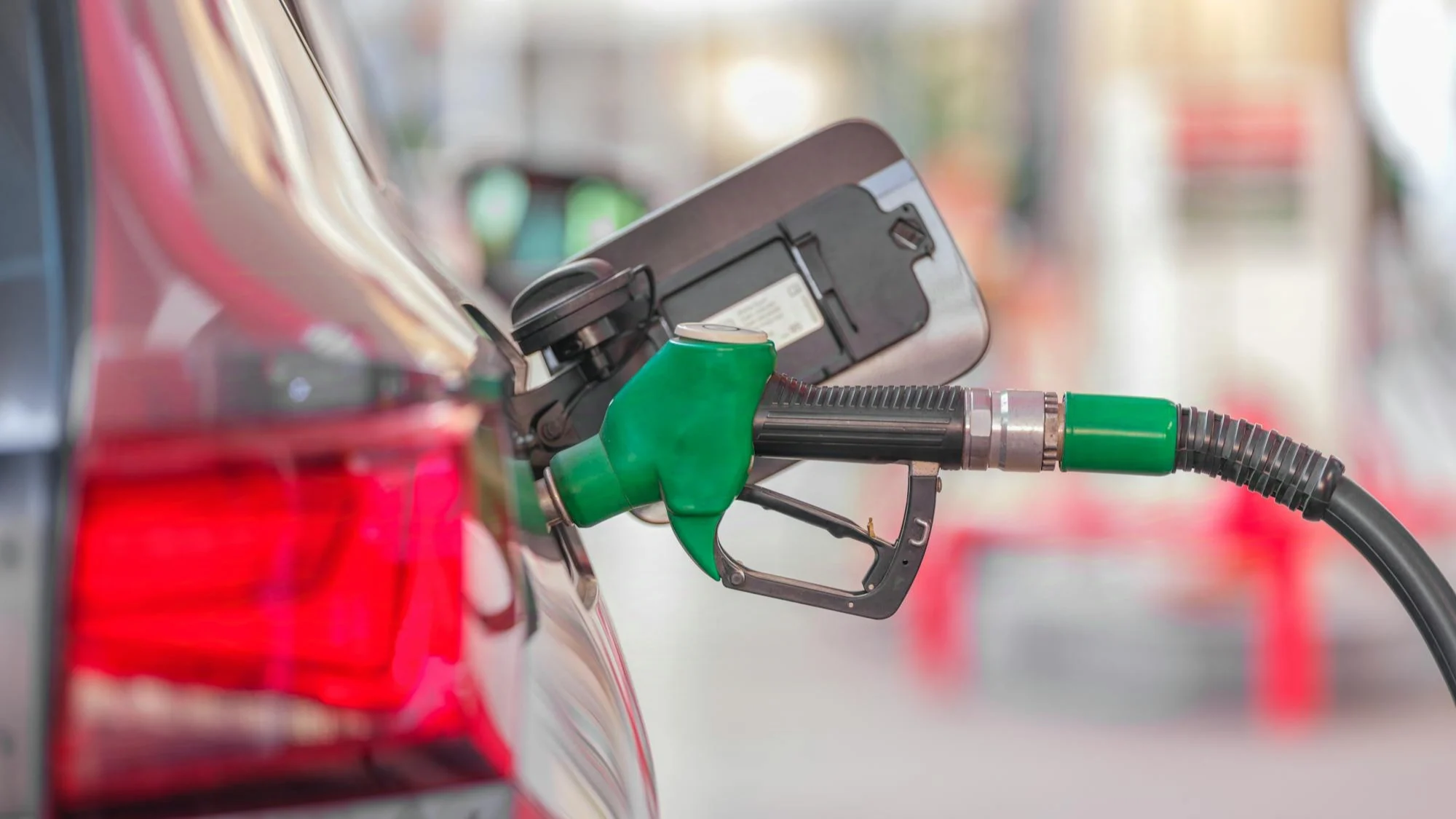
Kenyan motorists have been spared another fuel price increase for the next 30 days.
The Energy and Petroleum Regulatory Authority (EPRA) has kept the maximum retail prices of Super Petrol, Diesel and Kerosene unchanged for the period from September 15 to October 14, 2026.
The decision offers short-term relief at a time when international oil markets are under fresh pressure.
In Nairobi, a litre of Super Petrol will remain at KSh214.03, Diesel at KSh217.86 and Kerosene at KSh191.38.

The prices take effect from midnight on September 15.
But there is a striking detail behind the freeze.
The cost of importing diesel and kerosene into Kenya rose sharply in August, even as the landed cost of petrol fell.
EPRA's latest figures show that the average landed cost of imported Diesel rose by 11.86 per cent, from US$855.59 per cubic metre in July to US$957.05 in August.
Kerosene also became more expensive, with its landed cost rising 9.71 per cent, from US$915.01 to US$1,003.87 per cubic metre.
Petrol moved in the opposite direction.
Its landed cost fell 7.87 per cent, from US$948.92 to US$874.26 per cubic metre.
Yet none of those movements will be felt at the pump this month.
EPRA said the three maximum retail prices would remain unchanged.
“In the period under review, the maximum allowed petroleum pump prices for Super Petrol, Diesel and Kerosene remain unchanged,” the regulator said.
What motorists will pay
The unchanged prices apply across the country's regulated pricing zones, although the actual maximum varies by town because of transportation and distribution costs.
| Town | Super Petrol | Diesel | Kerosene |
|---|---|---|---|
| Nairobi | KSh214.03 | KSh217.86 | KSh191.38 |
| Mombasa | KSh210.87 | KSh214.58 | KSh188.09 |
| Nakuru | KSh212.92 | KSh217.27 | KSh190.81 |
| Eldoret | KSh213.69 | KSh218.09 | KSh191.63 |
| Kisumu | KSh213.69 | KSh218.08 | KSh191.63 |
EPRA's schedule covers 223 pricing towns, with prices generally increasing further from the main import and distribution points.
For example, Mandera remains among the most expensive markets, with Super Petrol capped at KSh234.68 per litre.
The difference reflects the cost of moving fuel from the coast and other distribution points to more distant parts of the country.
Why prices did not rise despite higher import costs
The latest figures highlight an important feature of Kenya's fuel-pricing system.
The cost of the imported product is only one part of what consumers ultimately pay.
EPRA's calculation also takes into account taxes, transport and storage costs, margins and other approved components.
The regulator's latest cost breakdown shows that the price-stabilisation mechanism also helped absorb some of the pressure in the current cycle.
According to the breakdown reported by Nation, the mechanism absorbed a surplus of KSh1.28 per litre on petrol and KSh5.77 per litre on diesel, while a deficit of KSh13.14 per litre was recorded for kerosene.
That helps explain why a sharp rise in diesel's landed cost did not translate directly into a higher pump price.
It also explains why the fall in petrol's import cost has not automatically produced cheaper petrol for motorists.
The system is designed to smooth some of those monthly movements rather than pass every change straight to consumers.
Taxes remain a major part of the pump price
EPRA's latest figures also show how much of the price motorists pay goes towards taxes and levies.
For Nairobi, the tax component is about KSh73.86 per litre for Super Petrol, KSh64.07 for Diesel and KSh50.41 for Kerosene.
The published prices include VAT and applicable excise duty.
This means the international price of crude oil is not the same as the price Kenyans see on a petrol-station sign.
A fall in crude prices does not necessarily mean an equal fall at the pump.
Likewise, a rise in international oil prices does not automatically translate into the same percentage increase for Kenyan consumers.
The global oil market is getting more difficult
The timing of EPRA's decision is significant.
International oil markets have become increasingly volatile as conflict and attacks around key shipping routes threaten supplies.
Brent crude, the international benchmark, moved above US$100 a barrel last week.
On September 9, Brent settled at US$101.21, its highest close since May, as disruption around the Strait of Hormuz raised fears about global oil supplies.
The situation has since become more tense.
On September 14, Brent climbed as high as US$107.81 during trading, while WTI rose above US$102, as attacks on energy infrastructure and threats to shipping added to supply concerns.
Reuters reported on September 15 that Brent had reached about US$106.93 after attacks disrupted Saudi Arabia's East-West oil pipeline, which normally provides an alternative route for roughly four million barrels of oil a day.
The developments are important for Kenya because the country relies on imported refined petroleum products.
That leaves the domestic market exposed to changes in global prices, shipping conditions and the exchange rate.
A month of relief — but not necessarily a trend
For ordinary Kenyans, the immediate message is simple.
There will be no additional fuel-price shock at the pump this month.
That matters because diesel is particularly important to the wider economy.
It powers trucks, buses, agricultural machinery and much of the equipment used by businesses.
A significant increase can quickly raise the cost of transporting food and other goods.
Matatu and bus operators also watch diesel prices closely because fuel is one of their major operating expenses.
When fuel becomes more expensive, operators face pressure to either absorb the cost or pass some of it on through fares.
Manufacturers and retailers face similar pressures through transportation and logistics.
Keeping prices unchanged therefore provides businesses with some breathing room.
But it would be wrong to interpret the decision as proof that pressure on the fuel market has disappeared.
The opposite is true.
The latest EPRA data show that diesel and kerosene import costs have already risen substantially.
And global crude prices have moved higher since the period covered by the latest calculation.
That creates a difficult question for the next review.
What happens at the October review?
The current prices run until October 14.
By then, EPRA will have a new set of international petroleum prices and import-cost data to consider.
If the disruption in global oil markets persists, Kenya could face higher import costs in the next pricing cycle.
The exchange rate will also matter because petroleum imports are priced internationally in US dollars.
EPRA said the average exchange rate used in the latest calculation was about KSh129.72 to the US dollar.
A weaker shilling would make imported fuel more expensive in local currency, all other factors being equal.
A stronger shilling could have the opposite effect.
The next review will therefore depend on more than what happens at the pump today.
The cost of keeping fuel stable
There is also a bigger policy question behind the unchanged prices.
Keeping fuel prices stable protects households and businesses from sudden shocks.
But stabilisation measures can also require public resources.
In the previous pricing cycle, the government provided KSh938 million in stabilisation support, helping keep petrol and kerosene prices unchanged while diesel was reduced by KSh5 per litre in Nairobi.
That intervention came as global energy markets were already under pressure.
The challenge for policymakers is therefore two-sided.
Consumers need protection from sudden increases in the cost of living.
But the government also has to consider how long it can continue absorbing market pressures without putting additional strain on public finances.
That debate is likely to become more important if international oil prices remain above US$100.
Why the freeze matters beyond motorists
Fuel prices affect far more than people filling private cars.
A truck carrying food from Mombasa to Nairobi uses diesel.
A matatu carrying workers across Nairobi depends on fuel.
A farmer using machinery or transporting produce to market faces fuel costs.
A shop receiving deliveries also pays for transportation indirectly.
When fuel prices rise sharply, those costs can move through the economy.
They can eventually show up in transport fares and the prices of goods and services.
That is why the latest EPRA decision provides some breathing space beyond the petrol station.
For the next month, businesses can plan around known maximum fuel prices.
Households also avoid an immediate increase in transport-related costs.
But the relief is temporary.
The bigger issue is Kenya's exposure to imported oil
The latest review also exposes a longer-term vulnerability.
Kenya can control how it taxes petroleum products and how it manages domestic pricing.
It cannot control the price of crude oil on international markets.
Nor can it control conflicts that disrupt major shipping routes.
The country can, however, reduce its exposure over time by cutting petroleum dependence in areas where alternatives are practical.
Electric mobility, more efficient public transport and greater use of alternative energy sources could gradually reduce the pressure.
But for now, petroleum remains central to transport and the movement of goods across the country.
That means global oil shocks will continue to reach Kenyan consumers.
For the moment, however, EPRA has given motorists and businesses another month of certainty.
From September 15 to October 14, the maximum price in Nairobi remains KSh214.03 for petrol, KSh217.86 for diesel and KSh191.38 for kerosene.
The bigger question is what happens next.
With diesel and kerosene import costs already rising and global crude trading above US$100 a barrel, the October review could be far more difficult if the international supply shock persists.
You may also like
Category: Business
Related Video: Sex for Work: True Cost of Our Tea
Related Explainer: Kiharu Technical College September Intake 2026: Courses, Skills and New Opportunities
About the Author
Maureen Onyango is a journalist passionate about storytelling, life coaching and spiritual lessons. She studied at the Kenya Institute of Management and enjoys telling stories that inform, inspire and empower communities.
 Facebook
 Twitter / X
 WhatsApp
 LinkedIn
 Telegram
 Reddit