
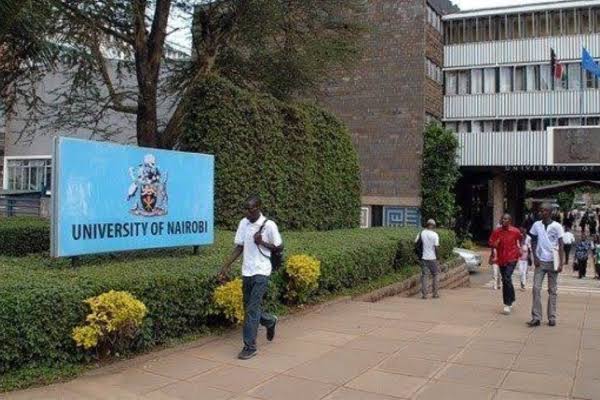
Lecturers and other public university workers have downed their tools nationwide after months of failed negotiations over a new four-year pay and working conditions agreement.
The Universities Academic Staff Union (UASU), Kenya Universities Staff Union (KUSU) and Kenya Union of Domestic, Hotels, Educational Institutions, Hospitals and Allied Workers (KUDHEIHA) began the strike on Friday, October 2, after talks with the Inter-Public Universities Councils Consultative Forum (IPUCCF) collapsed in Machakos.
The immediate dispute is over the proposed 2025–2029 Collective Bargaining Agreement (CBA).
But the disagreement goes beyond salaries.
The unions want changes to allowances, better medical benefits and more academic staff. They also want commitments made under the previous agreement and a November 2025 return-to-work deal addressed.
For students, the standoff could affect teaching, examinations, supervision and other services in public universities and constituent colleges.
Why the latest offer was rejected
At the centre of the dispute is the gap between what university workers are demanding and what their employers have proposed.
IPUCCF has recommended an 8.25 per cent cumulative increase in basic salaries over the four-year agreement. The proposal would be implemented through annual increases of about two per cent.
The forum considered three salary-review options before settling on the proposal submitted to the Salaries and Remuneration Commission (SRC).
The unions had sought considerably higher increases.
UASU proposed basic salary increases ranging from 36 to 68 per cent, while KUSU sought increases of between 36 and 113 per cent. KUDHEIHA's proposals ranged from 75 to 193 per cent.
The size of that gap has become one of the biggest obstacles to an agreement.
The unions have also objected to an automatic four per cent annual increment discussed in the negotiations, saying it does not keep pace with the cost of living.
In a statement issued after the Machakos meeting, the three unions said the counter-offer failed to address their concerns on pay and working conditions.
They also argued that it did not honour provisions of the registered 2021–2025 CBA relating to the harmonisation of allowances.
Medical cover and staffing add to the dispute
The unions say the dispute cannot be reduced to basic salary.
They have challenged the proposed medical package, arguing that it does not match benefits available to civil servants in comparable job grades.
Staffing is another major concern.
The unions say public universities have continued to admit growing numbers of students without a corresponding increase in academic staff.
That, they argue, leaves lecturers carrying heavier workloads while students face pressure on teaching, supervision and academic support.
“The counter-offer does not address one of the critical issues, that is the recruitment of specifically the academic members of staff to match ... the very high enrolment of students in public universities,” the unions said.
IPUCCF, however, has maintained its position through the proposal submitted for consideration by the SRC.
Its recommendations also include a three per cent increase in house allowance across grades, with the forum noting that the allowance had not changed since the 2010–2013 CBA.
A dispute that has been running for more than a year
The current strike follows months of unsuccessful negotiations.
KUSU issued its own seven-day strike notice in September, saying talks on the 2025–2029 CBA had dragged on well beyond the timetable originally envisaged.
The union said negotiations were expected to begin in February 2025 and conclude by June 30, 2025, allowing the new agreement to take effect from July 1, 2025.
Instead, the process continued into 2026 without a final agreement.
UASU also issued a seven-day strike notice in September.
It accused university councils, the Ministry of Education and the National Treasury of failing to honour commitments contained in the return-to-work formula signed on November 5, 2025.
The latest talks in Machakos were therefore seen as an opportunity to break the deadlock.
They failed to do so.
What the strike means for students
The immediate concern is disruption across public universities and constituent colleges.
Lectures and other academic activities are likely to be affected as union members withdraw their services.
The wider impact could extend to examinations, research, student supervision and administrative services, depending on how individual institutions respond to the action.
The unions have instructed their members to remain on strike until their demands are addressed.
President William Ruto has meanwhile said his administration will engage the lecturers.
Speaking to journalists in Mombasa, the President acknowledged that some of the issues raised by the unions date back several years.
“Those university lecturers who have threatened to go on strike, we will talk to them,” Ruto said. He added that his administration would take responsibility for resolving outstanding matters inherited from the previous government.
The next test is getting both sides back to the table
The latest breakdown leaves thousands of university employees and students caught between competing positions.
For the unions, the issue is whether the new CBA adequately improves pay and working conditions while addressing long-standing staffing and welfare concerns.
For the university employers and government, the challenge is finding a settlement that can be funded and implemented within the public-sector pay framework.
For students, the immediate question is how long the disruption will last.
The unions have not closed the door on negotiations. Their position is that talks must produce a settlement addressing the outstanding issues.
That leaves the government, university councils and the unions with a familiar task: getting back to the negotiating table before a labour dispute turns into a prolonged interruption of the academic calendar.
You may also like
Category: Education
Related Video: Gachagua’s explosive Ruto scorecard: Debt, taxes, State capture and a government ‘that has failed’
Related Explainer: EXPLAINER: Why Kenya’s aviation workers are striking — and what travellers need to know
About the Author
Maureen Onyango is a journalist passionate about storytelling, life coaching and spiritual lessons. She studied at the Kenya Institute of Management and enjoys telling stories that inform, inspire and empower communities.
 Facebook
 Twitter / X
 WhatsApp
 LinkedIn
 Telegram
 Reddit