
African media is reaching more people than ever. But as audiences move online and artificial intelligence changes how content is produced, a bigger question is emerging: who actually captures the value created by Africa’s stories?
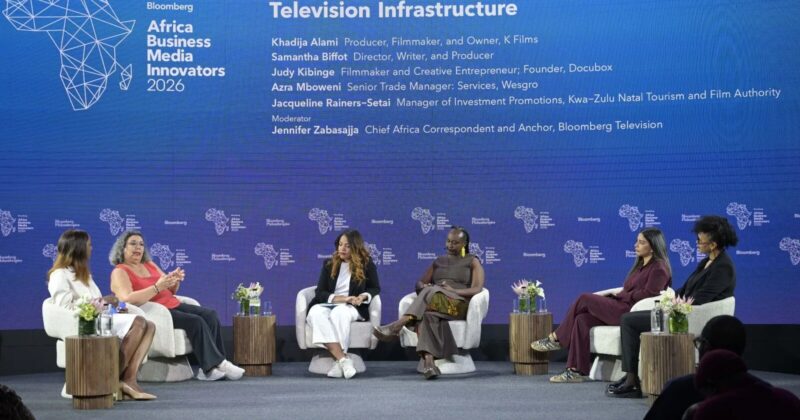
That question took centre stage as media executives, journalists, technology leaders, investors and policymakers met in Cape Town for the 2026 Africa Business Media Innovators (ABMI) convening.
The three-day meeting, held from September 27 to 29, focused on the next phase of Africa’s media industry, including artificial intelligence, changing audience behaviour, digital business models, investment and the ownership of African content and intellectual property.
The discussions come at a difficult moment for news organisations.

Traditional advertising models are under pressure. Audiences are increasingly consuming news through social platforms and other digital channels. At the same time, AI is opening new possibilities for production and distribution while raising questions about accuracy, copyright, jobs and editorial responsibility.
For African media leaders, the challenge is no longer simply getting African stories in front of global audiences.
It is making sure African organisations, journalists and creators retain a meaningful share of the value those stories generate.
From telling African stories to owning them
South Africa’s Deputy Minister of Communications and Digital Technologies Mondli Gungubele said digital platforms were changing the relationship between Africa and the rest of the world.
“Africa has been reported on by other people, but the digital age gives this continent something extraordinary. The ability to speak to the world without asking anybody for permission,” Gungubele said.
His remarks reflected one of the central themes of the meeting: Africa is no longer dependent on traditional international media organisations to distribute its stories.
A smartphone, social platform, podcast, video channel or independent news site can now take an African story to an international audience.
But access to global audiences does not automatically translate into economic ownership.
That gap between reach and revenue is becoming one of the industry's biggest challenges.
African creators can attract millions of views while platforms, distributors and advertisers capture much of the commercial value generated around that attention.
The same question applies to journalism.
A newsroom may produce original reporting that is widely read, watched or quoted online, yet struggle to turn that audience into enough revenue to pay journalists, invest in technology and sustain independent reporting.
AI brings opportunity — and new risks
Artificial intelligence was another major focus of the Cape Town discussions.
News organisations across the continent are exploring AI for tasks such as research, transcription, translation, data analysis and content production.
But speakers stressed that technology should support journalism rather than replace the editorial decisions that give journalism its credibility.
That distinction matters as newsrooms face pressure to produce more content, more quickly and across more platforms.
The risks are also becoming harder to ignore.
AI-generated material can spread inaccurate information at scale. Synthetic images, audio and video can make verification more difficult. There are also unresolved questions over how AI systems use copyrighted journalism and whether publishers and creators are adequately compensated when their work contributes to AI products.
The Bloomberg Media Initiative Africa has previously emphasised the importance of maintaining human oversight while adopting new tools. At the 2025 ABMI meeting, Aspen Digital's Vivian Schiller urged news organisations to experiment with AI but keep a person involved and verify material before publication.
The message from the current discussions was similar: adopting AI does not remove the responsibility to verify, edit and stand behind published work.
The business model problem
For many African newsrooms, however, technology is only part of the problem.
The bigger question is how to pay for journalism.
Advertising remains important, but digital platforms have changed where audiences spend their time and where advertising money flows.
Publishers are therefore experimenting with subscriptions, memberships, events, branded content, digital products, partnerships and other forms of revenue.
Bloomberg's ABMI programme identifies the loss of advertising revenue and competition from global social platforms among the major pressures facing African media companies. It is also examining subscription and other revenue models as part of the industry's next phase.
The answer is unlikely to be the same across the continent.
A premium subscription model may work for one specialist business publication but be difficult for a general-interest newsroom serving audiences with limited disposable income.
That makes local experimentation important.
Media organisations need to understand what audiences are willing to pay for, what advertisers value and where new digital products can create income without compromising editorial independence.
Media as part of Africa's economic infrastructure
The debate also extends beyond individual news organisations.
Bloomberg Corporate Philanthropy's Africa and Middle East lead, Erana Stennett, has argued that reliable public-interest media should be treated as part of the infrastructure supporting economic development.
Writing ahead of the ABMI meeting, Stennett and International Fund for Public Interest Media chief executive designate Amélie Baudot argued that markets depend on reliable information in much the same way they depend on physical infrastructure.
That argument is particularly relevant as African economies seek more investment and deeper regional trade.
The IMF estimates that sub-Saharan Africa grew by about 4.5 per cent in 2025, its strongest growth in more than a decade, but expects growth to ease to about 4.3 per cent in 2026. The institution has also warned that the region faces weaker living-standard gains, high financing costs and other structural constraints.
The World Bank similarly expects continued regional growth but points to debt pressures, weaker external demand and other risks.
Against that backdrop, media has a role that goes beyond publishing headlines.
Reliable business and financial reporting can help investors understand markets, help citizens scrutinise public spending and give businesses information needed to make decisions.
Collaboration takes centre stage
Stennett said the industry's future should not be shaped by technology and commercial pressures alone.
“Africa’s media’s future must be shaped not only by the forces acting upon it, but by African journalists, editors, media owners, entrepreneurs, creators, investors, business and public leaders working together,” she said.
That call for collaboration reflects another shift in the media industry.
Traditional newsrooms increasingly operate alongside podcasters, YouTubers, newsletter writers, filmmakers and other independent creators.
The boundaries between journalism, entertainment and digital storytelling are becoming less rigid.
Rather than treating these groups as competitors, participants at ABMI have argued for greater collaboration and knowledge-sharing across the wider media and creative industries.
The next frontier is ownership
The Cape Town meeting marks more than a decade of ABMI gatherings.
Since its first meeting in Johannesburg in 2015, the initiative says it has brought together more than 1,000 leaders from media, business, technology and government across 66 countries.
But the industry's next challenge may be harder than simply adapting to another technology.
It is deciding who owns the stories, data, audiences, intellectual property and businesses that emerge from Africa's digital growth.
African media already has something global platforms cannot manufacture on their own: local knowledge, local audiences and stories rooted in the continent.
The question now is whether African media businesses can build sustainable models around that advantage.
For newsrooms, that means finding new ways to earn revenue without sacrificing trust.
For creators, it means protecting ownership of their work.
For policymakers and investors, it means creating conditions in which independent media can survive.
And for AI, the test will be whether the technology makes journalism better without weakening the human judgement on which public trust depends.
Category: Technology
Related Video: What Dangote’s proposed Lamu oil refinery could mean for East Africa
Related Explainer: Kenya G-to-G Oil Deal Explained: How It Works, Who Supplies the Fuel and Why It Is Controversial
About the Author
Maureen Onyango is a journalist passionate about storytelling, life coaching and spiritual lessons. She studied at the Kenya Institute of Management and enjoys telling stories that inform, inspire and empower communities.
 Facebook
 Twitter / X
 WhatsApp
 LinkedIn
 Telegram
 Reddit