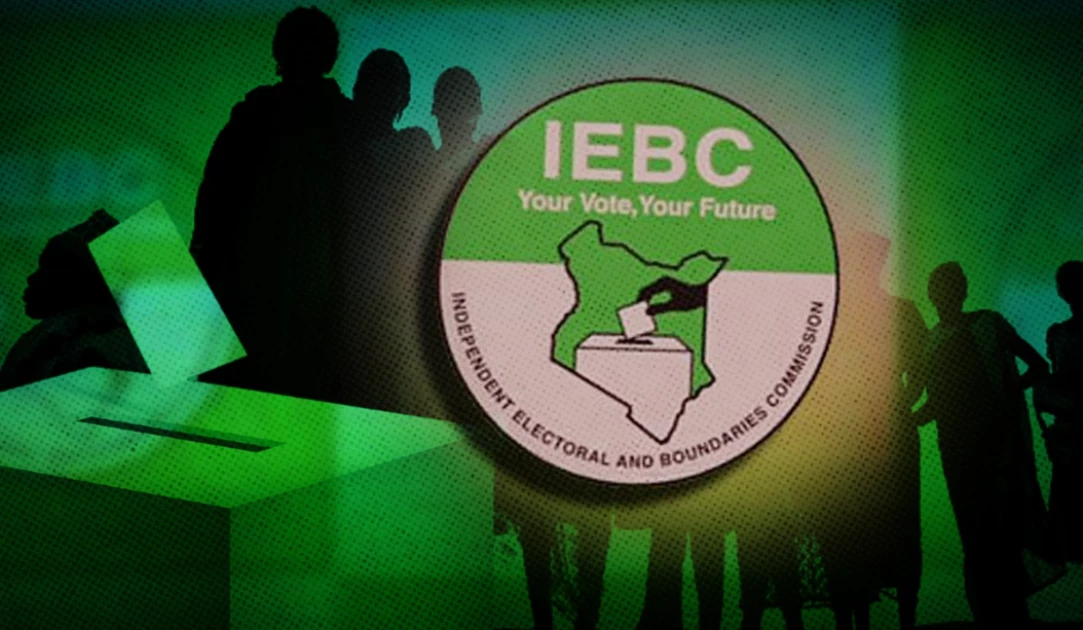
The Independent Electoral and Boundaries Commission (IEBC) has suspended its tender for ballot papers and other critical election materials, as a procurement dispute moves through the courts with less than a year to the 2027 General Election.
The tender covers ballot papers, tactile folders for voters with visual disabilities, the Register of Voters and statutory election result declaration forms.
IEBC Acting Commission Secretary and Chief Executive Officer Ruth Kulundu said the suspension followed a request for review filed before the Public Procurement Administrative Review Board (PPARB).
“Proceedings for the aforementioned tender have been suspended until further notice following a notification of request for review filed at the Public Procurement Administrative Review Board,” Kulundu said.

The development is not an isolated administrative pause.
The same procurement has already been caught up in a court battle after Oilmax Ventures Limited challenged some of the requirements for companies seeking the contract.
Why the ballot tender is now in court
IEBC advertised the tender in August as part of its preparations for the August 10, 2027 General Election.
The procurement was expected to cover one of the largest printing exercises required for the polls.
IEBC has projected that it could need up to 180 million ballot papers across the six elective positions, while the commission expects the number of polling stations to rise from 46,229 in 2022 to about 55,393 in 2027.
The tender was initially set to close on September 1.
A dispute then emerged over the qualification conditions imposed on prospective suppliers.
Oilmax Ventures challenged the requirements before the PPARB, arguing that some of the conditions were too restrictive and could limit the number of firms able to compete.
Among the disputed conditions is a requirement linked to previous experience in producing large volumes of security ballot papers.
The company has argued that the requirement, together with the tender's local-content provisions, could make it difficult for some Kenyan firms to qualify.
The PPARB rejected the company's substantive challenge on September 3. However, the board directed IEBC to clarify part of the tender relating to acceptable tender security and extended the submission and opening deadlines.
Oilmax subsequently moved to the High Court.
High Court puts procurement on hold
Justice William Musyoka of the High Court's Judicial Review Division granted a stay on further steps in the procurement after the bidder challenged the PPARB decision.
The order means IEBC cannot simply proceed to the next stages while the legal challenge is pending.
The court has directed the parties to deal with the matter through written submissions.
The case is due for a compliance mention on October 7, 2026, with judgment scheduled for October 16, according to court reporting.
The legal dispute does not mean that the 2027 election has been postponed.
It does, however, place one of the commission's most time-sensitive procurement exercises under judicial scrutiny.
What IEBC is trying to buy
The tender goes beyond ballot papers.
It includes tactile folders intended to make voting easier for people with visual disabilities, the Register of Voters and statutory forms used to record and declare election results.
The ballot papers themselves are expected to contain several security features aimed at making counterfeiting, copying and substitution more difficult.
IEBC has indicated that the papers could include watermarks, ultraviolet-visible markings, anti-copy features, guilloche patterns, micro-text, QR codes, perforations and serial numbers printed using security techniques.
The proposed colour system also follows the familiar arrangement used in previous elections.
Presidential ballot papers are white, National Assembly green, MCA brown, Senate yellow, Woman Representative purple and gubernatorial sky blue. IEBC has also provided for a grey referendum ballot if a referendum is held.
The specifications are designed to deal with a basic but critical problem: ensuring that every voter receives the correct ballot and that the papers used at polling stations can be accounted for.
The clock is already running
The procurement dispute comes as IEBC prepares for a much larger logistical operation in 2027.
The commission expects to expand polling infrastructure to 55,393 stations, compared with 46,229 in 2022. It has also projected a significant increase in the number of registered voters.
That means ballot papers and other election materials must eventually be printed, checked, packaged, transported and distributed across thousands of locations.
The commission has previously stressed the need to begin procurement well before election day because some materials require extensive preparation and testing.
The timing is also important because IEBC is dealing with other major procurement exercises.
A separate tender for the Integrated Elections Management System has also faced scrutiny, with the PPARB ordering changes to aspects of the procurement process.
IEBC has nevertheless maintained that its procurement processes are being conducted within the law.
Chairperson Erastus Ethekon has said the specifications are performance-based and open to qualified suppliers. The commission has also rejected claims that a supplier had already been selected, saying no award had been made.
Funding adds another layer
The procurement dispute comes against a wider funding challenge.
IEBC has projected a total requirement of about KSh74.8 billion for the three-year 2027 election cycle but has been allocated about KSh41.3 billion, leaving a funding gap of roughly KSh33.5 billion.
The commission has said timely financing is important for acquiring technology, election materials and other preparations.
Parliament has approved about KSh2.7 billion for ballot papers and statutory forms, according to reporting on the commission's budget.
That makes the procurement dispute more than a contest between competing suppliers.
For IEBC, it is now a question of resolving the legal challenge while keeping a procurement timetable that leaves enough time for printing and nationwide distribution.
What happens next?
For now, bidders remain on hold.
IEBC has advised prospective suppliers to monitor the Public Procurement Information Portal and the commission's website for further instructions.
The immediate legal milestones are the October 7 compliance mention and the October 16 judgment in the High Court case.
Until then, the commission cannot simply move ahead with the affected procurement under the disputed terms.
The 2027 election remains scheduled for August 10, 2027.
But with the ballot-paper procurement already before the courts, one of the most basic requirements for polling day is now part of the election's growing legal and logistical timetable.
You may also like
Category: News · Related Topic: 2027 Elections
Related Video: Murkomen Says Kenya Is Safe: “Stop Creating a Crisis” | Political Goons & Security Under Scrutiny
Related Explainer: Kenya G-to-G Oil Deal Explained: How It Works, Who Supplies the Fuel and Why It Is Controversial
About the Author
Maureen Onyango is a journalist passionate about storytelling, life coaching and spiritual lessons. She studied at the Kenya Institute of Management and enjoys telling stories that inform, inspire and empower communities.
 Facebook
 Twitter / X
 WhatsApp
 LinkedIn
 Telegram
 Reddit