
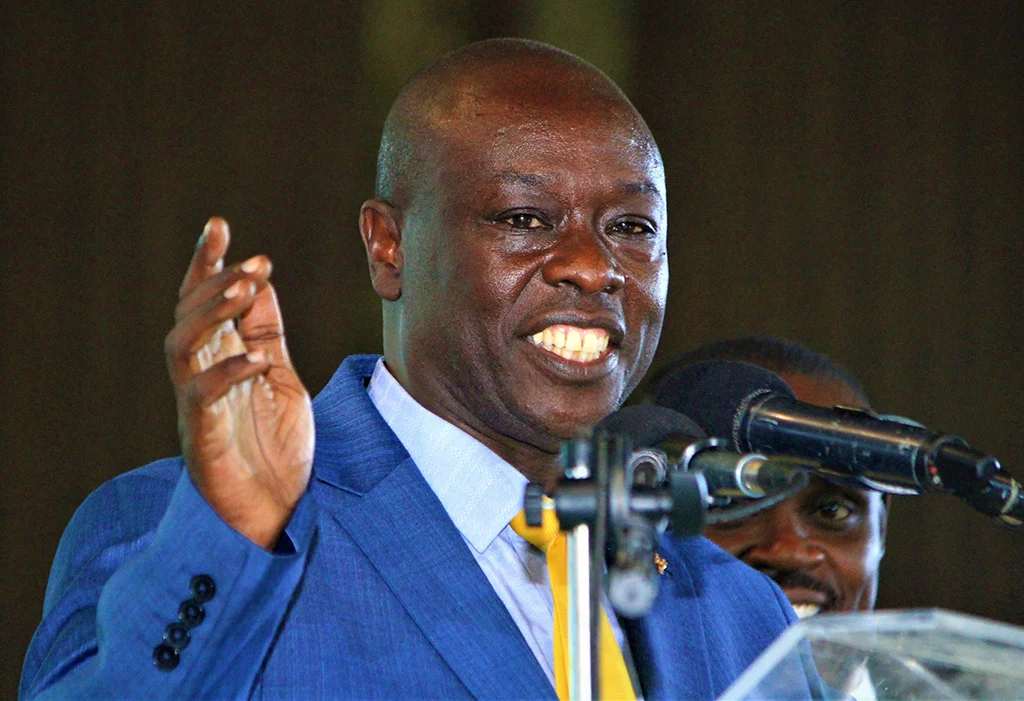
Former Deputy President Rigathi Gachagua has reopened questions surrounding the final days of former Prime Minister Raila Odinga, asking for clarity over his medical treatment, journey to India and the circumstances surrounding his death.
Gachagua made the remarks on Tuesday, August 11, during a media briefing in Nairobi in which he reviewed the Kenya Kwanza administration’s four years in office.
He said Kenyans were entitled to know more about what happened before Raila died in India in October 2025.
“Kenyans want to know what happened to Raila Odinga,” Gachagua said.
He then listed a series of questions, including whether Raila’s personal doctors had been given access to him during his final hours and whether medical advice against travelling had been followed.
“Why were the doctors of the late Prime Minister denied access to him in the last hours?” Gachagua asked.
“Why were instructions of Raila’s doctors ignored that Raila shouldn’t travel?”
Gachagua also questioned the circumstances of Raila’s trip to India, including the use of a private aircraft and the medical personnel who accompanied him.
“Why was a post-mortem not done on Raila? Why was he forced to go to India on a private jet?” he asked.
He added: “Who are these doctors who accompanied Raila to India against the instructions of Raila’s personal doctor?”
Gachagua did not provide evidence during the briefing to substantiate the allegations. The questions should therefore be understood as calls for clarification rather than established findings about the circumstances of Raila’s death.
What is known about Raila’s death
Raila died on October 15, 2025, aged 80, while in Kerala, India, where he had been receiving medical treatment.
Indian hospital and police authorities reported at the time that he collapsed during a morning walk and suffered cardiac arrest. He was taken to Devamatha Hospital in Koothattukulam, where he was pronounced dead.
President William Ruto’s official proclamation confirmed that Raila died in India while receiving medical treatment.
Contemporary reports also said Raila had been undergoing treatment and rest following a mild stroke and was managing conditions including diabetes, hypertension and chronic kidney disease.
Gachagua's latest intervention does not overturn that publicly reported account. Instead, it raises questions about whether the full circumstances surrounding Raila’s treatment and final journey have been adequately explained.
The 72-hour burial question
Gachagua also questioned how Raila could have been buried within 72 hours, pointing to Luo traditions and customs.
“Raila Odinga respected Luo traditions and customs; how could he indicate that he should be buried in 72 hours against all Luo traditions?” he asked.
That part of his argument, however, needs context.
Reports published immediately after Raila’s death said his family had been informed that he wanted to be buried within 72 hours. Deputy President Kithure Kindiki, who chaired the funeral committee, later said the accelerated timetable reflected Raila’s wishes.
The burial was ultimately held in Bondo on October 19, 2025, following public viewing and a state funeral programme.
A High Court judge also declined an application seeking to stop the burial within the stated timeframe, saying the petitioner had not demonstrated that the process was contrary to Raila’s wishes.
Why Gachagua is raising the issue now
The intervention comes as Gachagua positions himself as a leading critic of the Ruto administration ahead of the 2027 General Election.
His comments also broaden a political argument that has increasingly focused on accountability, unresolved deaths and the conduct of government institutions.
Gachagua said questions surrounding the deaths of several prominent Kenyans should not simply disappear from public discussion.
His remarks are likely to put renewed pressure on the government and Raila’s family to address any specific concerns that can be independently verified.
For now, however, there is an important distinction between questions being raised by a political leader and evidence establishing wrongdoing.
Raila’s death was officially reported as a cardiac arrest in India. Any different conclusion would require credible medical, investigative or judicial evidence.
Raila’s death also had a profound political impact. He had spent decades at the centre of Kenya’s political life, served as prime minister from 2008 to 2013 and ran unsuccessfully for president five times. His death came after years of political rivalry with Ruto, followed by their post-2022 political rapprochement.
As the 2027 contest takes shape, questions about Raila’s final days are now being drawn back into Kenya’s political conversation.
Whether they lead to a formal inquiry, further investigation or simply renewed public debate remains to be seen.
You may also like
Category: Politics · Related Topic: William Ruto
Related Video: What Dangote’s proposed Lamu oil refinery could mean for East Africa
Related Explainer: Ebola contact tracing: Why the 21-day window matters in Kenya’s response
About the Author
Maureen Onyango is a journalist passionate about storytelling, life coaching and spiritual lessons. She studied at the Kenya Institute of Management and enjoys telling stories that inform, inspire and empower communities.
 Facebook
 Twitter / X
 WhatsApp
 LinkedIn
 Telegram
 Reddit