
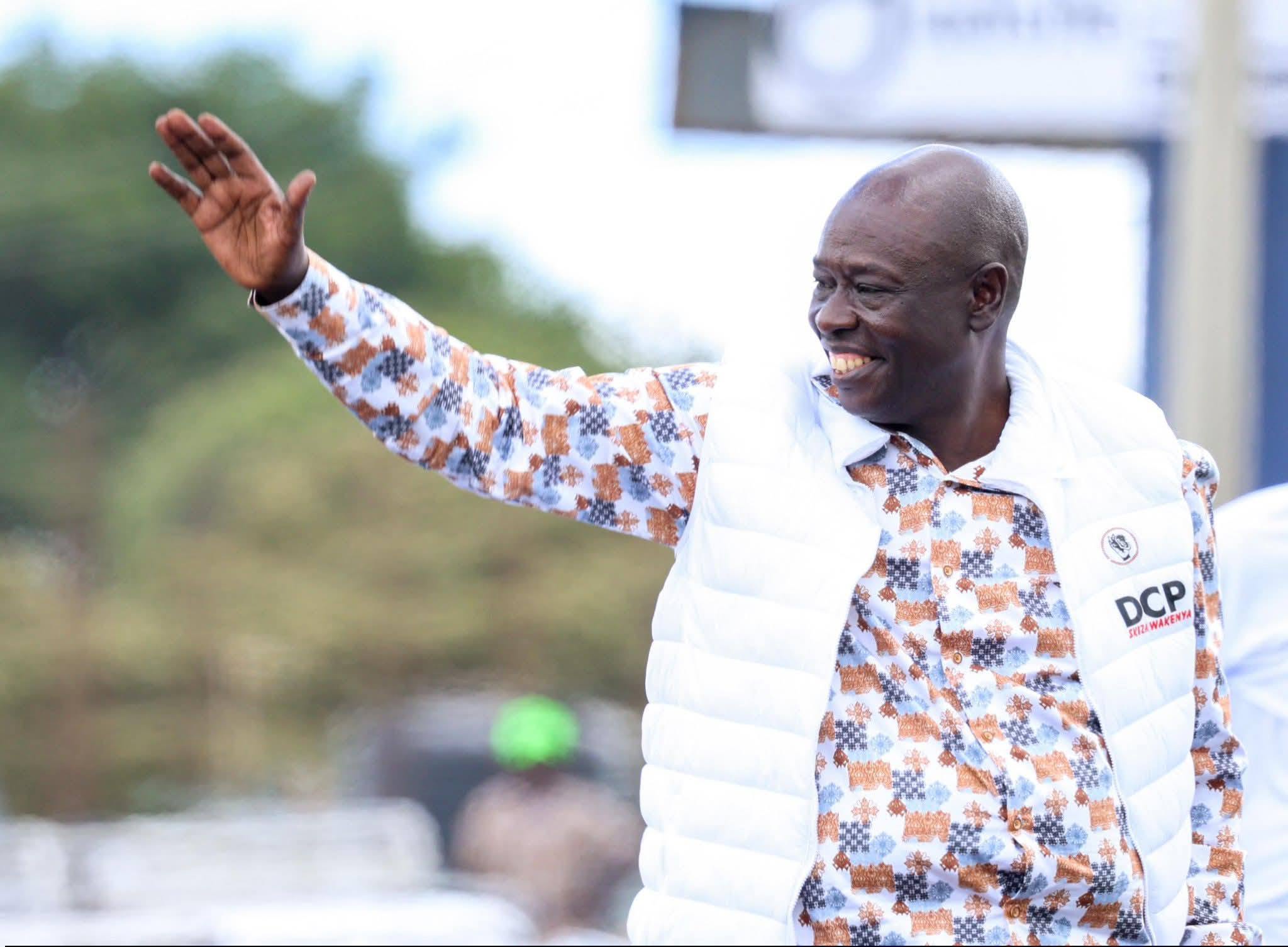
Former Deputy President Rigathi Gachagua has launched a blistering attack on President William Ruto’s administration, accusing it of abandoning its campaign promises and presiding over what he described as worsening economic hardship, corruption and abuse of State power.
Gachagua, who is now the leader of the Democracy for Citizens Party (DCP), delivered his assessment of Ruto’s first four years in office during a press briefing at the party’s headquarters in Nairobi on Tuesday.
He dismissed the government’s new economic and development plans, arguing that Kenyans had already heard similar promises through the Bottom-Up Economic Transformation Agenda (BETA), the National Dialogue Committee (NADCO) recommendations and the government’s Ten-Point Agenda.
According to Gachagua, none of the initiatives had delivered the transformation promised to Kenyans.

‘Another plan will not fix failed promises’
Gachagua said the government was introducing new plans instead of accounting for what had happened to previous programmes.
“When the Bottom-Up plan failed, Kenyans were told that the answer lay in the National Dialogue Committee report. It, too, has failed to deliver the hope, unity and reforms that were promised,” he said.
He added that the Ten-Point Agenda had similarly failed to change the country's trajectory.
Gachagua questioned why Kenyans should expect different results from another plan when previous initiatives had not delivered.
He accused the President of constantly shifting attention to future promises instead of accounting for his administration's record.
Attack on Ruto’s record
The former Deputy President accused the government of presiding over human rights violations, corruption, wasteful spending and what he described as the weaponisation of State institutions.
On the rule of law, Gachagua claimed that Kenya had experienced a deterioration in law and order and accused the government of failing to adequately address allegations of abductions and extrajudicial killings.
He further alleged that State agencies had been used against political opponents.
Gachagua made particularly serious allegations of an alleged network involved in the targeting of political dissidents, including during the 2024 Gen Z and Saba Saba protests.
The allegations were not accompanied by evidence during the briefing and have not been established by a court.
Economic pain
Gachagua also attacked the government's economic record, arguing that the administration had failed to fulfil Ruto's campaign promise of putting more money in Kenyans' pockets.
He pointed to higher taxes, increased statutory deductions, fuel prices, utility costs and transport expenses as some of the factors contributing to pressure on household incomes.
He also cited a Federation of Kenya Employers report which he said showed that several local and international companies had either closed operations or exited the Kenyan market during the period.
According to Gachagua, the combination of tax increases, expensive credit and a weak jobs market had worsened the financial pressure facing households.
Debt comes under fire
The DCP leader also criticised the government's borrowing record.
He claimed the Kenya Kwanza administration had borrowed at a significantly higher rate than previous governments and accused it of taking on debt without corresponding development.
Gachagua put the average annual borrowing under the current administration at approximately Sh1.4 trillion, compared with Sh700 billion under the Jubilee administration and Sh200 billion under the Grand Coalition government.
He further claimed that every Kenyan, including newborn children, effectively carries a debt burden of more than Sh221,000.
Gachagua argued that the government had violated constitutional and public finance provisions governing borrowing and the use of debt.
The debt figures and interpretation of the legal provisions are political claims that require verification against official Treasury and public debt data.
State House spending questioned
Gachagua also attacked the growing budget allocated to State House, claiming that expenditure had increased from approximately Sh8 billion to Sh18 billion.
He alleged that public funds were being used to facilitate delegations visiting the President and described the practice as wasteful.
The criticism comes amid increasing public debate over the large groups of Kenyans who have recently been hosted by Ruto at State House.
Gachagua argued that the government should instead direct resources towards addressing economic hardships facing citizens.
E-Citizen audit claims
The former Deputy President also cited an audit of the government's E-Citizen platform, claiming that the Auditor-General had identified more than Sh11 billion in collections that lacked adequate documentation or had been routed through non-designated accounts.
He described the findings as evidence of serious weaknesses in financial management.
The specific findings and context of the audit require consideration of the Auditor-General's full report and the government's response.
Kenya Pipeline and Safaricom claims
Gachagua further questioned government decisions involving strategic State assets.
He raised concerns about Kenya Pipeline and what he described as the possibility of Kenya surrendering ownership or control of strategic infrastructure.
He also criticised the reported sale of the government's stake in Safaricom to Vodacom, claiming the transaction undervalued the shares at Sh34 each.
Gachagua questioned why the government did not use an open price-discovery mechanism or allow Kenyan cooperatives and SACCOs to participate in acquiring the stake.
He also raised concerns over the future of other State assets, including New KCC, Kenya Ports Authority and Kenya Airways, accusing the government of pursuing a broader strategy of divestiture.
The claims surrounding State asset transactions remain contested and should be assessed against the terms of the relevant transactions, official valuation records and government disclosures.
Government hits back
Treasury Cabinet Secretary John Mbadi dismissed the criticism, urging Gachagua and other opposition leaders to allow Ruto to complete his constitutional mandate.
Mbadi argued that the government had stabilised an economy that was facing serious challenges when Kenya Kwanza took office.
“You should be celebrating us; we have saved this economy,” Mbadi said.
He accused some opposition leaders of attacking Ruto for political and ethnic reasons rather than focusing on economic performance.
Mbadi challenged opposition politicians to use the remaining period before the next election to refine their own policy proposals.
MPs accuse Gachagua of political attacks
National Assembly Majority Leader Kimani Ichung’wah and Minority Leader Junet Mohamed also rejected Gachagua's assessment.
The two lawmakers accused him of seeking publicity and attempting to undermine the Kenya Kwanza administration through what they described as divisive rhetoric.
Ichung’wah launched a particularly strong attack, accusing Gachagua of making reckless allegations against State institutions.
2027 battle takes shape
Gachagua's broadside against Ruto comes as political activity intensifies ahead of the 2027 General Election.
His decision to present a detailed assessment of the government's record signals a shift from general opposition rhetoric towards a more structured attempt to challenge Ruto's economic and governance record.
The central political battle is increasingly likely to revolve around three questions: the cost of living, government accountability and the credibility of competing economic plans.
For Ruto, the challenge will be to demonstrate that his administration's policies are delivering measurable improvements before voters return to the ballot.
For Gachagua and the wider opposition, the challenge will be to turn criticism of the government into a credible alternative that can persuade voters beyond traditional political and ethnic alliances.
You may also like
Category: Politics · Related Topic: William Ruto
Related Video: Dolly Parton’s Family Announces Her Passing in Emotional Tribute
Related Explainer: EXPLAINER: How can one mother give birth to five babies? The science behind Kenya’s rare quintuplets
 Facebook
 Twitter / X
 WhatsApp
 LinkedIn
 Telegram
 Reddit