
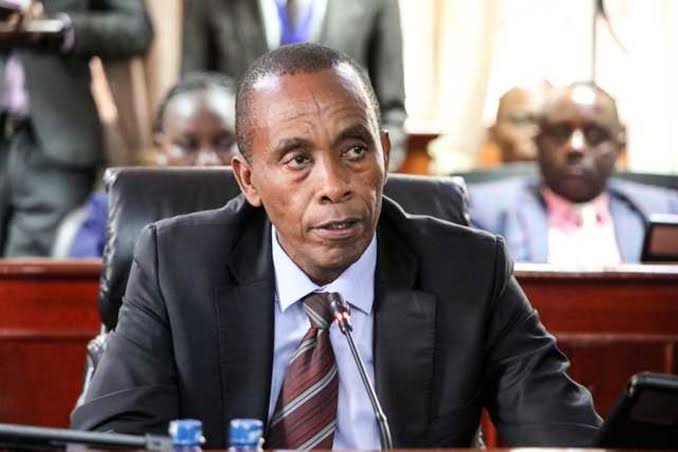
NAIROBI, Kenya, Oct 1 — Kiambu Governor Paul Kimani Wamatangi has failed to have an Ethics and Anti-Corruption Commission (EACC) case seeking recovery of KSh813.1 million from him and 13 others thrown out.
High Court Judge Rose Ougo dismissed applications by Wamatangi and other defendants seeking to be removed from the civil asset recovery proceedings.
The ruling means the case will proceed, with EACC allegations of fraud, misrepresentation and falsification of documents now set to be tested through evidence.
Importantly, the ruling does not establish that Wamatangi committed corruption or that the KSh813 million was illegally acquired. Those allegations remain contested and will be determined through the court process.
Wamatangi's sub judice argument rejected
Wamatangi had argued that the EACC proceedings should be stopped because a separate constitutional petition involving him was already before the courts.
He pointed to conservatory orders issued in that matter and argued that the asset recovery proceedings were therefore sub judice.
Justice Ougo rejected the argument.
The judge found that Wamatangi had not provided sufficient evidence showing that the constitutional petition and the EACC case involved the same parties and issues.
EACC had argued that the conservatory orders in the constitutional matter only prevented the Office of the Director of Public Prosecutions from charging Wamatangi.
According to the commission, those orders did not prevent it from pursuing a separate civil action to recover property or money it alleges was obtained through unlawful conduct.
Parliamentary privilege argument also fails
Wamatangi also sought protection under parliamentary privilege.
His lawyers argued that some of the allegations related to his time as chairperson of the Senate Standing Committee on Roads, Transportation and Housing.
Justice Ougo rejected that position.
The judge held that parliamentary privilege does not protect alleged unlawful acts simply because they are connected to a legislator's public duties.
She also found that the allegations pleaded by EACC did not relate to protected parliamentary proceedings in a manner that would interfere with Parliament's functions.
Why EACC is seeking KSh813 million
EACC filed the asset recovery case in 2025 against Wamatangi and 13 other defendants.
The commission says the money under dispute came from road construction contracts awarded by three state agencies between the 2018/19 and 2021/22 financial years.
They are:
- Kenya National Highways Authority (KeNHA)
- Kenya Urban Roads Authority (KURA)
- Kenya Rural Roads Authority (KeRRA)
According to EACC's court filings, five companies received a combined KSh813,145,532.40 from the agencies.
The commission says KSh726,483,442.40 came from KeNHA and KURA, while KSh86,662,090 came from KeRRA.
EACC alleges that Wamatangi used his position as chairperson of the Senate roads committee to improperly influence the award of tenders to companies associated with him.
It further alleges that he concealed his interest in the companies by transferring directorships to relatives and associates while allegedly remaining a signatory to their bank accounts.
Wamatangi and the other defendants have denied the allegations.
Court declines to remove defendants
The defendants had also argued that EACC had failed to establish a sufficient legal basis for pursuing them individually.
They pointed to the separate legal identities of the companies named in the case and argued that being directors or associates should not automatically make individuals personally liable.
The court declined to strike them out at this stage.
Justice Ougo said the allegations contained claims of fraud, misrepresentation and falsification of documents that require evidence to establish or disprove them.
In other words, the court has not ruled that EACC's allegations are true. It has ruled that they are serious matters that should be tested at trial rather than dismissed at the preliminary stage.
Asset freeze remains in place
The case now moves to another important stage.
EACC has asked the court to issue injunctions and maintain restrictions on the defendants' bank accounts and other assets while the recovery case is determined.
Justice Ougo directed that the injunction application be heard on November 12, 2026.
She also extended the existing interim orders until that hearing.
Defence lawyers asked the court to move the case quickly, arguing that the frozen funds were needed to operate the companies and that continued restrictions were affecting their businesses.
The defendants have also been granted leave to appeal the latest decision.
For now, the KSh813 million remains at the centre of a civil recovery battle.
The next major question is whether EACC will ultimately prove its allegations and secure forfeiture of the assets or money it says were obtained through unlawful means.
That decision has not yet been made.
You may also like
Category: News
Related Video: Dolly Parton’s Family Announces Her Passing in Emotional Tribute
Related Explainer: EXPLAINER: How can one mother give birth to five babies? The science behind Kenya’s rare quintuplets
About the Author
Maureen Onyango is a journalist passionate about storytelling, life coaching and spiritual lessons. She studied at the Kenya Institute of Management and enjoys telling stories that inform, inspire and empower communities.
 Facebook
 Twitter / X
 WhatsApp
 LinkedIn
 Telegram
 Reddit