
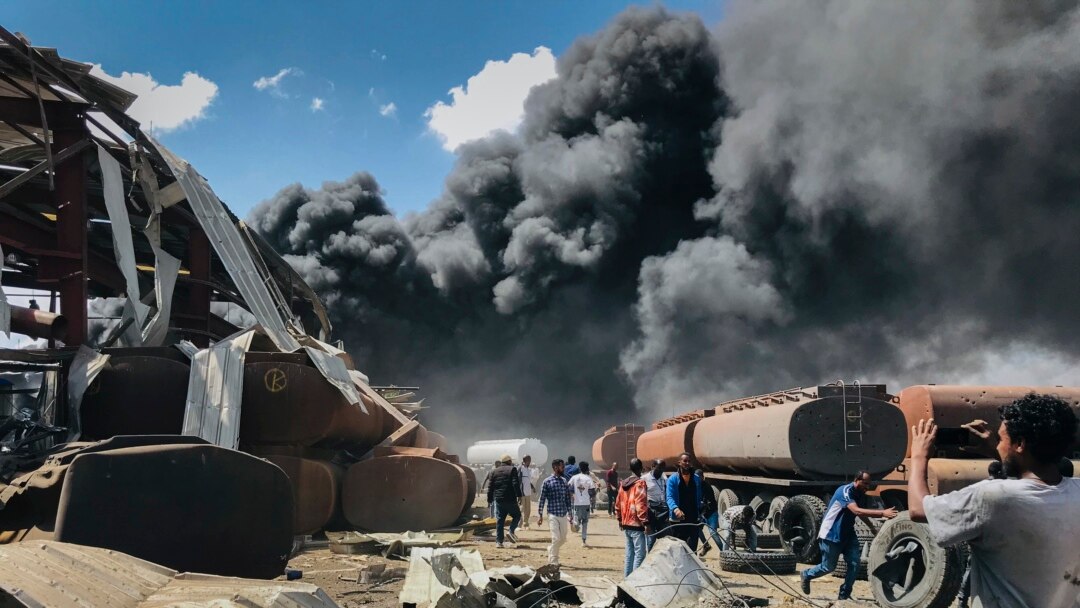
ADDIS ABABA, Ethiopia, Oct 1 — Explosions were heard in Addis Ababa overnight, raising fresh concerns that Ethiopia’s rapidly escalating northern conflict could be reaching the capital.
Several blasts were reported shortly after midnight on Thursday, including in the vicinity of the Ethiopian National Defence Force headquarters.
But authorities have not confirmed that the military headquarters was attacked.
Three diplomatic sources told Reuters that explosions were heard in the capital. A source linked to the opposition alliance fighting federal forces in northern Ethiopia claimed that the alliance had carried out drone strikes, including against military targets in Addis Ababa.
Reuters said it could not independently verify the claim. Witnesses also reported no visible damage around the military base.
That leaves a key question unanswered: were the blasts an attack, or were they linked to military activity?
The Ethiopian government had not publicly confirmed the cause of the explosions by Thursday.
Drone ban preceded the blasts
The reports came only hours after Ethiopia's National Intelligence and Security Service announced an indefinite ban on drone flights over Addis Ababa and surrounding areas.
The agency said the restriction was being imposed for security reasons and warned that unauthorised drones would be detected and intercepted.
The timing of the ban has added to speculation about the overnight explosions. However, the ban itself does not establish that an attack had taken place.
Associated Press reported that three explosions were heard at different locations in the capital, including near the defence headquarters and a nearby factory.
AP also reported that it remained unclear whether the blasts were attacks or could have been connected to military exercises.
Fighting intensifies in northern Ethiopia
The incident comes as Ethiopia faces its most serious military escalation since the 2020–2022 Tigray war.
Fighting resumed in late September between federal forces and Tigrayan forces, with clashes spreading beyond Tigray into neighbouring Afar and Amhara regions.
The renewed violence follows the fragile 2022 Pretoria peace agreement that brought the previous war to an end.
Pro-government forces have claimed battlefield gains, including the recapture of Alamata in southern Tigray.
The conflict has also involved drone strikes and attacks on strategic sites. On September 27, a drone strike hit the headquarters of Tigrai Television in Mekelle, according to journalists at the broadcaster.
The expansion of the fighting has heightened fears that Ethiopia could slide back into a much broader conflict.
Humanitarian toll grows
The fighting is already putting pressure on hospitals and humanitarian operations.
Médecins Sans Frontières (MSF) said its teams recorded a sharp increase in war-wounded patients in southern Tigray.
Between September 22 and 25, the number of wounded patients treated at hospitals in Korem and Alamata rose from about 180 to more than 420.
AP also reported that residents in affected areas were facing disruptions to communications, banking and basic services, while displacement was increasing.
The previous Tigray war caused a devastating humanitarian crisis, with estimates of hundreds of thousands of deaths from fighting, hunger and the collapse of healthcare.
That history is now hanging over the renewed clashes.
Addis Ababa attack claim remains unverified
If the opposition claim is eventually confirmed, an attack on a military target in Addis Ababa would represent a significant geographical expansion of the conflict.
But there is currently not enough independently verified evidence to say that anti-government forces attacked the capital.
Reuters reported that opposition forces were not previously known to have an established armed-drone capability, although recent developments have raised questions about whether some groups now possess such equipment.
There have also been reports of drone activity elsewhere in the conflict.
The Critical Threats Project reported that Ethiopian federal forces had carried out a drone strike against the Tigrai Television headquarters in Mekelle on September 27.
The competing reports underscore how difficult it is to establish events on the ground. Access to conflict zones is restricted, while communications disruptions have made independent verification harder.
For now, Addis Ababa remains tense after the overnight blasts.
What caused them, whether the military headquarters was actually targeted and who was responsible remain unresolved questions.
You may also like
Category: International
Related Video: What Dangote’s proposed Lamu oil refinery could mean for East Africa
Related Explainer: Explainer: Your car burns at a garage: Who pays for the damage?
About the Author
Maureen Onyango is a journalist passionate about storytelling, life coaching and spiritual lessons. She studied at the Kenya Institute of Management and enjoys telling stories that inform, inspire and empower communities.
 Facebook
 Twitter / X
 WhatsApp
 LinkedIn
 Telegram
 Reddit