
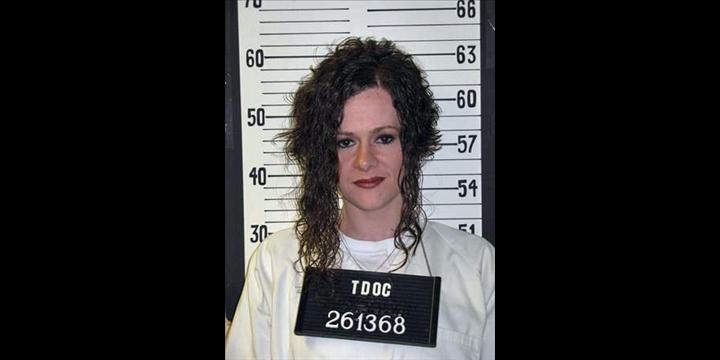
NASHVILLE, Tennessee, Oct 1 — Tennessee set out to carry out one of its most closely watched executions. Instead, the state was left with a far more difficult question: what happens when a lethal injection does not kill the prisoner?
Christa Pike, 50, remained alive after receiving two doses of pentobarbital during an attempted execution at Riverbend Maximum Security Institution on Wednesday night.
She was taken to an outside hospital, where her lawyers said she was receiving emergency, life-saving treatment.
The Tennessee Department of Correction has not explained why the drugs failed to cause her death.
Instead, the department said its execution team followed the state's approved procedure and that the protocol did not provide for further steps after what was carried out.
"The lethal injection chemical in the protocol has consistently been effective," the department said in a statement.
The incident has now triggered an independent review and a suspension of Tennessee's remaining executions for 2026.
That makes Pike's case more than a failed execution. It has become a test of how a US state responds when its own execution procedure breaks down.
What happened inside the execution chamber?
Pike was scheduled to receive a lethal injection on September 30 after a series of last-minute court battles.
Earlier that day, the US Supreme Court cleared the way for Tennessee to proceed after a federal appeals court had temporarily halted the execution to consider fresh legal arguments.
The Supreme Court's order vacated the stay. Three justices — Sonia Sotomayor, Elena Kagan and Ketanji Brown Jackson — dissented.
The execution eventually went ahead.
Pike was administered two doses of pentobarbital, a powerful barbiturate used by Tennessee in its single-drug lethal injection protocol.
But witnesses reported that she remained alive and breathing after the injections. Her lawyers later said she could still be heard snoring.
The execution was eventually stopped and Pike was transported to hospital.
Her medical condition remained unclear on Thursday.
Her lawyers have raised concerns that the delay in providing emergency treatment could have caused serious injury. Those claims have not been independently established.
The state, meanwhile, has not publicly identified a technical failure, a problem with the drug or another reason for the unsuccessful procedure.
Why did the lethal injection fail?
That is still the biggest unanswered question.
Pike's lawyers have questioned whether the pentobarbital used was effective. The Tennessee Department of Correction has not specifically confirmed or rejected their allegation that the drug may have degraded.
There is also no public evidence at this stage establishing that the drug was defective.
Medical experts have offered possible explanations, but they are not a substitute for the state's investigation.
Dr Joel Zivot, an Emory University medical expert retained by Pike's legal team, has argued that the drug may not have reached a sufficiently high concentration in her bloodstream to produce the expected respiratory and cardiovascular effects.
That remains an expert opinion, rather than an established finding.
The state has maintained that its execution protocol was followed.
The independent review ordered by Governor Bill Lee will now be important in determining what happened to the drug, how it was administered and whether the protocol itself contains a gap when an inmate survives the procedure.
Tennessee had already had an execution failure this year
Pike's case is particularly significant because it was the second unsuccessful execution attempt in Tennessee in 2026.
In May, officials attempted to execute Tony Von Carruthers.
Medical personnel established a primary intravenous line but were unable to secure the required backup line. They also failed in an attempt to establish a central line.
After more than an hour, the execution was abandoned.
Governor Lee then granted Carruthers a one-year reprieve.
The two cases involved different problems.
Carruthers' execution was stopped because officials could not establish the necessary intravenous access.
Pike received the execution drug, but remained alive.
Taken together, however, the incidents have put renewed attention on Tennessee's procedures for carrying out death sentences.
What happens to Pike now?
For the moment, Pike remains under medical care rather than on an execution schedule.
Governor Lee has suspended Tennessee's remaining executions for 2026 while the state conducts an outside review.
That means another prisoner scheduled to be executed later this year will not be put to death as planned.
It does not, by itself, erase Pike's death sentence.
Whether Tennessee can seek another execution date, and what legal challenges would follow, are questions likely to be fought through the courts.
Pike's lawyers have already challenged the attempted execution and are expected to argue that the failed procedure raises constitutional concerns about trying to execute her again.
The legal position is not yet settled.
There is historical precedent in the United States for prisoners surviving failed execution attempts and facing later execution efforts. But each case turns on its own facts, court rulings and applicable state law.
Why was Pike facing execution?
Pike was sentenced to death for the 1995 murder of 19-year-old Colleen Slemmer, whom she met while both were attending a Job Corps programme in Knoxville.
Pike was 18 when Slemmer was killed.
According to court records, Pike and her then-boyfriend, Tadaryl Shipp, were involved in the killing. Pike was the only participant to receive a death sentence.
She has spent more than three decades in prison.
Her case attracted renewed attention during the final legal battle because her lawyers argued that severe childhood abuse and mental-health problems were not properly presented during her original sentencing.
Those arguments did not persuade Tennessee authorities to commute her sentence.
Governor Lee rejected her clemency request before the execution.
Slemmer's mother, May Martinez, has continued to support Pike's execution. After Wednesday's failed attempt, Martinez described what happened as "a mess" in comments reported by US media.
The competing positions reflect the human weight of the case: a family that has spent decades seeking justice for a murdered daughter, and a prisoner whose lawyers argue that the circumstances surrounding her childhood and development should have carried greater weight.
What is pentobarbital?
Pentobarbital is a barbiturate that depresses activity in the central nervous system.
At sufficiently high doses, it can cause unconsciousness followed by respiratory and cardiovascular failure. Tennessee uses it as the sole drug in its lethal injection protocol.
The drug has also been at the centre of wider debate over execution methods in the United States.
The federal government under President Joe Biden previously suspended federal executions and questioned whether pentobarbital could be used without risking unnecessary pain and suffering.
That federal policy did not prevent Tennessee from setting its own execution procedure.
The federal government has since reversed that position. In 2026, the US Justice Department reinstated a federal pentobarbital execution protocol under President Donald Trump.
The federal policy and Tennessee's state procedure are separate.
Have executions failed elsewhere?
Yes.
The US has a long record of executions that have encountered serious problems, particularly where officials have struggled to establish intravenous access or administer the drugs as intended.
The Death Penalty Information Center recorded seven visibly problematic execution attempts out of 20 in 2022 — 35 per cent of that year's attempts — although its broader historical data shows that definitions of a "botched" execution vary.
Tennessee's own history is now particularly relevant.
Carruthers' failed execution in May was followed only months later by Pike's unsuccessful injection.
That has shifted the debate from whether an individual execution went wrong to whether Tennessee's wider system needs closer scrutiny.
What happens next?
Three things are now likely to shape the case.
First, Pike's medical condition. Her lawyers have raised concerns about possible serious injury, but there is not yet enough public information to establish the extent of any harm.
Second, the independent review. Investigators will have to establish exactly what happened during the injection, whether the drugs were administered correctly and whether the existing protocol adequately deals with an inmate who remains alive.
Third, the courts. Any attempt to schedule another execution is likely to face further legal challenges from Pike's defence team.
For now, Tennessee has stopped all remaining executions scheduled for 2026.
The state had intended to carry out the death sentence against Pike.
Instead, it has been forced to pause and examine how an execution that was supposed to end in death left the prisoner alive and in hospital.
That unanswered question is likely to remain at the centre of the case for some time.
You may also like
Category: International
Related Video: Gachagua’s explosive Ruto scorecard: Debt, taxes, State capture and a government ‘that has failed’
About the Author
Maureen Onyango is a journalist passionate about storytelling, life coaching and spiritual lessons. She studied at the Kenya Institute of Management and enjoys telling stories that inform, inspire and empower communities.
 Facebook
 Twitter / X
 WhatsApp
 LinkedIn
 Telegram
 Reddit