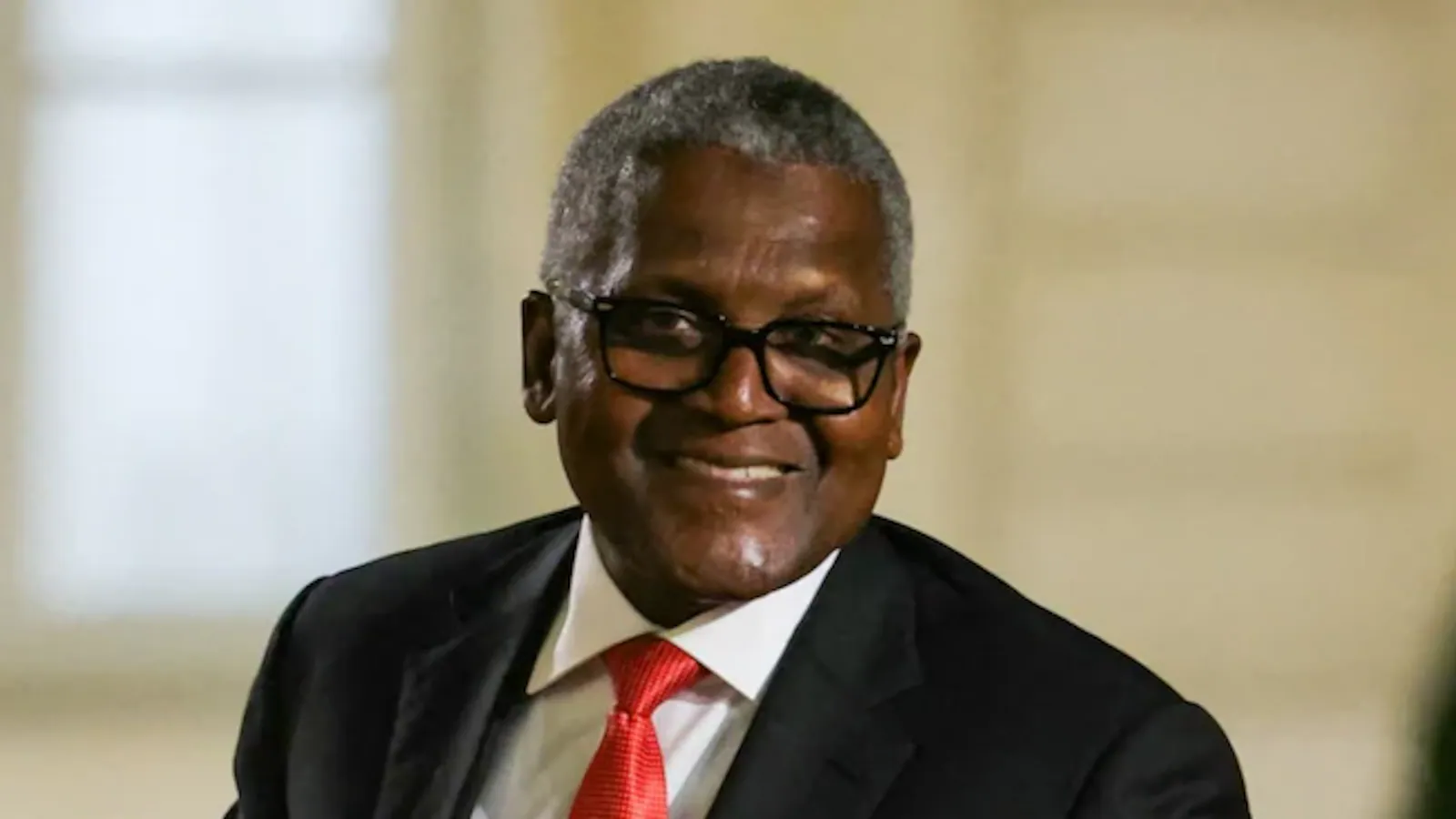
Aliko Dangote is a Nigerian businessman whose name has become closely associated with Africa's industrial growth.
The founder and chief executive of Dangote Group built his business empire from a trading operation into one of Africa's largest conglomerates, with interests spanning cement, sugar, salt, fertiliser, oil and gas, logistics and infrastructure.
Dangote began his business career in 1978, trading commodities including rice, sugar and cement. He later shifted towards manufacturing, a move that became central to the expansion of his business empire.
Today, Dangote Group has operations across several African countries and says its focus is on producing essential goods locally while creating jobs and reducing dependence on imports.
Early life and education
Aliko Dangote was born on April 10, 1957, in Kano, northern Nigeria, into a wealthy business family.
His grandfather, Sanusi Abdulkadir Dantata, was a successful businessman and trader in Kano. According to Forbes, Dangote showed an interest in business from a young age, including buying sweets and having others sell them for a profit.
Dangote studied at Al-Azhar University in Cairo, Egypt, where he earned a degree in business studies. He later received honorary doctorates from institutions including Coventry University in the UK and the University of Ibadan in Nigeria.
How Dangote built his business empire
Dangote's business story began with trading.
He started by importing and selling commodities, including rice, sugar and cement. But his ambitions eventually moved beyond trading.
He began investing heavily in manufacturing, particularly in cement.
That strategy turned Dangote Cement into the group's flagship business and one of Africa's largest cement producers.
Dangote Cement currently has production capacity of about 48.6 million metric tonnes a year and operates in 10 African countries, according to Forbes. Dangote owns about 85 per cent of the publicly traded company through a holding structure.
The wider Dangote Group has since expanded into food production, fertiliser, energy, logistics and other industries.
The company says it now has operations in more than a dozen African countries and employs more than 30,000 people.
The Dangote Refinery
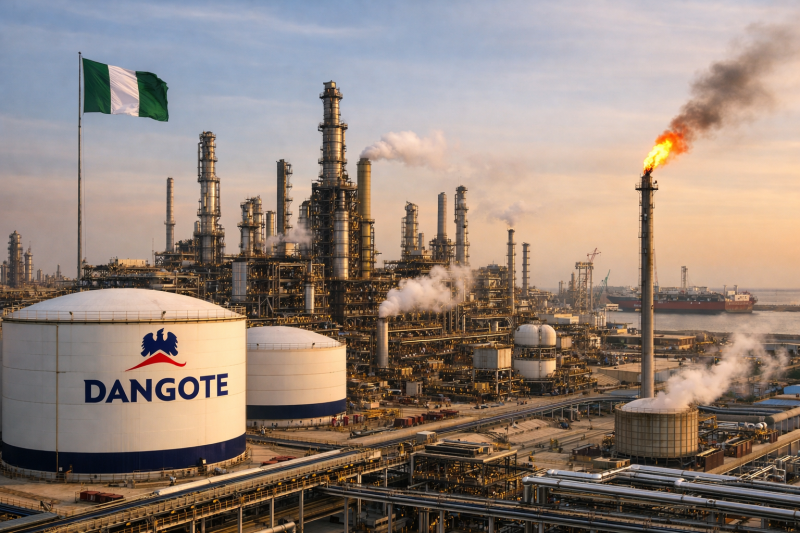
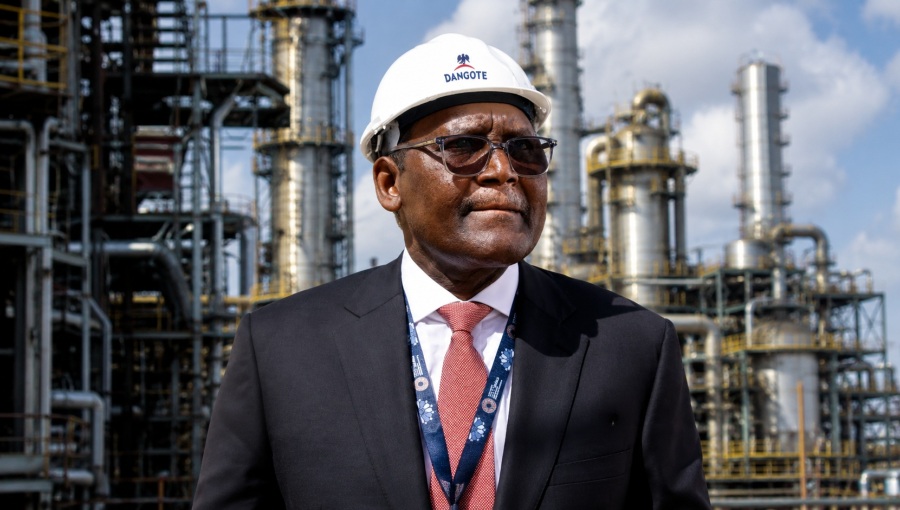
One of Dangote's most ambitious projects is the Dangote Petroleum Refinery in Lagos.
The refinery was conceived as a major attempt to increase Nigeria's domestic refining capacity and reduce the country's reliance on imported petroleum products.
Construction began in 2016, while refining operations began in early 2024, according to Forbes.
The project has become a major part of Dangote's business interests in the oil and gas sector.
The refinery is part of a broader industrial strategy that has also included fertiliser and petrochemical production.
Fertiliser and agriculture
Dangote has also expanded into fertiliser production.
The group's fertiliser plant in Nigeria began operations in 2022. The investment forms part of the company's push into industries that supply key inputs for Nigeria's agricultural sector.
The expansion reflects Dangote's wider approach of investing in industries where Africa has traditionally relied heavily on imports.
Wealth and global standing
Dangote has consistently ranked among the world's wealthiest people.
Forbes listed his real-time net worth at about US$31.4 billion in September 2026, placing him among the world's top 100 billionaires. Forbes identifies cement and sugar among the main sources of his wealth.
His fortune is closely linked to his ownership of Dangote Cement and his interests in the wider Dangote Group.
His wealth has also made him one of Africa's most prominent private-sector figures.
Philanthropy
Dangote's business activities have been accompanied by extensive philanthropic work.
Through the Aliko Dangote Foundation, he has supported initiatives in areas including health, nutrition, education and economic empowerment.
The foundation has also funded programmes targeting vulnerable communities and women in Nigeria.
Dangote has separately participated in international initiatives focused on health and education.
His international roles have included membership of the board of the Clinton Health Access Initiative and involvement in global business and development forums.
Influence beyond business
Dangote's influence extends beyond the companies he owns.
He has served in international business organisations and has participated in discussions on Africa's economic development, manufacturing, investment and trade.
He was appointed co-chair of the US-Africa Business Center in 2016 and has been involved in several international business and development initiatives.
His business philosophy has generally centred on expanding local production.
The Dangote Group says its goal is to build manufacturing capacity in Africa, create employment and reduce capital leaving the continent through imports.
Personal life
Dangote has three children and is divorced, according to Forbes. He is based in Lagos, Nigeria.
He has generally kept much of his private life away from the spotlight, while remaining a highly visible figure in African business and philanthropy.
Legacy
Dangote's rise reflects a broader shift in African business — from trading imported goods towards building large-scale manufacturing capacity on the continent.
His biggest projects have been built around sectors that affect everyday life: cement for construction, food products, fertiliser for agriculture and petroleum products for transport and industry.
The scale of his businesses has made him one of the most recognisable African entrepreneurs globally.
For Dangote, however, the story is not simply about becoming one of the world's richest people.
It is also about building industries on a continent where many countries continue to depend heavily on imported goods.
That approach has made Aliko Dangote a defining figure in modern African business.
You may also like
Category: Features
Related Video: What Dangote’s proposed Lamu oil refinery could mean for East Africa
Related Explainer: Inside Kenya’s crude supply puzzle as Dangote prepares to break ground in Lamu
About the Author
Maureen Onyango is a journalist passionate about storytelling, life coaching and spiritual lessons. She studied at the Kenya Institute of Management and enjoys telling stories that inform, inspire and empower communities.
 Facebook
 Twitter / X
 WhatsApp
 LinkedIn
 Telegram
 Reddit