
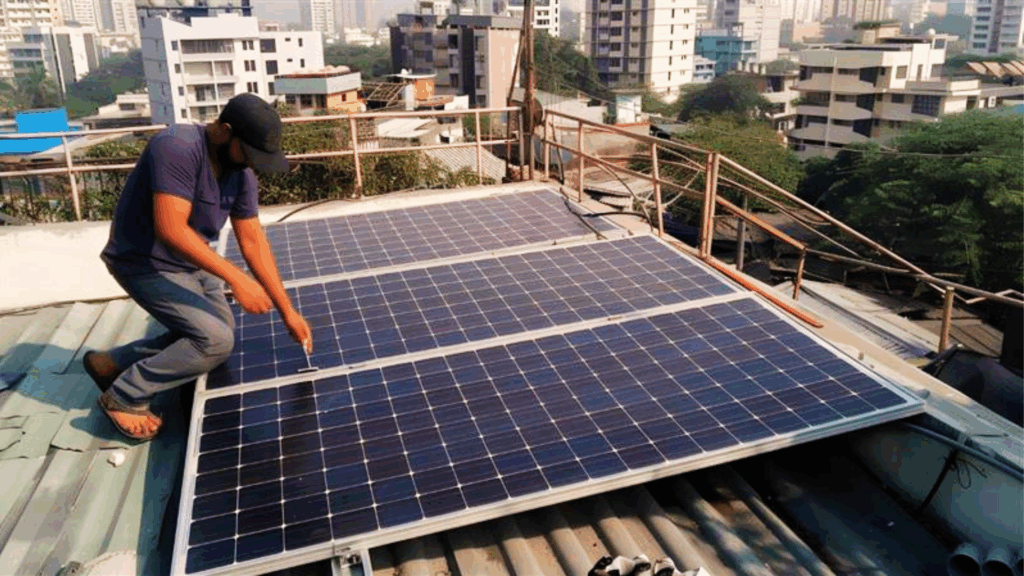
Kenyans installing rooftop solar systems could face tighter technical requirements as Kenya Power pushes for mandatory battery-storage standards to protect the stability of the national electricity grid.
The utility says the rapid expansion of rooftop solar is changing how electricity flows through Kenya’s power system and creating new challenges for managing supply and demand.
Businesses and households have increasingly installed solar panels to reduce electricity bills, improve reliability and protect themselves from outages.
But solar generation varies significantly during the day.
Production rises when sunlight is strongest and falls rapidly in the evening, precisely when household electricity demand often increases.
Battery storage can help manage that imbalance by storing electricity generated during the day and releasing it later when required.
Kenya Power is therefore advocating internationally recognised battery-storage standards for grid-connected rooftop systems.
The company argues that properly designed battery installations could improve grid stability while allowing consumers to use more of their own solar electricity.
They could also support arrangements under which eligible customers supply excess electricity to the national grid.
The debate comes as Kenya undergoes a significant energy transition.
The country already generates a large proportion of its electricity from renewable sources, particularly geothermal, hydro, wind and solar.
Rooftop solar adds another layer by turning households and businesses from conventional consumers into potential electricity producers.
That creates opportunities but also technical complications.
Electricity grids were traditionally designed for power to move in one direction: from large generating stations through transmission and distribution networks to customers.
Distributed solar can send electricity in the opposite direction when production exceeds local consumption.
Without appropriate controls, protection equipment and storage, high levels of distributed generation can complicate voltage management and grid stability.
Consumers are likely to focus on another issue: cost.
Battery systems can substantially increase the upfront price of a rooftop solar installation.
Any mandatory requirement would therefore need to balance grid-security concerns against Kenya’s broader objective of encouraging renewable energy.
Clear rules would also be required to determine which installations are affected, the standards batteries must meet and whether existing systems would need upgrades.
Kenya Power's position reflects a problem utilities around the world are increasingly confronting as distributed renewable energy expands.
Solar is no longer simply an alternative source of electricity.
At sufficient scale, it changes the architecture of the entire electricity system.
For Kenya, the challenge will be developing rules that allow households and businesses to benefit from cheaper renewable generation without creating new reliability problems for the national grid.
You may also like
Category: Business
Related Video: What Dangote’s proposed Lamu oil refinery could mean for East Africa
 Facebook
 Twitter / X
 WhatsApp
 LinkedIn
 Telegram
 Reddit