

A mother in Kiambu County has delivered five babies at once, raising a fascinating question: How can one pregnancy produce five babies, and what happens inside the womb to make this possible?
Mercy Kanini, 28, from Juja delivered quintuplets — four girls and one boy — at Thika Level Five Hospital in a rare vaginal delivery.
The case is particularly unusual because quintuplet pregnancies are already exceptionally rare, while delivering five babies vaginally is rarer still. Multiple pregnancies involving this many babies frequently require specialised obstetric and neonatal care.
Kanini's family had reportedly expected four babies following pregnancy scans, only for a fifth baby to emerge during delivery.

So, scientifically, how does a woman become pregnant with five babies?
How are five babies conceived at once?
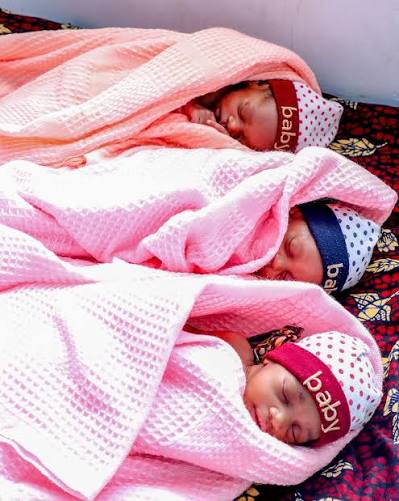
A multiple pregnancy begins at conception in one of two basic ways.
The first occurs when a woman's ovaries release several eggs during the same menstrual cycle. If several of those eggs are fertilised by separate sperm cells, several embryos can develop simultaneously.
The second occurs when a fertilised egg divides into two or more embryos. This is the biological process responsible for identical multiples.
There can also be a combination of the two processes — several eggs are fertilised, and one or more of the resulting embryos subsequently split.
The American College of Obstetricians and Gynecologists explains that when more than one egg is released and fertilised, multiple embryos can implant and develop in the uterus. A single fertilised egg can alternatively split to create genetically identical embryos.
With triplets, quadruplets or quintuplets, therefore, the babies can theoretically be all fraternal, all identical or a mixture of the two.
In Kanini's case, the presence of four girls and a boy means the five babies cannot all have resulted from a single fertilised egg splitting into genetically identical embryos.
Without genetic and placental information, however, it is not possible to determine precisely how the five babies developed.
Did fertility treatment cause the quintuplets?
Not necessarily.
Fertility treatment can substantially increase the likelihood of multiple pregnancies. Medicines that stimulate ovulation can cause several eggs to be released in the same cycle, while assisted reproductive techniques can also result in multiple embryos developing.
But quintuplets can occur spontaneously without fertility treatment.
Kanini has not publicly disclosed whether fertility treatment was involved, so it would be inaccurate to assume how the pregnancy occurred. Media reports have described spontaneous quintuplet conception as extraordinarily rare.
How can five babies fit inside one womb?
The uterus is an exceptionally adaptable muscular organ.
Before pregnancy, it is relatively small. As pregnancy progresses, hormonal changes and the growth of the fetus — or fetuses — cause the uterus to expand dramatically.
With five babies, however, space becomes increasingly limited much earlier than in a pregnancy involving one baby.
That is one reason higher-order multiple pregnancies commonly end prematurely.
The babies also compete for the mother's nutritional and physiological resources, while the mother's cardiovascular system must support a much greater pregnancy burden.
Kenya's clinical guidelines classify multiple pregnancy as higher risk than singleton pregnancy and identify complications including anaemia, pre-eclampsia, excessive amniotic fluid, bleeding, abnormal fetal positioning and premature labour.
Why are quintuplets usually born prematurely?
Think of the uterus as having practical limits on how far it can comfortably stretch and sustain a pregnancy.
One baby can ordinarily develop for around 40 weeks. With several babies growing simultaneously, the uterus becomes distended much earlier.
That increases the likelihood of contractions and premature labour.
Prematurity is particularly important because a baby's lungs, brain, digestive system and other organs continue developing during the final weeks of pregnancy.
Babies from higher-order multiple pregnancies are consequently more likely to have low birth weights and require neonatal monitoring or intensive care after delivery.
What makes Kanini's delivery especially unusual?
It isn't simply that she had five babies.
She reportedly delivered all five vaginally.
Kanini said that when she arrived at Thika Level Five Hospital, one baby was already beginning to come. Medical staff initially prepared her for theatre, but after further assessment she was allowed to continue with vaginal delivery.
Doctors frequently consider Caesarean delivery in complicated higher-order multiple pregnancies because the position and condition of each baby can change after the preceding baby has been delivered.
Kenya's clinical guidelines illustrate the complexity even with twins: after the first baby is delivered vaginally, clinicians reassess the lie, presentation and heartbeat of the next baby before proceeding.
With five babies, that process becomes substantially more complex.
This means Kanini's experience should not be interpreted to mean vaginal delivery is automatically safe or preferable for quintuplets. The appropriate method depends on the condition and position of the babies, gestational age, the mother's condition and the clinical judgement of the obstetric team.
Why did scans reportedly show four babies instead of five?
This is another intriguing part of Kanini's case.
The family says they had been expecting quadruplets before discovering during delivery that there was a fifth baby.
Ultrasound is the standard method for diagnosing multiple pregnancy. Kenya's clinical guidelines describe ultrasound as the definitive diagnostic investigation.
But identifying every fetus can become more challenging in a crowded uterus, depending on gestational age, fetal positions, image quality, equipment and the timing and circumstances of scanning.
Without reviewing Kanini's medical records and ultrasound examinations, however, it would be speculative to say exactly why the fifth baby was apparently not identified before delivery.
Are the five babies identical?
Almost certainly not all five.
The babies comprise four girls and one boy. Identical multiples originate from the same fertilised egg and therefore ordinarily have the same chromosomal sex.
The presence of both a boy and girls demonstrates that at least two separate fertilisation events must be represented among the five babies.
But that still leaves several possibilities. For example, some of the four girls could theoretically be identical while others are fraternal.
Determining their precise biological relationship would require information about their placentas and membranes and, if necessary, DNA testing.
Why quintuplet pregnancies need intensive medical care
For the mother, carrying five babies places significantly greater demands on the body than carrying one.
Multiple pregnancies carry increased risks of premature labour, anaemia, hypertensive disorders such as pre-eclampsia, bleeding and postpartum haemorrhage. For the babies, major concerns include prematurity and low birth weight.
That is why higher-order multiple pregnancies require close antenatal monitoring and delivery in a facility capable of managing both maternal emergencies and premature newborns.
For Kanini, what began as an expected delivery of four babies ended with five — four daughters and a son — turning an already uncommon multiple pregnancy into one of Kenya's most remarkable recent births.
Category: Explainers
Related Video: Dolly Parton’s Family Announces Her Passing in Emotional Tribute
Related Explainer: Explainer: Your car burns at a garage: Who pays for the damage?
 Facebook
 Twitter / X
 WhatsApp
 LinkedIn
 Telegram
 Reddit