
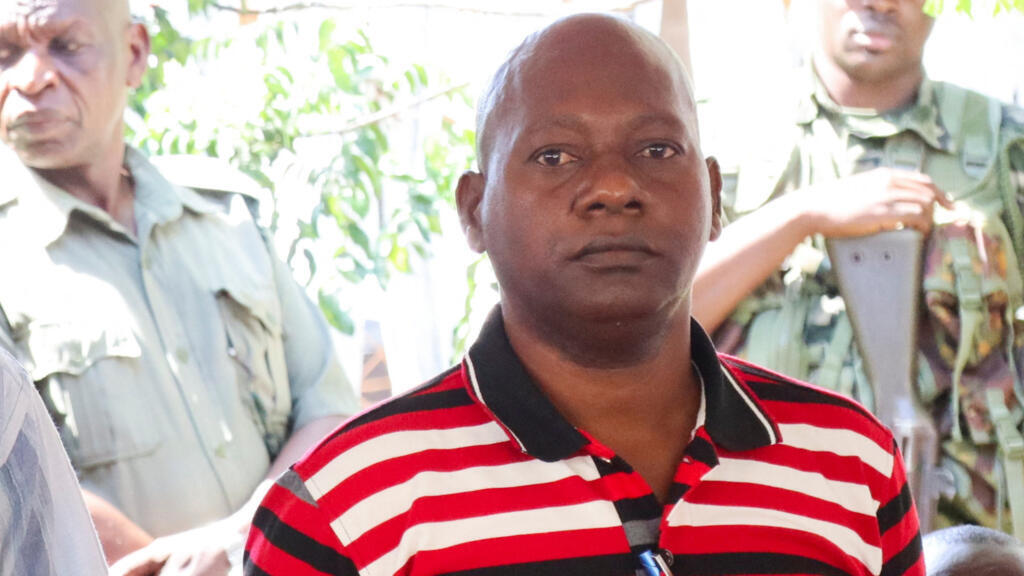
Interior Cabinet Secretary Kipchumba Murkomen says convicted preacher Paul Mackenzie will be kept away from other inmates while serving his 200-year prison sentence, amid concerns that his influence could extend beyond the Shakahola tragedy.
Murkomen made the announcement on Sunday, November 8, during a church service at Bushiangala Church of God in Ikolomani, Kakamega County.
He said the government would set aside a secluded area for Mackenzie to prevent him from spreading extremist religious teachings or influencing other prisoners.
“We will provide a secluded area to hold him to make sure that there will be no radicalisation again by the type of Mackenzies in this country,” Murkomen said.
The announcement signals the government's intention to treat Mackenzie as a potential security risk even after his conviction. However, the CS did not publicly explain where the preacher would be held, how the arrangement would work or what restrictions would apply to his communication and visits.
The government has also not released a detailed account of the intelligence behind concerns that Mackenzie could influence other inmates.
Why the government wants him held separately
Murkomen's remarks came amid reports that Mackenzie had attempted to influence police officers and fellow detainees through his teachings while in custody.
The Star reported that security intelligence had raised concerns about his alleged attempts to radicalise fellow inmates. The claims have not been independently established in the public information available.
The proposed separation is intended to limit opportunities for him to recruit followers or spread teachings that authorities consider extremist.
It is important, however, to distinguish separate custody from a punishment imposed by a court. Murkomen announced a government security measure, not an additional sentence. Any restrictions on Mackenzie's detention would still have to comply with the law and applicable prison regulations.
Mackenzie sentenced to 200 years over 191 deaths
The announcement came two days after the High Court in Mombasa sentenced Mackenzie to an aggregate 200 years in prison for the murder of 191 people at Shakahola Forest in Kilifi County.
Justice Diana Kavedza imposed 100 years for 183 murder counts involving deaths through starvation and a further 100 years for eight murders involving direct homicide. The two sets of sentences are to run consecutively.
The victims in the case were 190 children and one adult. The court found that Mackenzie was central to a system of religious indoctrination and enforced fasting that led to the deaths.
Twenty-eight co-accused were also convicted. Their sentences ranged from 10 to 160 years.
The 191 convictions relate to the deaths covered by that particular trial. They should not be confused with the wider Shakahola death toll. More than 400 bodies were recovered from the forest, and Mackenzie faces separate proceedings linked to other alleged deaths.
The defence has indicated it intends to challenge the sentence, meaning the legal process may continue through the appeal courts.
Murkomen praises investigators and prosecutors
During Sunday's service, Murkomen credited the Directorate of Criminal Investigations (DCI), the Office of the Director of Public Prosecutions (ODPP) and the Judiciary for their roles in bringing the case to court.
He said the government would continue supporting the institutions and working with the Judiciary to protect the public.
The CS also warned that the government would take firm action against religious organisations found promoting extremism and radicalisation.
The challenge for authorities will be to distinguish criminal activity from legitimate religious practice. Kenya's Constitution protects freedom of religion and worship, even as the State has a duty to investigate and prosecute criminal conduct carried out under the cover of religion.
Shakahola families turn attention to local officials
As the court delivered its sentences, families of Shakahola victims renewed calls for accountability from government officials who were responsible for security and administration in the area.
In a report aired by Citizen TV on November 8, relatives questioned whether chiefs, assistant chiefs and police officers acted on information about Mackenzie's activities before the tragedy came to light.
The families said local officials should have raised the alarm over alleged warning signs, including unusual movements, children leaving school and the growing isolation of followers.
Their concerns point to a question that has remained central to the Shakahola tragedy: whether the deaths could have been prevented if warning signs had been acted upon earlier.
The allegations are demands for investigation and accountability, not proof that particular administrators knowingly enabled the crimes. Establishing whether officials received credible reports, what action they took and whether any failures breached their duties requires evidence and a proper inquiry.
Mackenzie's encounters with authorities reportedly predated the 2023 discovery of the mass graves. The movement of followers to the remote Chakama Ranch, and the failure to detect the scale of what was happening there, have also raised questions about oversight by local and national security agencies.
For the families, the prison sentence is only one part of the search for justice. They also want answers about how the deaths happened, whether missing relatives can be identified and whether public officials who failed in their responsibilities will be held to account.
The government now faces two tests: ensuring Mackenzie cannot use prison as a platform for further influence, and addressing the institutional failures that allowed the Shakahola tragedy to unfold.
You may also like
Category: News · Related Topic: Social Health Authority (SHA)
Related Video: Dolly Parton’s Family Announces Her Passing in Emotional Tribute
About the Author
Maureen Onyango is a journalist passionate about storytelling, life coaching and spiritual lessons. She studied at the Kenya Institute of Management and enjoys telling stories that inform, inspire and empower communities.
 Facebook
 Twitter / X
 WhatsApp
 LinkedIn
 Telegram
 Reddit