
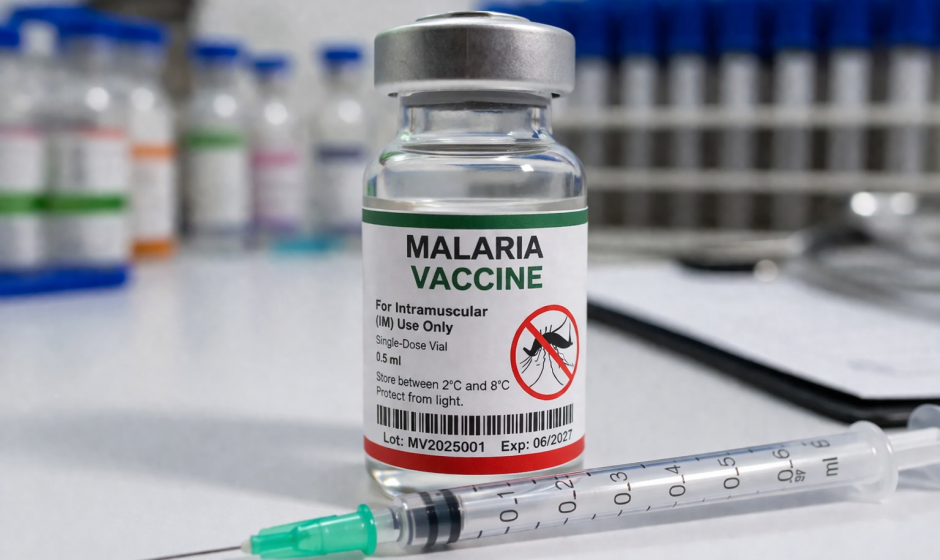
Rwanda has become the first African country to host a clinical trial of a long-acting malaria prevention injection, as researchers explore whether a single dose could eventually offer protection for several months.
The experimental drug, known as MMV371, is being tested in a Phase 1b study led by Medicines for Malaria Venture (MMV) in partnership with Rinda Ubuzima, a Rwandan health research organisation.
The study marks an important step in the search for new ways to prevent malaria. But researchers have an important question to answer before the injection can be considered for wider use: is it safe, and can it reliably prevent infection?
MMV371 is designed to release an antimalarial compound gradually into the body after it is injected. The aim is to maintain protection for longer than medicines that require frequent doses.
Earlier research involving healthy adults in the United Kingdom found that the injection was well tolerated and showed potential to provide protection for about three months. That duration, however, has not yet been confirmed in the Rwanda study or established as a reliable period of protection.
What the Rwanda trial will examine
The study is expected to involve approximately 80 healthy participants aged between 12 and 50 years.
About three-quarters will receive the experimental drug, while the remainder will receive a placebo, or an injection containing no active medicine. Neither participants nor the researchers directly monitoring them will know who has received which injection during the blinded stage of the trial.
Participants will be followed for 24 weeks. Researchers will monitor possible side effects, measure the amount of medicine remaining in their blood and check for malaria infections.
The main purpose is to establish the drug's safety, tolerability and how the body absorbs and processes it. Its ability to prevent malaria will also be examined, but this early study is not designed to provide final proof of effectiveness.
The distinction matters. A medicine can show promise in early research without eventually proving safe or effective enough for routine use.
Why a new prevention option matters
Malaria remains one of Africa's most serious public health challenges, despite years of investment in mosquito control, medicines, vaccines and other interventions.
The World Health Organization's 2025 World Malaria Report estimates that 282 million people contracted malaria worldwide in 2024, while 610,000 died from the disease.
The WHO African Region accounted for approximately 94 per cent of global cases and 95 per cent of deaths. Children under five made up about three-quarters of malaria deaths in the region.
Progress is also under pressure from antimalarial drug resistance. The WHO has reported partial resistance to artemisinin-based medicines, which are central to treating malaria, in at least eight African countries.
A longer-lasting preventive medicine could eventually offer another option, particularly for people who struggle to take medication regularly or have difficulty accessing health facilities. However, its usefulness will depend on the evidence from further trials, its eventual cost and whether health systems can deliver it to the people who need it.
Rwanda's own malaria figures show why continued research matters. The country's malaria incidence rate fell to 72 cases per 1,000 people in the 2025–2026 financial year, from 76 in the previous year. It nevertheless remained above the 45 cases per 1,000 recorded in 2023–2024.
African researchers take a central role
The trial is also significant because it places an African research institution directly in the development process for a medicine intended for communities heavily affected by malaria.
Rinda Ubuzima Executive Director Marie Michele Umulisa said the partnership would strengthen the role of African scientists in finding solutions to health challenges affecting their own communities.
“Conducting this study in Rwanda demonstrates that partnerships such as this are essential to ensuring that African researchers and institutions are active contributors to the development of solutions for the communities and countries that need them most,” she said.
MMV Chief Executive Officer Dr Martin Fitchet said new prevention methods would be needed alongside wider access to existing tools.
“To eliminate malaria, we will need not only wider access to today's tools but also the next generation of prevention technologies,” he said.
He added that long-acting injections could eventually widen the options available to communities at risk by reducing the need for repeated preventive doses.
MMV371 is designed to produce atovaquone in the body, a compound already used in established malaria medicines. Its long-acting formulation is intended to release the compound gradually rather than deliver it all at once.
What happens next?
The Rwanda trial is an early step in a much longer development process. Its findings will help researchers decide whether MMV371 is suitable for larger studies that can assess its protective effect more fully.
The injection is not an approved malaria prevention product and is not available for public use. It will need to pass further clinical testing and regulatory review before it can be considered for wider distribution.
For now, the significance of Rwanda's role is twofold: it offers researchers an opportunity to study the experimental drug in a malaria-endemic setting, while giving African scientists a direct part in evaluating a potential new prevention tool.
If later trials confirm that the injection is safe, effective and affordable, it could add to the range of ways communities protect themselves against malaria. But the first task is to establish whether the promise seen in earlier research can stand up to closer testing.
You may also like
Category: Health
Related Video: What Dangote’s proposed Lamu oil refinery could mean for East Africa
Related Explainer: Ebola contact tracing: Why the 21-day window matters in Kenya’s response
About the Author
Maureen Onyango is a journalist passionate about storytelling, life coaching and spiritual lessons. She studied at the Kenya Institute of Management and enjoys telling stories that inform, inspire and empower communities.
 Facebook
 Twitter / X
 WhatsApp
 LinkedIn
 Telegram
 Reddit